अहं च त्वं च
Class 6 Sanskrit · दीपकम् · Chapter 4
158 members in the CBSE community
View all





CBSE Class 6 · All available subjectsTrending
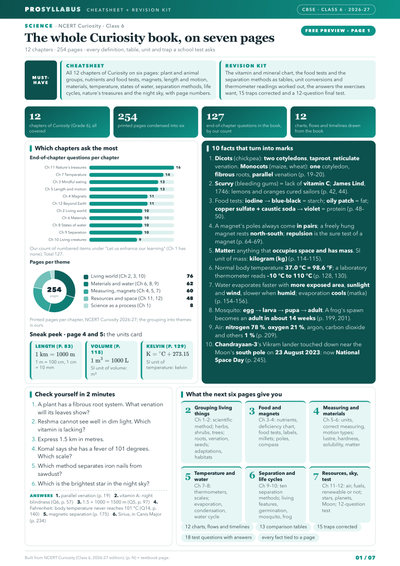
All 5 Class 6 kits: each book, by chapter- Science: 12 chapters, with traps corrected
- Maths: 10 chapters, primes to integers
- Hindi: 13 मल्हार lessons, 16 grammar points
- English: all 16 Poorvi texts, unit by unit
- Social Science: 14 chapters, maps to sectors
- 5 kits, one per subject
CBSE Class 6 · Science
12 chapters: food tests to the night sky- Marks booster + cheatsheet: key concepts in 2 lines each, common traps
- Plant and animal groups, Ch 2
- Temperature and its measurement, Ch 7
- Common traps, corrected
- Methods of separation, Ch 9
- 10 must-know facts with a self-check
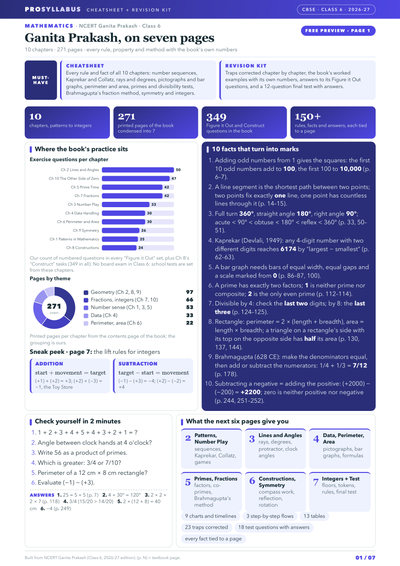
CBSE Class 6 · Mathematics
10 chapters: Kaprekar, Collatz to integers- Marks booster + cheatsheet: key concepts in 2 lines each, common traps
- Primes and divisibility tests, Ch 5
- Brahmagupta's fraction method, Ch 7
- Common traps, corrected
- Perimeter and area rules, Ch 6
- Types of angles and the protractor, Ch 2
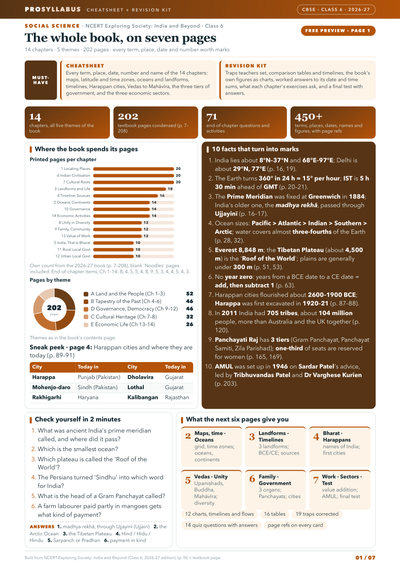
CBSE Class 6 · Social ScienceTrending
14 chapters: maps to economic sectors- Marks booster + cheatsheet: key concepts in 2 lines each
- Latitude and time zones, Ch 1
- Timelines and sources of history, Ch 4
- Harappan cities, Ch 6
- Vedas to Mahāvīra, Ch 7
- 3 tiers of government, Ch 10–12
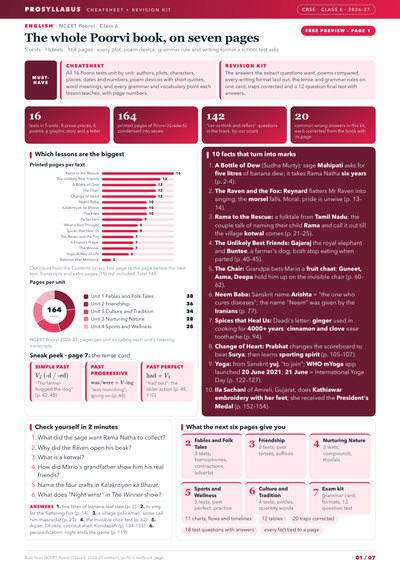
CBSE Class 6 · English
All 16 Poorvi texts, unit by unit- Marks booster + cheatsheet: key concepts in 2 lines each
- 5 units: authors, plots and characters
- Poem devices with short quotes
- Grammar point of every lesson
- Word meanings with page numbers
- Writing formats a school test asks
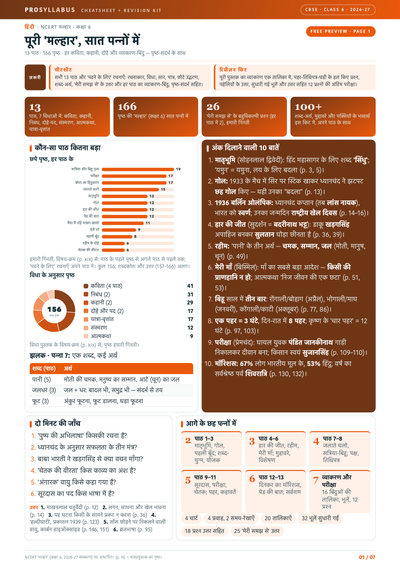
CBSE Class 6 · हिंदी
All 13 मल्हार lessons + 16 grammar points- Marks booster + cheatsheet: key concepts in 2 lines each
- Author, genre and summary for each lesson
- 'मेरी समझ से' answers, lesson by lesson
- Writers in time order
- Word meanings with page references
- 12 common mistakes
The story in short
यह पाठ अस्मद् (मैं/हम) तथा युष्मद् (तुम/आप) सर्वनामों तथा "अस्" धातु (होना — अस्ति, स्तः, सन्ति) के प्रयोग पर केन्द्रित है। चित्रों के माध्यम से विभिन्न व्यवसायों के व्यक्ति अपना परिचय देते हैं — "मम नाम भरतः, अहं छात्रः", "मम नाम मेनका, अहं छात्रा" आदि। पाठ अस्मद्-शब्द के अहम्-आवाम्-वयम् तथा युष्मद्-शब्द के त्वम्-युवाम्-यूयम् रूप, और इनके साथ प्रयुक्त "अस्" धातु के रूप — अस्मि-स्वः-स्मः (उत्तमपुरुष), असि-स्थः-स्थ (मध्यमपुरुष), अस्ति-स्तः-सन्ति (प्रथमपुरुष) — सिखाता है। पाठ में पुरुष का परिचय भी है — अहम्/आवाम्/वयम् उत्तमपुरुष, त्वम्/युवाम्/यूयम् मध्यमपुरुष, तथा भवान्/भवती/सः/सा प्रथमपुरुष के साथ प्रयुक्त होते हैं। "अहं पठामि संस्कृतम्" जैसे गीत द्वारा क्रियापद-अभ्यास भी कराया जाता है। यह पाठ संवाद-निर्माण तथा परिचय देने की संस्कृत-शैली में छात्रों को दक्ष करता है।