Geographical Perspective on Selected Issues and Problems
Class 12 Geography · India People and Economy · Chapter 9
173 members in the CBSE community
View all











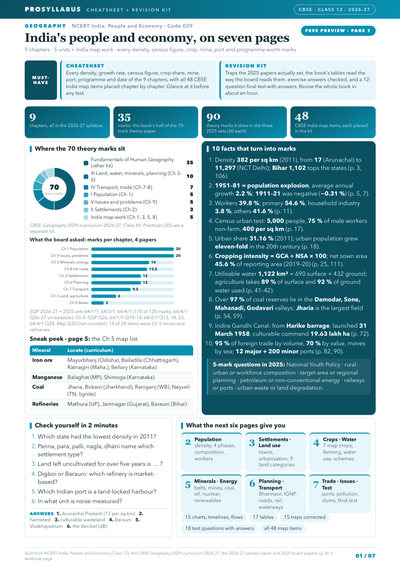
CBSE Class 12 · Geography
All 48 CBSE India map items, by chapter- Marks booster + cheatsheet: key concepts in 2 lines each, common traps
- 20 board marks in 4 papers: Population
- 14 board marks: Minerals and Energy
- 13 of the 28 map items asked: minerals
- 10 marks: Unit III, Ch 3–6
- Common traps, corrected
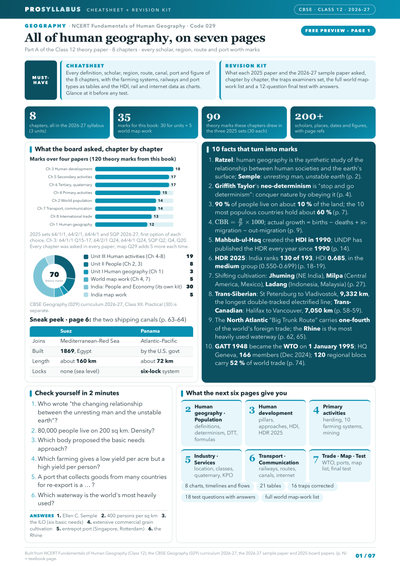
CBSE Class 12 · Geography
Human Development: 18 of 120 marks asked- Marks booster + cheatsheet: key concepts in 2 lines each
- 17 of 120 marks each: industry, services
- 15 of 120 marks: Primary Activities
- 14 of 120 marks: Transport
- 5 marks: world map work
- HDI, rail and internet data as charts
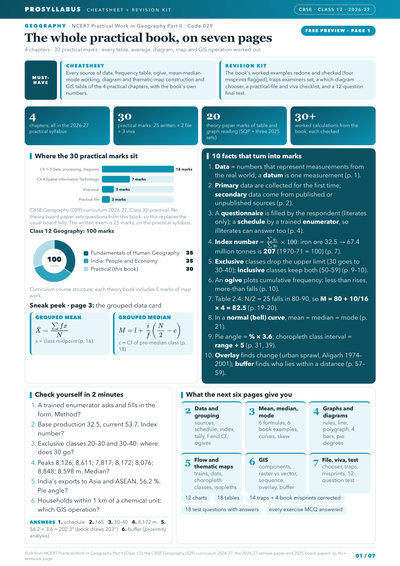
CBSE Class 12 · Geography
30 practical marks: where each one sits- Marks booster + cheatsheet: key concepts in 2 lines each, common traps
- 18 marks: Ch 1–3, data and diagrams
- 7 marks: GIS, Ch 4
- Common traps that cost marks, listed
- 5 marks: file and viva
- Mean, median and mode, fully worked
Summary
Environmental pollution results from the release of substances and energy from the waste products of human activities, and is classified by the medium of transport into air, water, land and noise pollution. Water pollution arises mainly from industry, along with agriculture and cultural activities, when effluents, chemicals and wastes deteriorate water quality and exceed its self-purifying capacity; the Yamuna and the Ganga are among the most polluted rivers, and the Namami Gange Programme works to clean the Ganga. Air pollution adds contaminants such as oxides of sulphur and nitrogen, carbon monoxide and lead from burning fossil fuels, mining and industry, causing respiratory and other diseases, smog and acid rain. Noise pollution from traffic, industry, aircraft and loudspeakers is location-specific and declines with distance. Urban waste disposal is a serious problem because growing solid waste from households and industries is often left uncollected, creating health hazards, while industrial waste dumped in rivers pollutes water. Rural-urban migration, driven by push and pull factors, swells city populations and the poor often bypass small cities for mega cities, creating slums such as Dharavi with dilapidated housing, poor sanitation and social exclusion. Land degradation through soil erosion, waterlogging, salinity and alkalinity reduces productive capacity and creates wastelands; watershed management with community participation, as in Jhabua district, helps restore land and livelihoods.