Deep Water
Class 12 English · Flamingo · Chapter 3
Visual story
Watch as storyTap a card to open it full-screen — swipe through like a story.
163 members in the CBSE community
View all










CBSE Class 12 · English Core
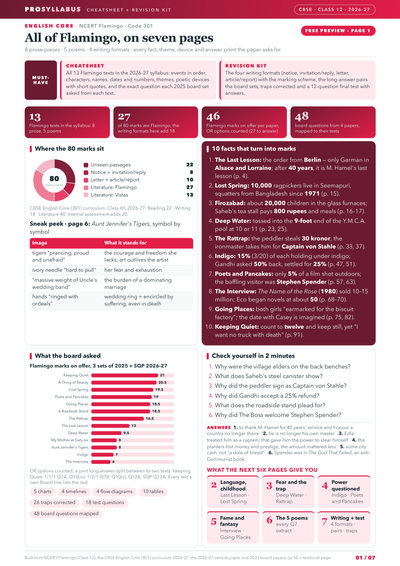
All 13 Flamingo texts, with what 2025 asked- Marks booster + cheatsheet: key concepts in 2 lines each, common traps
- 5 poems: Q7 is always one of these
- 4 writing formats, 18 marks
- Common traps, corrected
- 8 prose pieces: events, characters, themes
- Poetic devices with short quotes
CBSE Class 12 · English Core
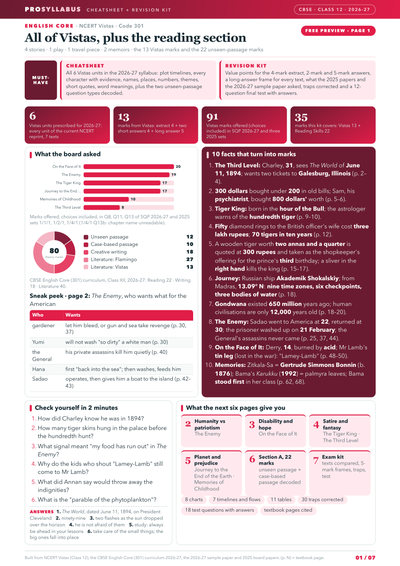
13 Vistas marks + 22 unseen-passage marks- Marks booster + cheatsheet: key concepts in 2 lines each, common traps
- 12 marks: unseen passage Q1, decoded
- 10 marks: case-based passage Q2, decoded
- Common traps that cost marks, listed
- Every character, with evidence and quotes
- 7 texts: plot timelines for each
The story in short
This autobiographical excerpt from 'Of Men and Mountains' by William O. Douglas describes how, as a young boy, the author nearly drowned and developed a deep, lasting fear of water, and how he finally conquered it. The fear began when, aged three or four, he was knocked down by waves at a California beach. Later, at the Y.M.C.A. pool in Yakima, a big eighteen-year-old boy tossed the ten-or-eleven-year-old Douglas into the deep end as a joke. He sank to the bottom three times, experiencing waves of stark, paralysing terror, and was finally rescued, half-drowned and traumatised. This misadventure left him with a haunting fear of water that ruined his fishing, boating and swimming for years. As an adult, determined to overcome it, he hired an instructor who, piece by piece, built him into a swimmer over several months — teaching him to exhale under water, kick, and finally swim. Douglas then tested himself repeatedly in lakes and rivers, challenging the returning terror until it fled, and at last swam across Warm Lake, shouting with joy. He draws a larger meaning from the experience: that the only thing to fear is fear itself, and that having known the terror of dying and conquered it, his will to live grew stronger. The essay shows the autobiographical narrative used to support a discussion of fear.