Financial Statements - I
Class 11 Accountancy · Financial Accounting Part II · Chapter 1
163 members in the CBSE community
View all










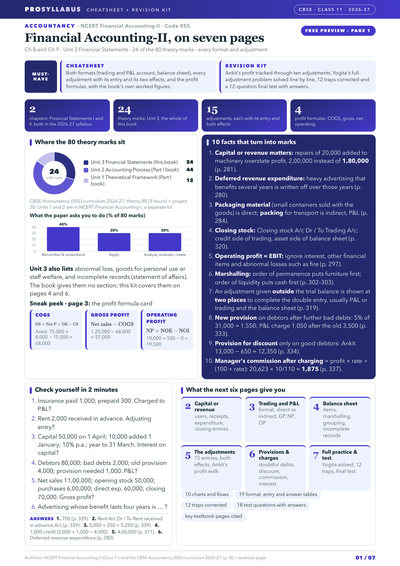
CBSE Class 11 · Accountancy
Financial statements: 24 of 80 theory marks- Marks booster + cheatsheet: key concepts in 2 lines each
- 12 exam traps, listed
- Five calculations the paper keeps asking
- Each adjustment: one entry, two effects
- Both formats: trading and P&L, balance sheet
- Yogita illustration solved line by line
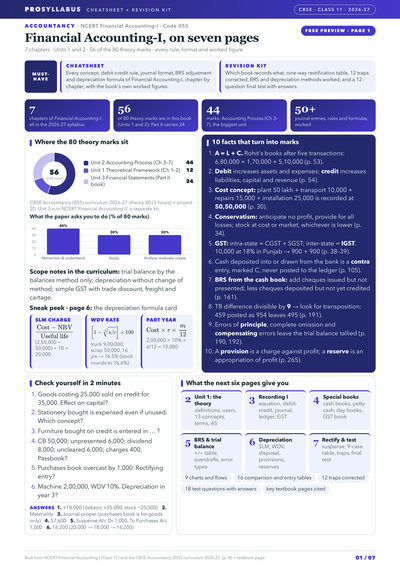
CBSE Class 11 · AccountancyTrending
Financial Accounting-I: 56 of 80 theory marks- Marks booster + cheatsheet: key concepts in 2 lines each, common traps
- 44 marks: Unit 2, recording to depreciation
- Journal formats and special purpose books
- Traps from all seven chapters
- Bank reconciliation adjustments
- Depreciation formulas, book's worked figures
Summary
Financial statements are the end products of the accounting process and communicate the profitability and financial position of a business to its stakeholders. The chapter first explains the distinction between capital and revenue items: capital expenditure benefits more than one accounting period and appears in the balance sheet, while revenue expenditure benefits only the current period and is charged to the profit and loss account; similarly, capital receipts and revenue receipts are distinguished. The two main financial statements of a sole proprietorship are the trading and profit and loss account and the balance sheet. The trading account is prepared to find the gross profit or gross loss, calculated as net sales less the cost of goods sold (opening stock plus purchases plus direct expenses less closing stock). The profit and loss account then deducts indirect expenses and adds other incomes to arrive at the net profit or net loss; operating profit is the profit from the main operations before non-operating items. Closing entries transfer the relevant balances to these accounts. The balance sheet is a statement of assets and liabilities showing the financial position on a particular date, and assets and liabilities are grouped and marshalled in a definite order, such as liquidity or permanence. The chapter also explains the opening entry, by which the assets, liabilities and capital of a previous period are brought into the books.