Effects of Exercise on the Body Systems
Class 10 Health and Physical Education · Chapter 3
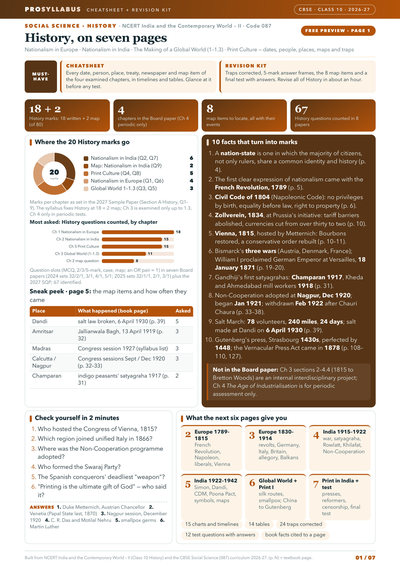
 12
12- Mathematics
- Science
- + 10 more
 4
4- History
- Economics
- + 2 more
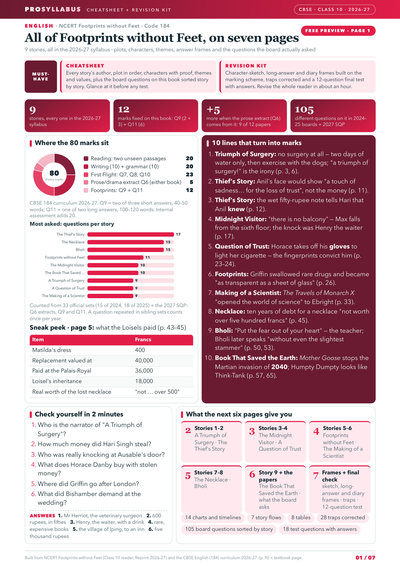 2
2- First Flight
- Footprints without Feet
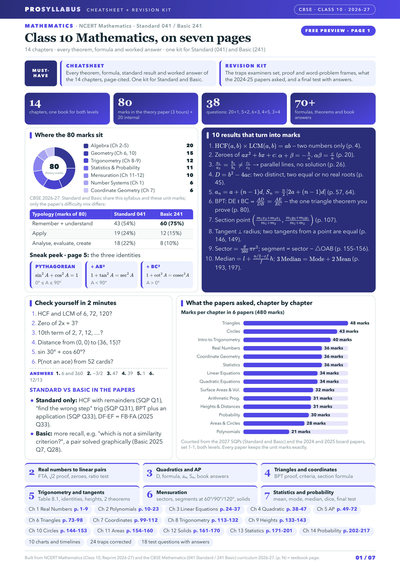
- 70+ formulas and theorems
- Board-paper chapter counts
- 24 traps corrected
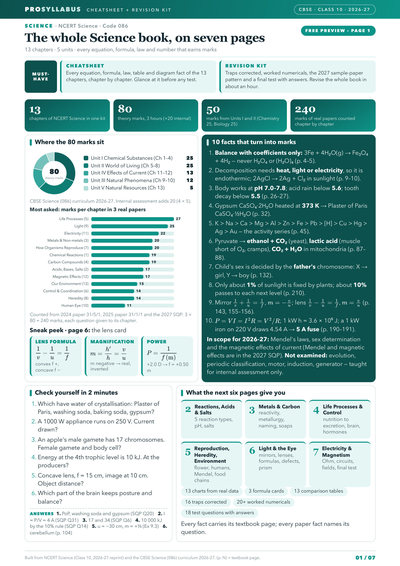
- Equations and formulas
- Book tables as charts
- Traps corrected
- Timelines
- Map list
- Traps corrected
- Full map list
- Crop and mineral tables
- Traps corrected
- Case studies
- Census tables
- Traps corrected
- Book data as charts
- Answer frames
- 18 traps corrected
- 19 texts summarised
- Poetic devices
- Writing formats
- 9 stories
- Character sketches
- Board questions
- 15 पाठ
- व्याकरण
- लेखन प्रारूप
- HTML & CSS examples
- Protocol tables
- Cyber ethics
- 17 पाठ
- व्याकरण
- लेखन प्रारूप
- 9 पाठ
- सन्धि-समास
- प्रत्यय
Summary
Regular exercise produces beneficial changes in every system of the body, and this chapter studies the most important of them. On the muscular system, exercise increases muscle size, strength, tone and endurance, and improves the supply of blood to working muscles. On the circulatory system, it strengthens the heart, increases stroke volume, lowers the resting heart rate and improves blood circulation, reducing the risk of heart disease. On the respiratory system, it increases lung capacity, the efficiency of breathing and the exchange of oxygen and carbon dioxide. Exercise also improves the working of the digestive and excretory systems, strengthens bones and joints, and benefits the nervous system by improving coordination, reaction time and mental alertness. The chapter distinguishes immediate (short-term) effects, such as faster heartbeat and breathing, from long-term effects, such as a stronger heart and greater endurance, and concludes that regular physical activity keeps the body systems healthy and efficient throughout life.