AISSEE 2026: Answer Key, Result Date, and E-Counselling Process
What to do after Sainik School Entrance Exam 2026: A Step-by-Step Guide
Read articleUseful ideas for studying better, choosing wisely and understanding the people behind remarkable academic journeys.
What to do after Sainik School Entrance Exam 2026: A Step-by-Step Guide
Read article
Planning for DU? Everything You Need to Know About CUET 2026 Registration, Eligibility, and Seat Allocation.
Read article
Complete KEA UGCET 2026 Guide for Engineering, Pharmacy & Agriculture
Read article
Your Complete Guide to IIFT Delhi & Kolkata Admissions via CAT 2025
Read article
Your complete guide to the CSIR UGC NET June 2026 session: Subject-wise patterns, JRF age limits, and how to apply.
Read article
Everything you need to know about the March 7 exam: New NBEMS schedule, sectional weightage, and image correction deadlines.
Read article
Everything you need for GPAT 2026: Official NBEMS updates, 30-day "War Room" strategy, and the definitive subject weightage for M.Pharm aspirants.
Read article
The CMAT 2026 exam is over! Check the latest updates on response sheets, score vs. percentile, and top MBA colleges accepting CMAT scores.
Read article
Your complete guide to IGNOU January 2026 session entrance tests: Application links, eligibility, and official deadlines.
Read article
Your complete guide to the ICAR AICE JRF/SRF (Ph.D.) 2026: New 120-question pattern, fellowship rates, and subject-wise syllabus.
Read article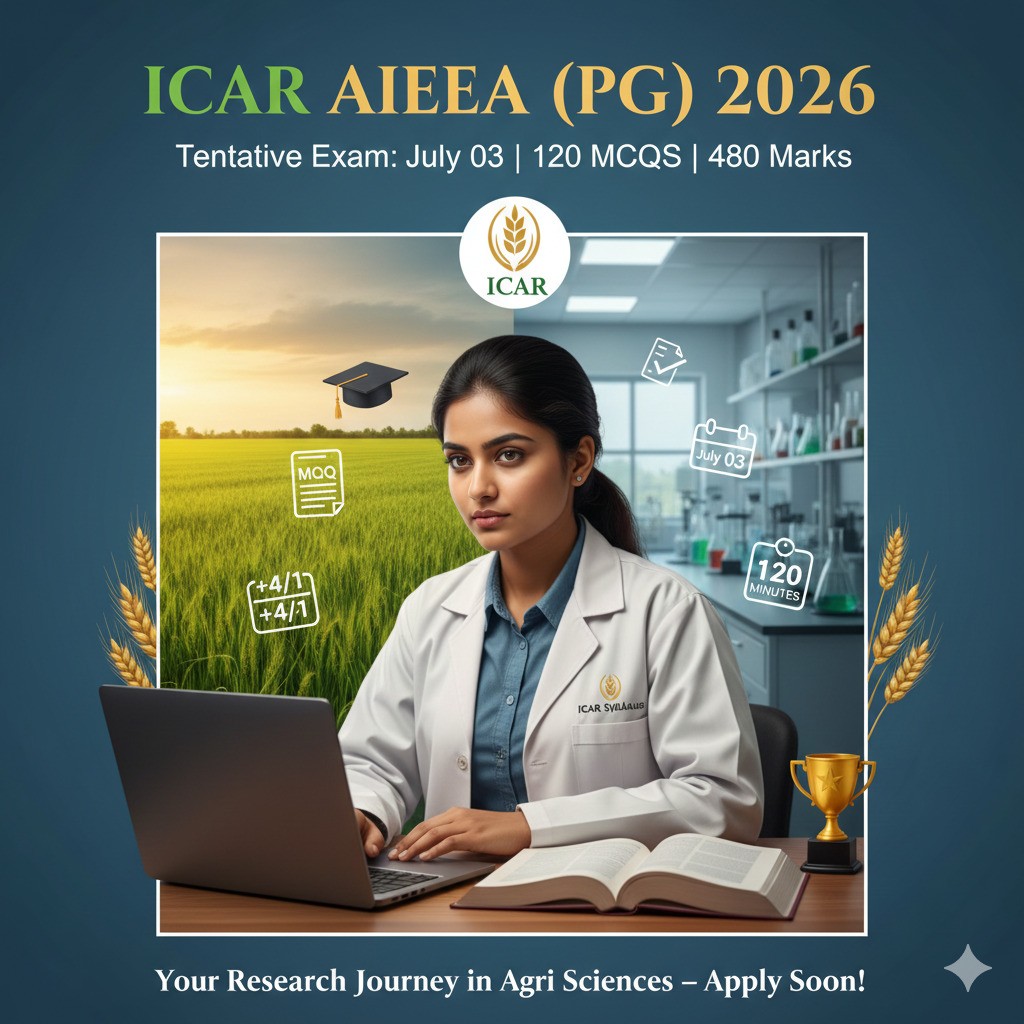
A complete roadmap for ICAR PG 2026: Eligibility, 120-minute CBT pattern, and key registration links.
Read article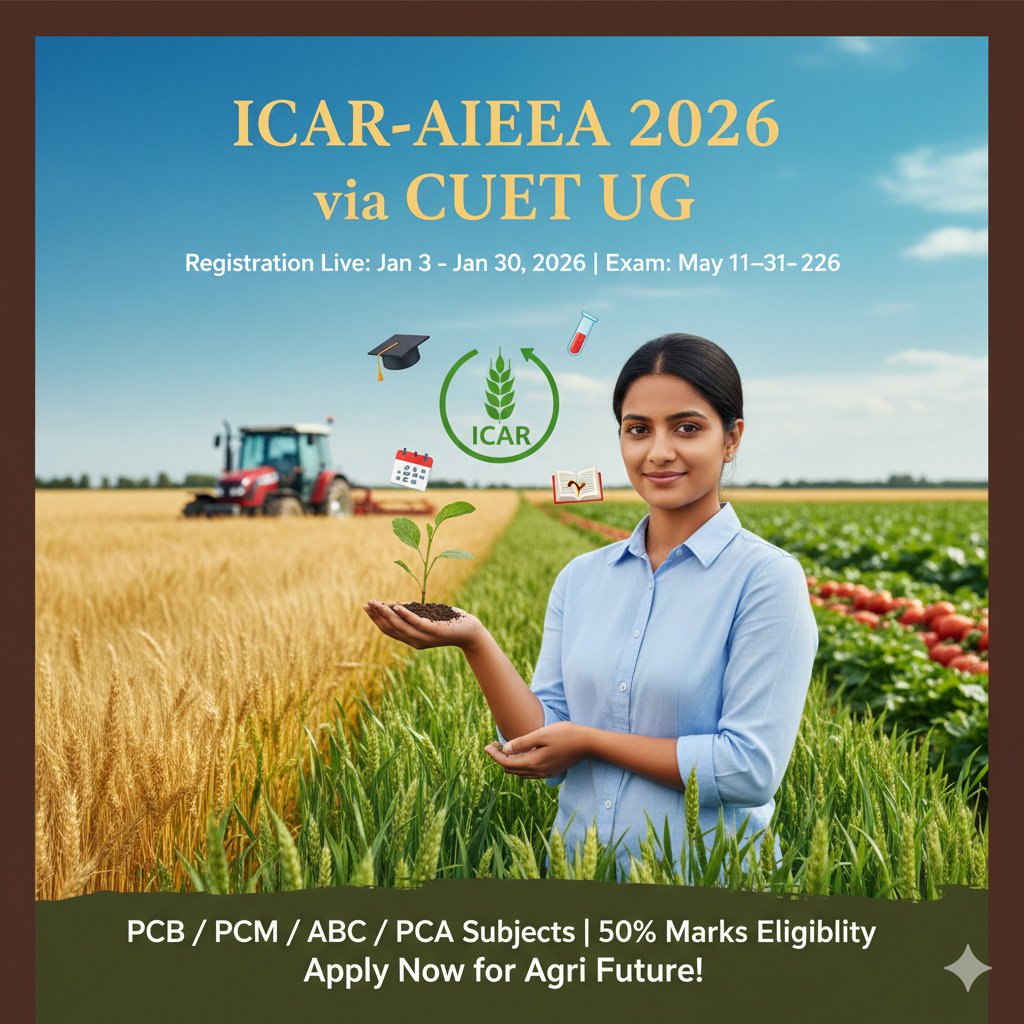
Complete guide to ICAR Agriculture admissions 2026: Eligibility, 13 available degree programs, and step-by-step CUET registration.
Read article
Everything you need to know about the 2026 Hotel Management entrance exam: New 120-question format, eligibility, and step-by-step application.
Read article
A comprehensive guide to Jawaharlal Nehru University admissions 2026 for BA, MA, M.Tech, and PhD programs.
Read article
Your complete guide to NTA AIAPGET 2026 registration timelines, internship cut-off dates, and exam patterns for Ayurveda, Homoeopathy, Siddha, and Unani.
Read article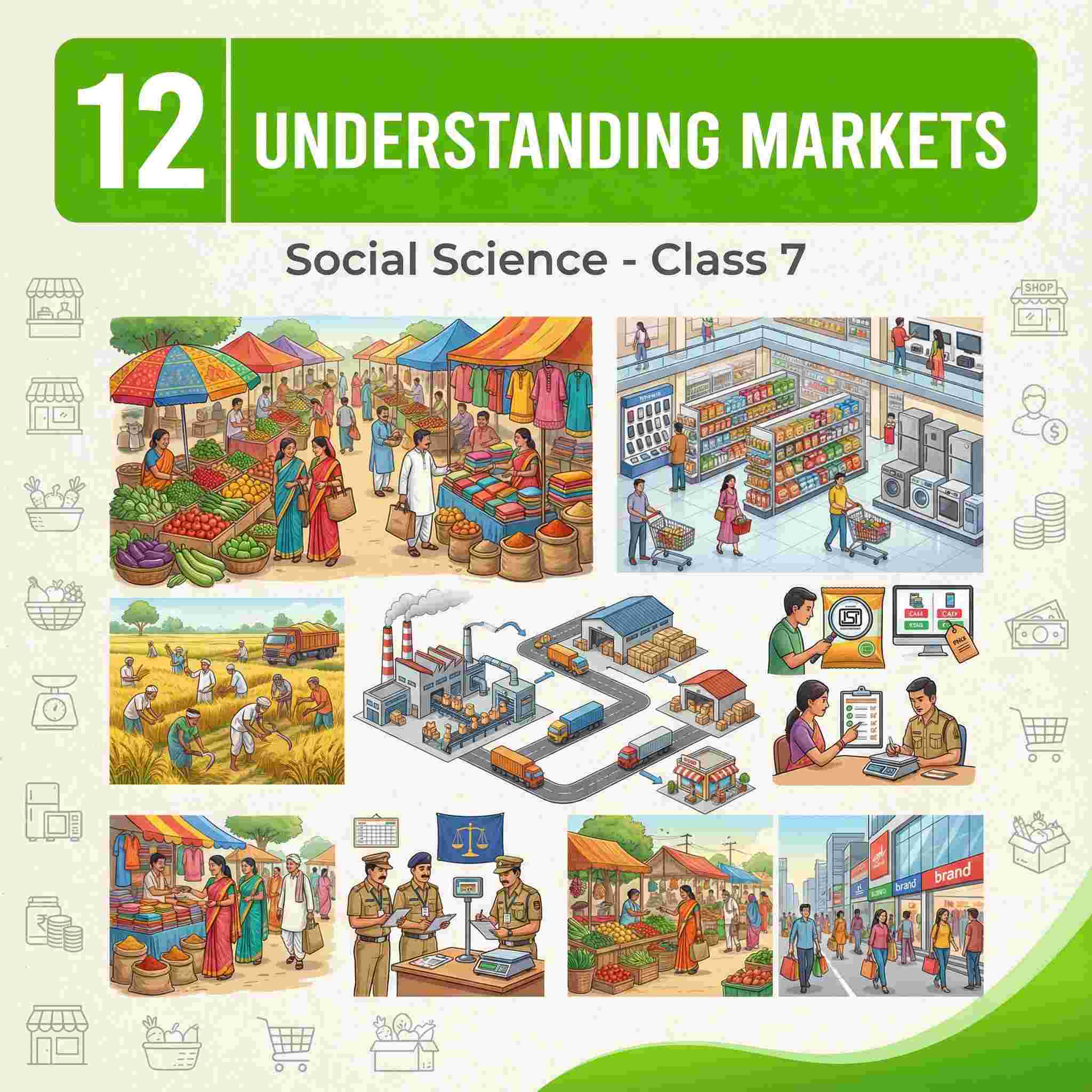
Complete Chapter 12 guide: meaning of markets and why people need them, Hampi Bazaar as a historic market example, key features of any market (buyers, sellers, negotiation and price), how demand and supply interact to fix a “just right” price, different kinds of markets around us (weekly haats, local shops, malls, online/e‑commerce), how goods move from producers to consumers, and the role of government rules and consumer awareness in keeping markets fair, with summary, Q&A, extra questions and quiz for CBSE Exam
Read article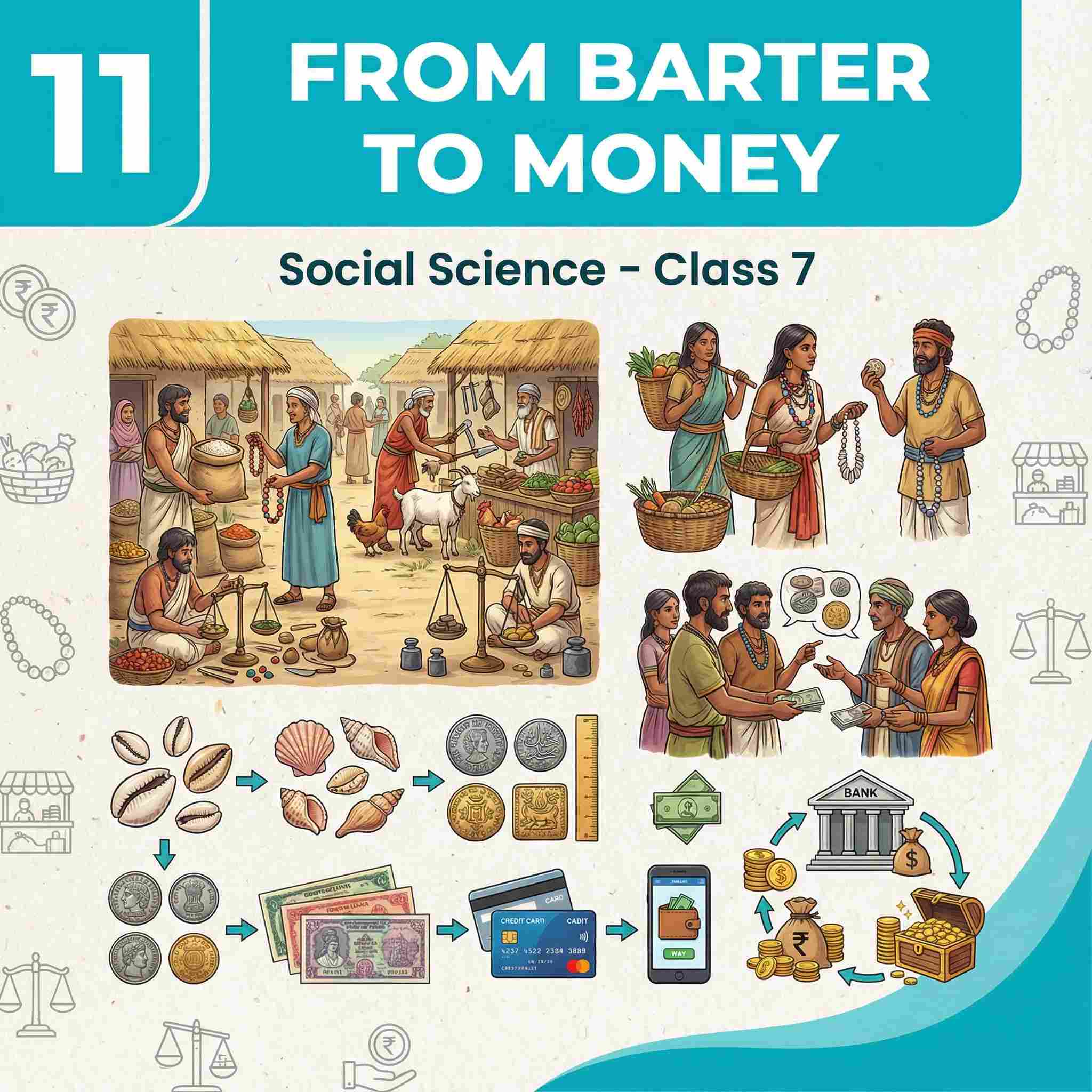
Complete Chapter 11 guide: how people exchanged goods in the barter system, real problems like double coincidence of wants, lack of standard value, divisibility, portability and durability, why money was invented as a common medium of exchange, early “money” objects (cowries, salt, cattle, metal objects, Rai stones, feather coils), and how modern money includes coins, notes and digital payments, with story-based examples (farmer, Junbeel Mela) plus summary, Q&A, extra questions and quiz for CBSE Exam
Read article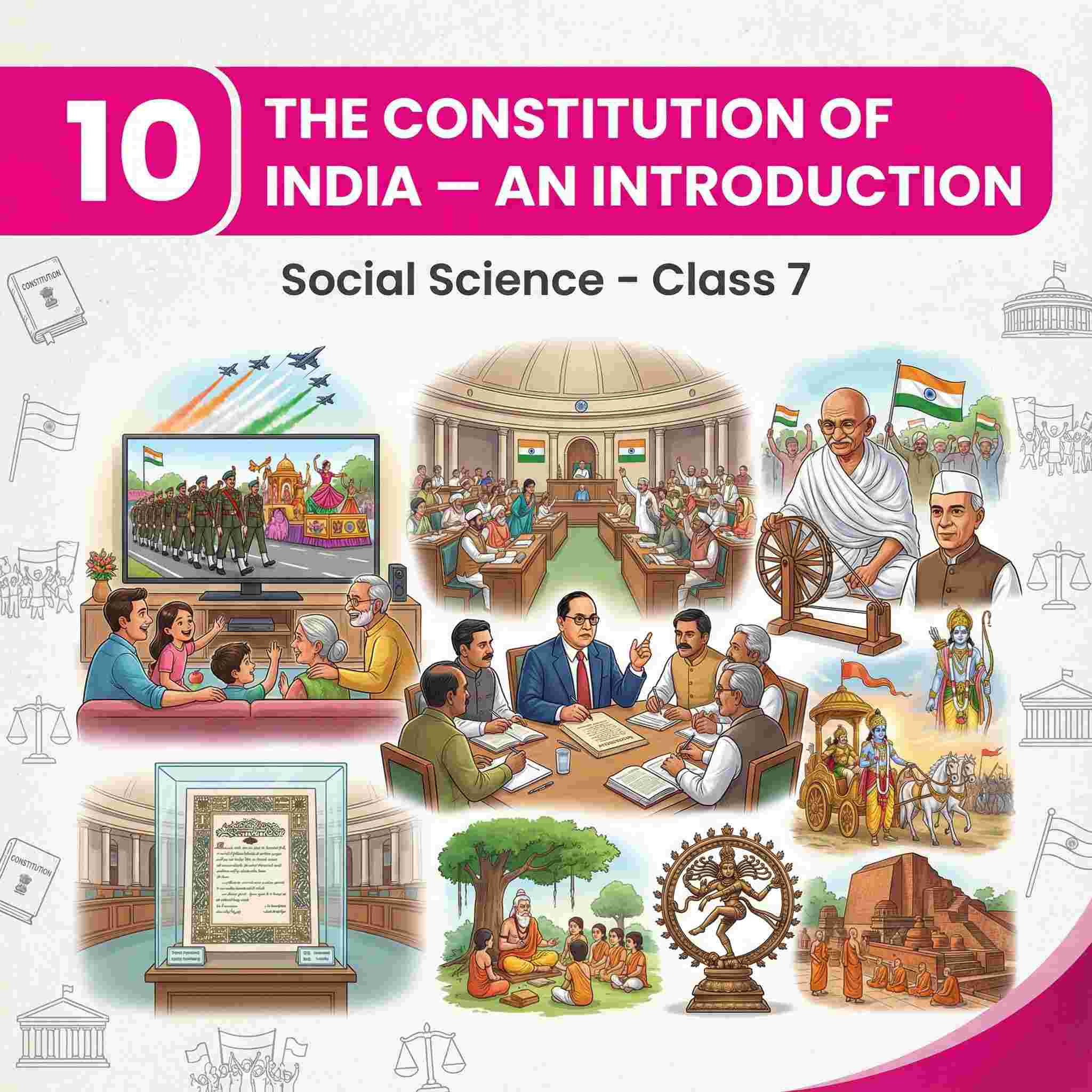
Complete Chapter 10 guide: what a constitution is and why every country needs one, Constitution as the “rulebook” for the nation (kabaddi example), structure of the Indian Constitution (largest written constitution, parts and schedules), key contents—values and ideals, rights and duties, political system, organs of government and their powers, making of the Constitution by the Constituent Assembly (1946–49) with Dr Rajendra Prasad and Drafting Committee under Dr B.R. Ambedkar, and how freedom struggle and civilisational heritage shaped its core principles, with summary, Q&A, extra questions and quiz for CBSE Exam
Read article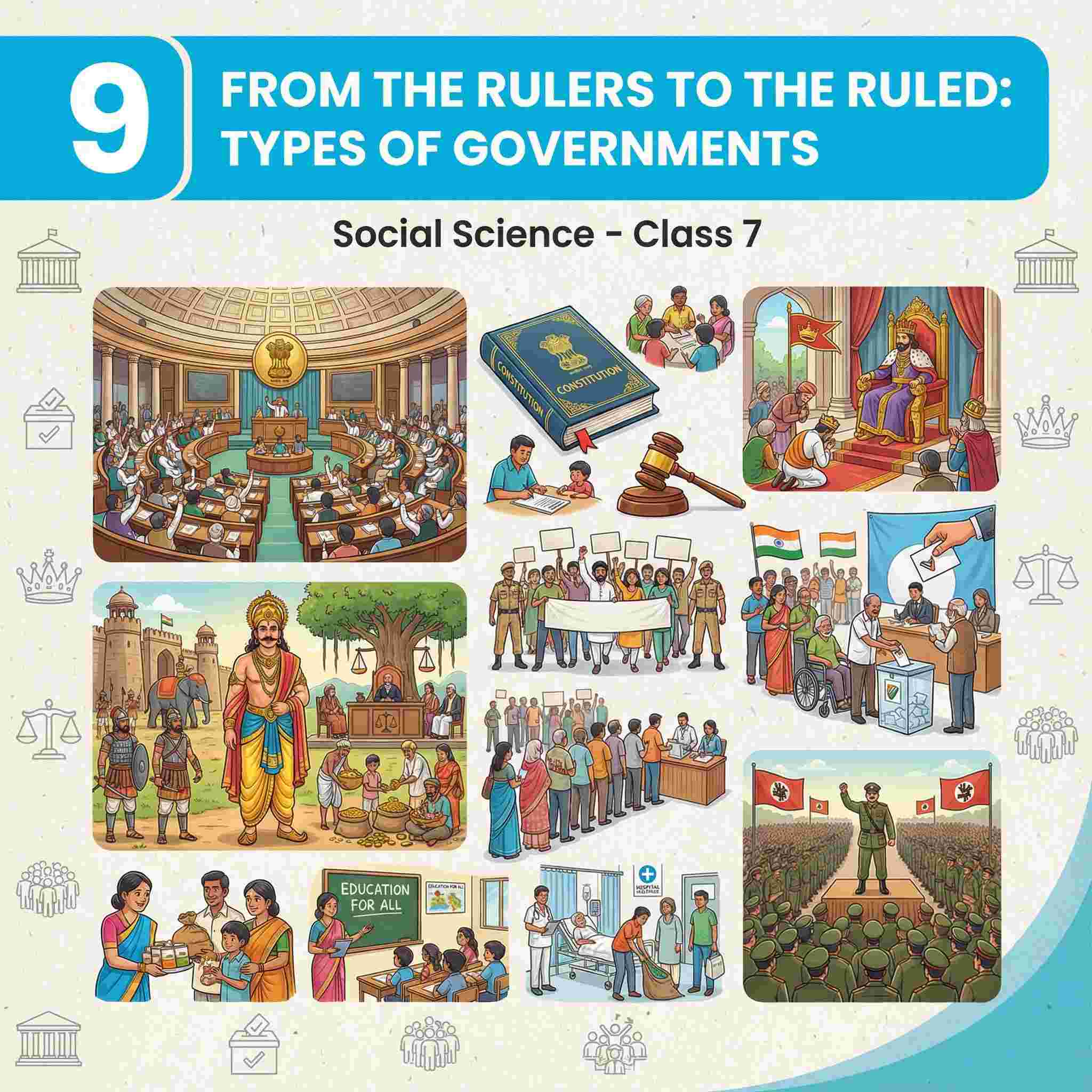
Complete Chapter 9 guide: what government is and what it does, detailed meaning of democracy as “rule of the people” with school committee example, three functions of government (legislative, executive, judiciary), key differences between systems (who gives power, how govt is formed, parts of govt, aims), core democratic principles (equality, freedoms, representation, universal adult franchise, independent judiciary, rights), and overview of forms like direct democracy, representative democracy, monarchy and theocracy, with exam-focused summary, Q&A, extra questions and quiz for CBSE Exam
Read article
Complete Chapter 8 guide: idea of sacredness and tirtha, sacred sites of different religions (mosques, churches, synagogues, fire temples, stupas, takhts, temples), Buddhist, Jain, Sikh and Hindu pilgrimage traditions, tīrthayātrā as inner and outer journey, long‑distance routes like Rameswaram–Haridwar, Sabarimala trek and Pandharpur wārī, and how centuries of pilgrimages turned India’s geography into a shared sacred space and strengthened “one country, one culture”, with summary, Q&A, extra questions and quiz for CBSE Exam
Read article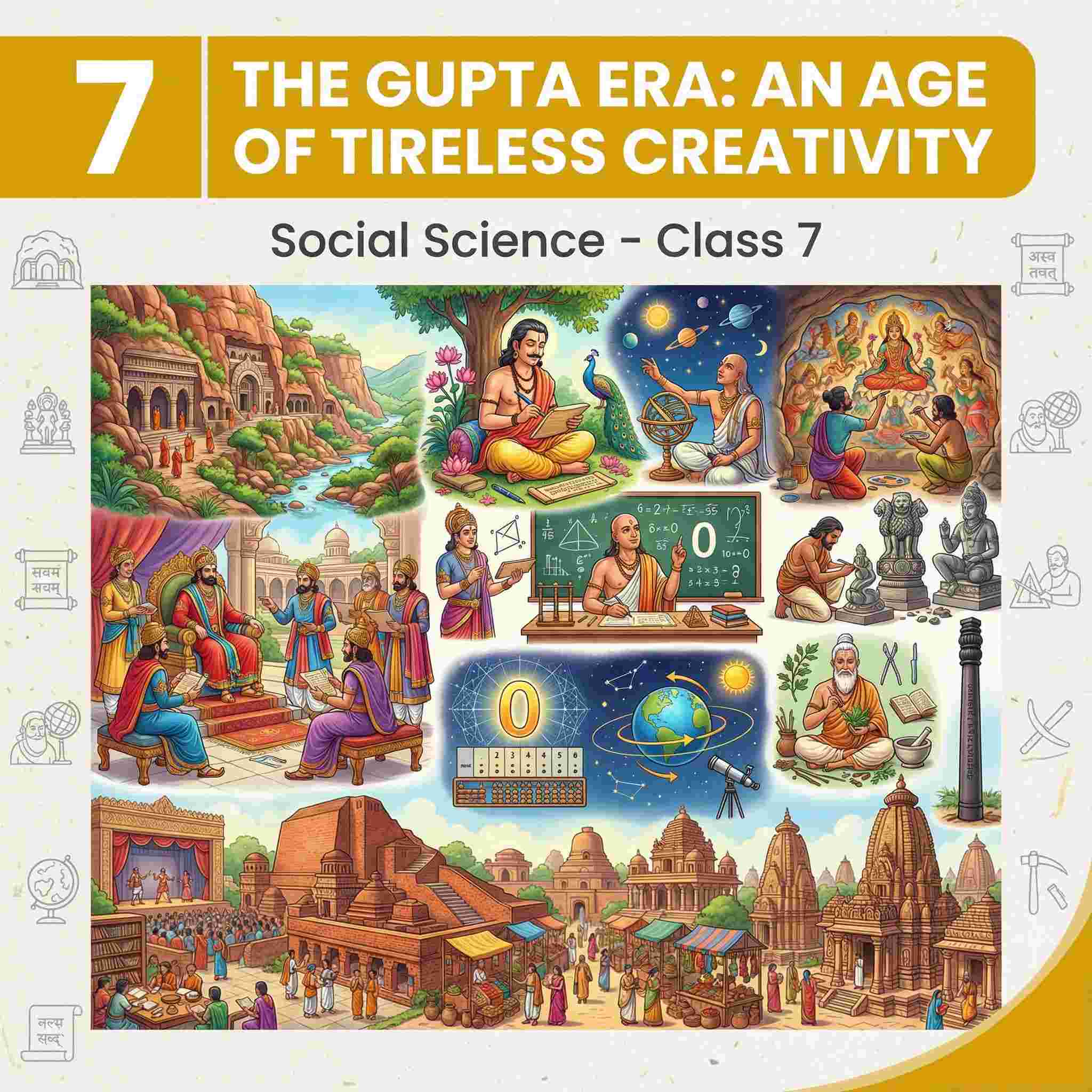
Complete Chapter 7 guide: rise of the Gupta dynasty after the Kushanas, expansion under Chandragupta I and the warrior‑king Samudragupta (Prayaga prashasti, veena coin, aśvamedha), Chandragupta II Vikramaditya and the Iron Pillar inscription, contemporary kingdoms Vakataka, Pallava and Kamarupa, flourishing of art, architecture, metallurgy, astronomy, mathematics and classical Sanskrit literature (Kalidasa), with timeline, maps, summary, NCERT-style Q&A, extra questions and quiz for CBSE Exam
Read article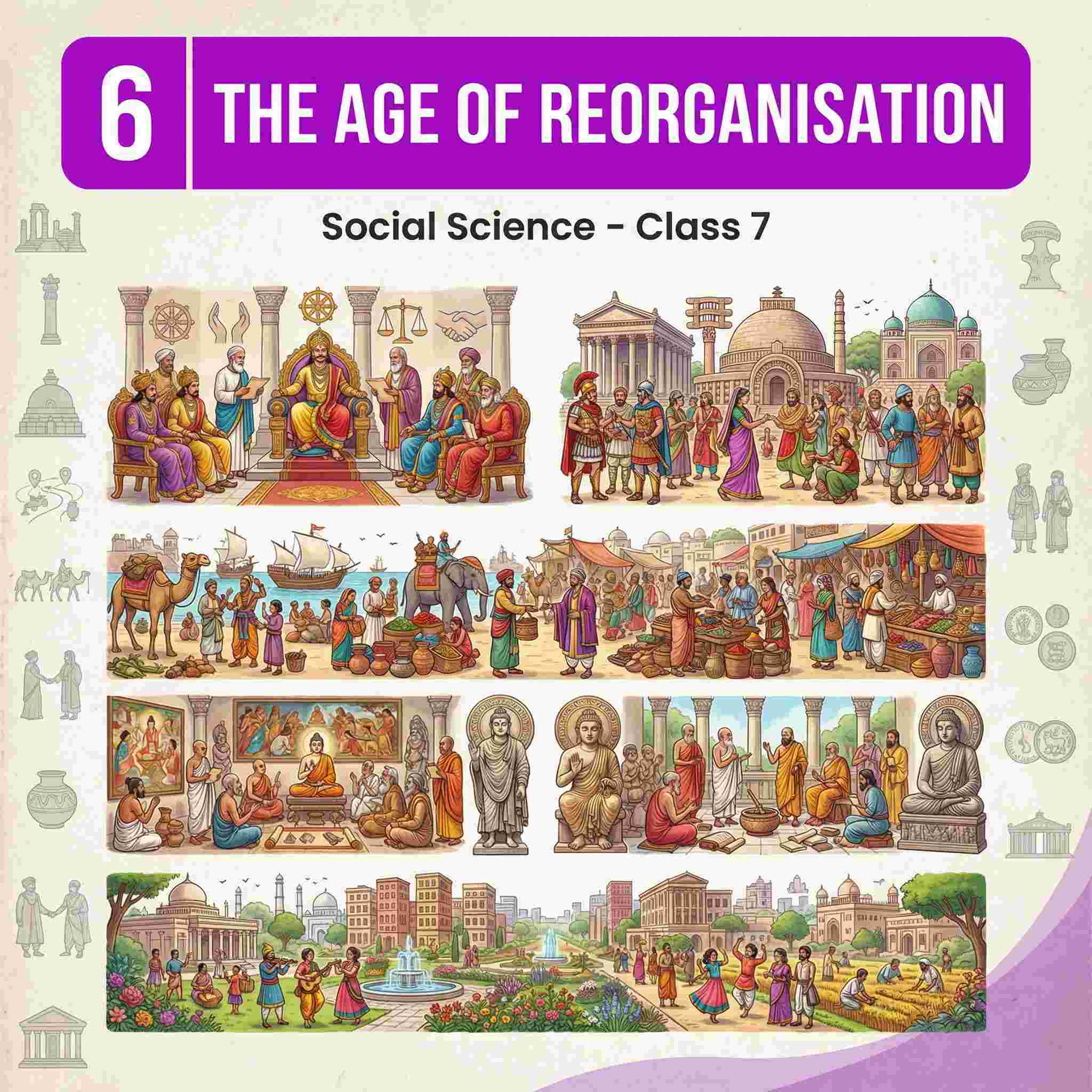
Complete Chapter 6 guide: breakup of the Mauryan empire and rise of many new kingdoms, why this period is called the “Age of Reorganisation”, Shunga rule and aśvamedha yajña, Bharhut Stupa and early Buddhist art, Indo‑Greeks, Shakas and Kushanas entering and assimilating into Indian culture, Hathigumpha inscription of Kharavela, southern kingdoms Cheras–Cholas–Pandyas, Sangam Age literature, Karikala’s Kallanai (Grand Anicut) and trade with Romans, plus exam-focused summary, maps, Q&A, extra questions and quiz for CBSE Exam
Read article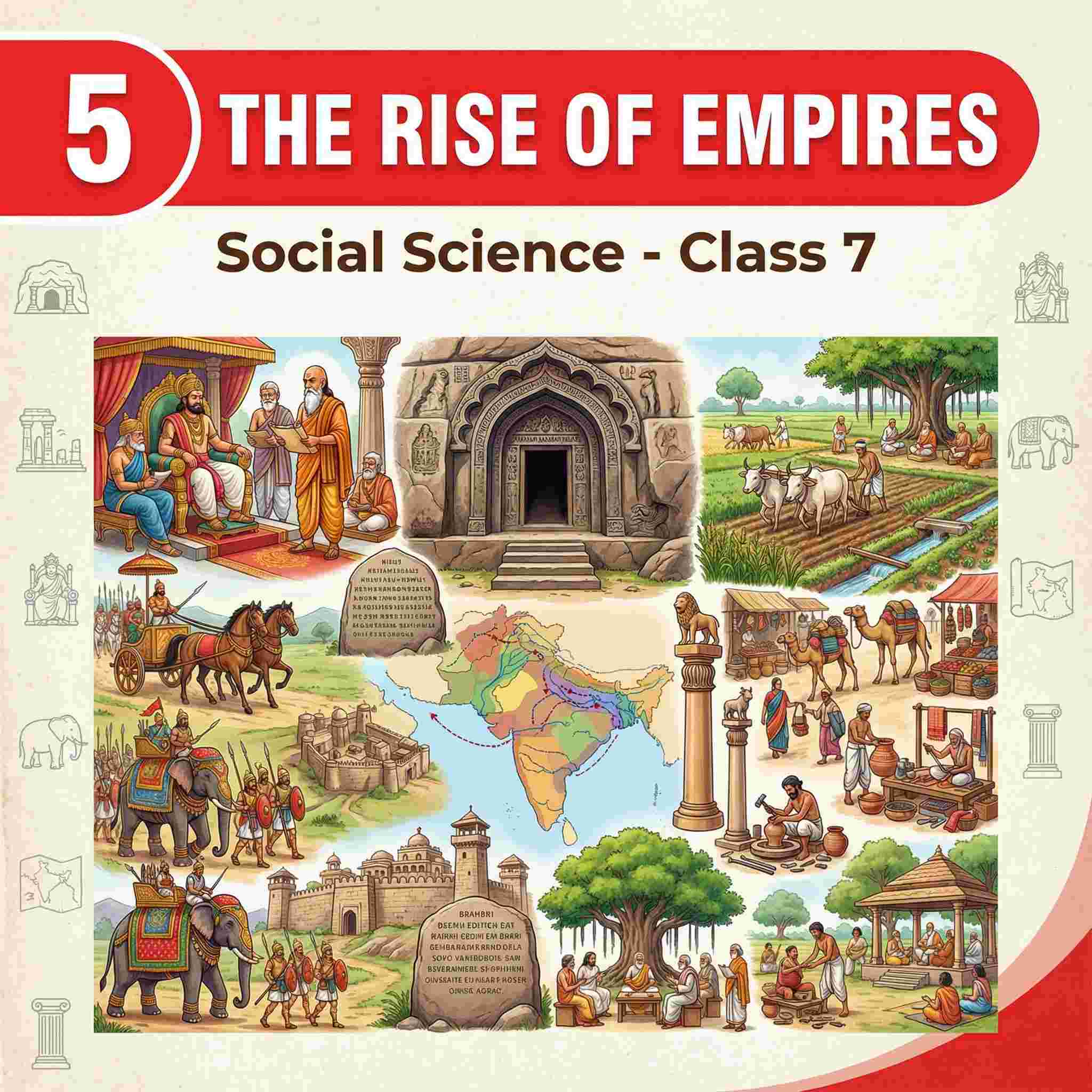
Complete Chapter 5 guide: definition of an empire (imperium, samrāj, rājādhirāja), time‑travel story tour of Pataliputra with forts, moats, caves and markets, how large empires grew from smaller kingdoms using war, resources and trade routes, key features of an empire (central authority, tributary kings, army, administration, taxes, roads and navigation, promotion of art and learning), and how empires reshaped political, economic, social and cultural life, with exam-focused summary, Q&A, extra questions and quiz for CBSE Exam
Read article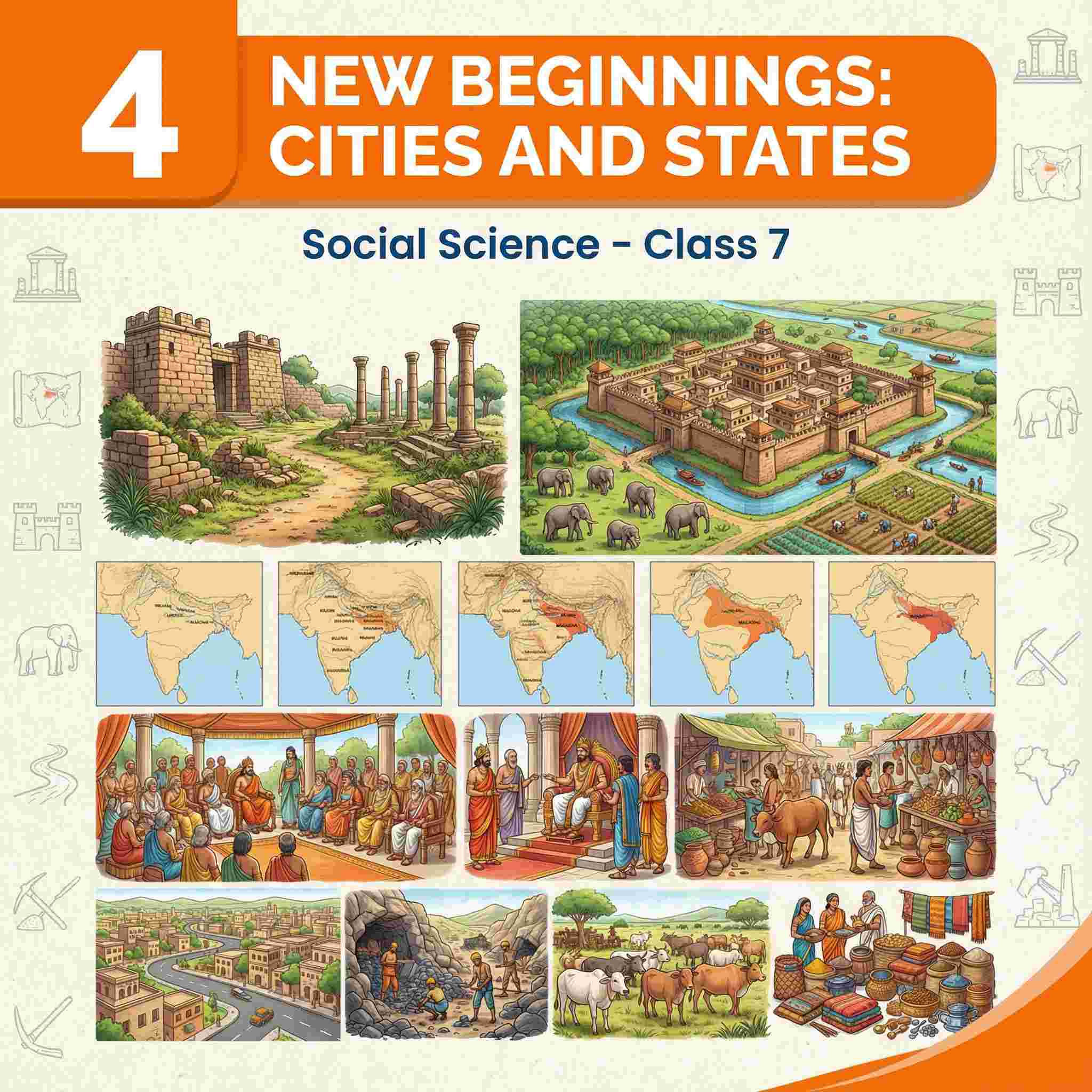
Complete Chapter 4 guide: India’s Second Urbanisation after the Harappan cities, rise of janapadas and 16 mahajanapadas in the Ganga plains, reasons for their growth (fertile land, iron, trade networks), fortified capitals with moats and narrow gateways, Kautilya’s ideal kingdom features, early democratic traditions in sabhā and samiti, gana‑sangha states like Vajji and Malla as early republics, plus exam-focused summary, maps, Q&A and quiz for CBSE Exam
Read article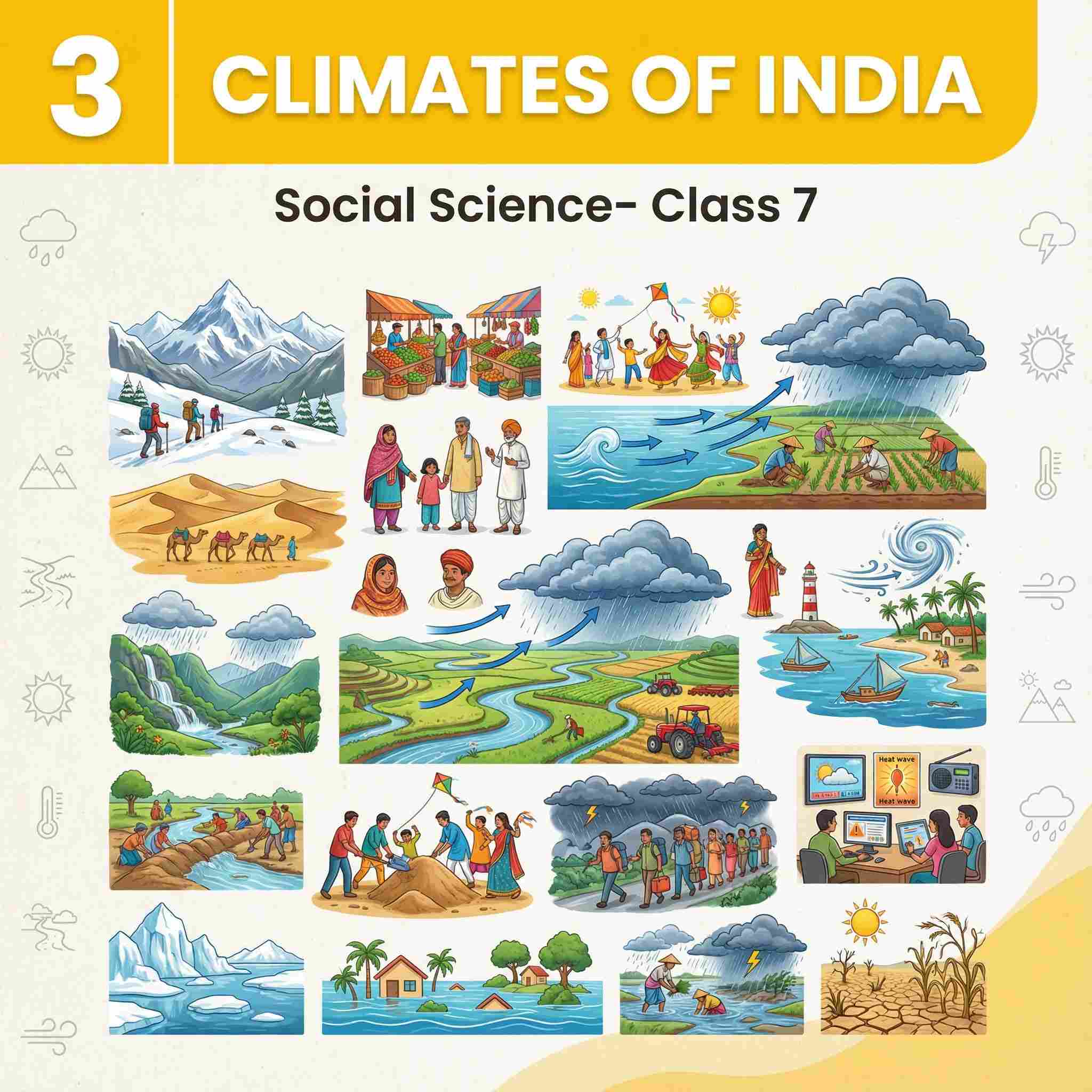
Complete Chapter 3 guide: difference between weather, seasons and climate, six Indian ritus, major climate types in India (alpine, temperate, subtropical, arid, semi‑arid, tropical wet and dry), role of latitude, sun’s rays and tropics, how climate shapes crops, clothing, festivals and daily life, and how recent human activities are changing climate, with exam-focused summary, NCERT-style questions & answers, extra questions and quiz for CBSE Exam
Read article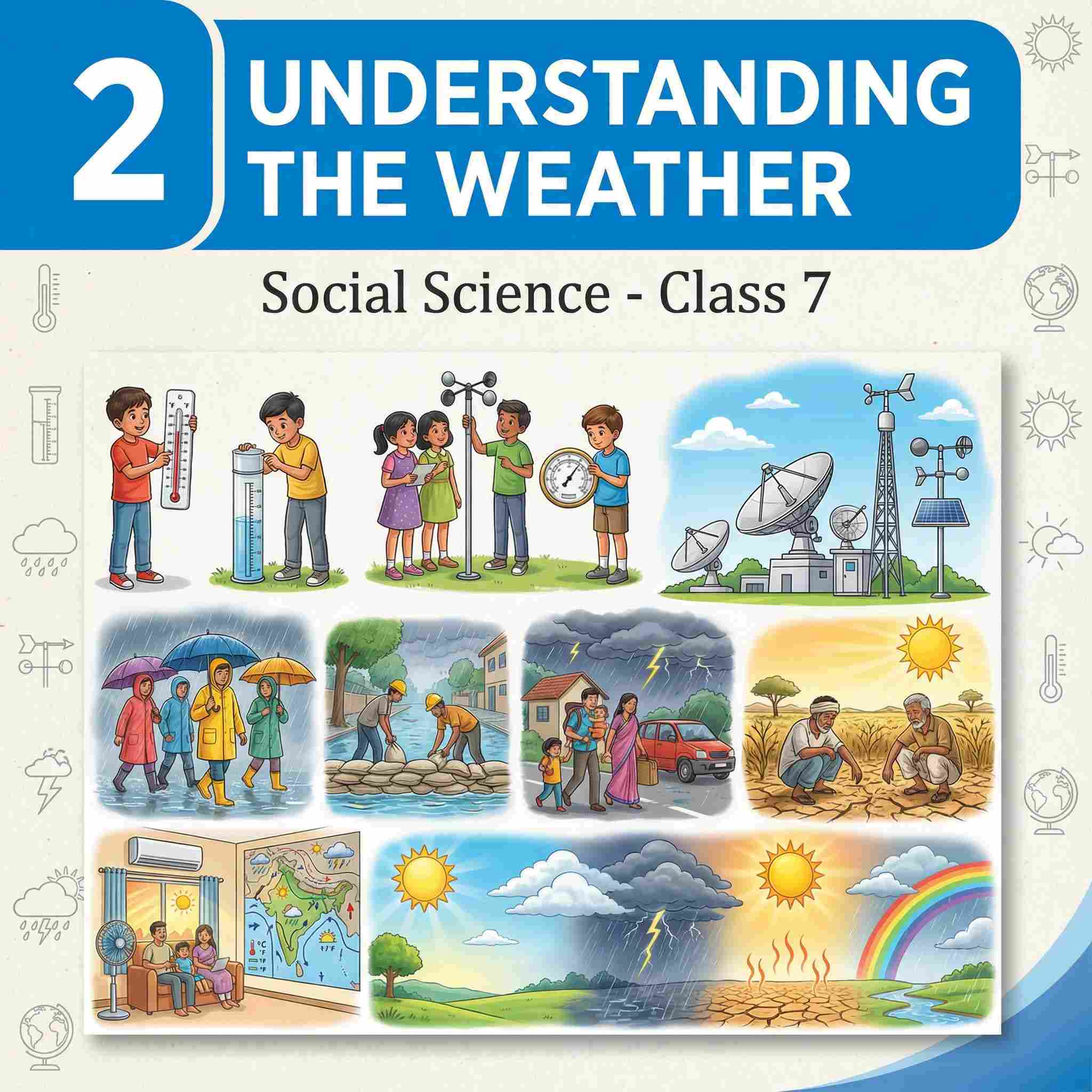
Complete Chapter 2 guide: definition of weather and atmosphere (troposphere), five elements of weather (temperature, precipitation, air pressure, wind, humidity), traditional weather prediction signs (ants, frogs, pine cones), modern meteorology and India Meteorological Department, thermometers and temperature range/mean, plus exam-focused summary, NCERT-style questions and answers, MCQ/quiz and extra practice for CBSE Exam
Read article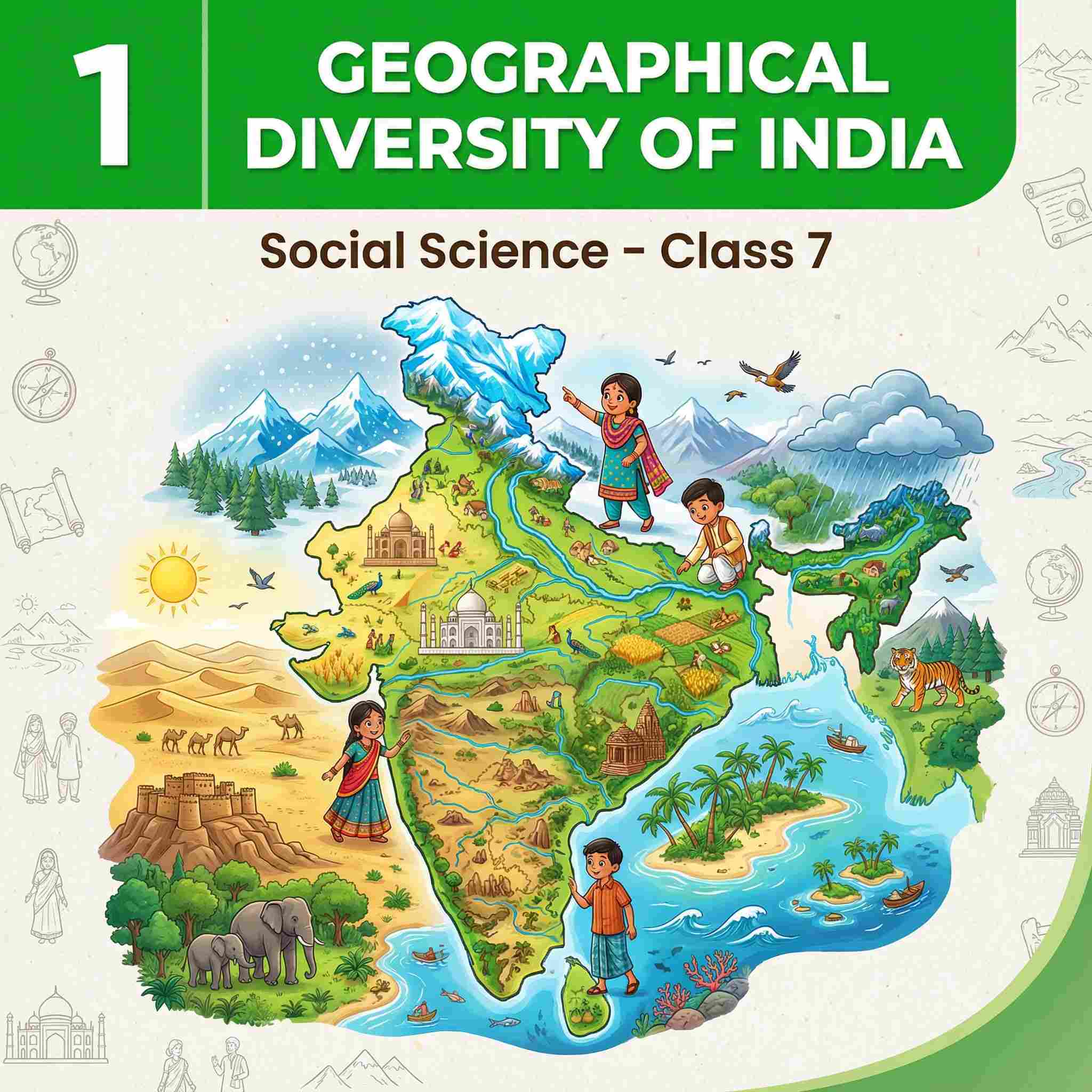
Complete Chapter 1 Guide: India's Physical Features (Himalayas: Himadri-Himachal-Shivalik, Northern Plains Ganga-Indus, Thar Desert, Peninsular Plateau Deccan, Coastal Plains, Islands Andaman Nicobar Lakshadweep), Plate Tectonics (India's Journey from Gondwana), Gaumukh Gangotri Glacier, Kath-kuni Houses, Great Himalayan National Park, Jog Falls Hydroelectricity, Rakesh Sharma Space View, Maps Latitudes Longitudes, 25+ Questions & Activities Solved CBSE Exams
Read article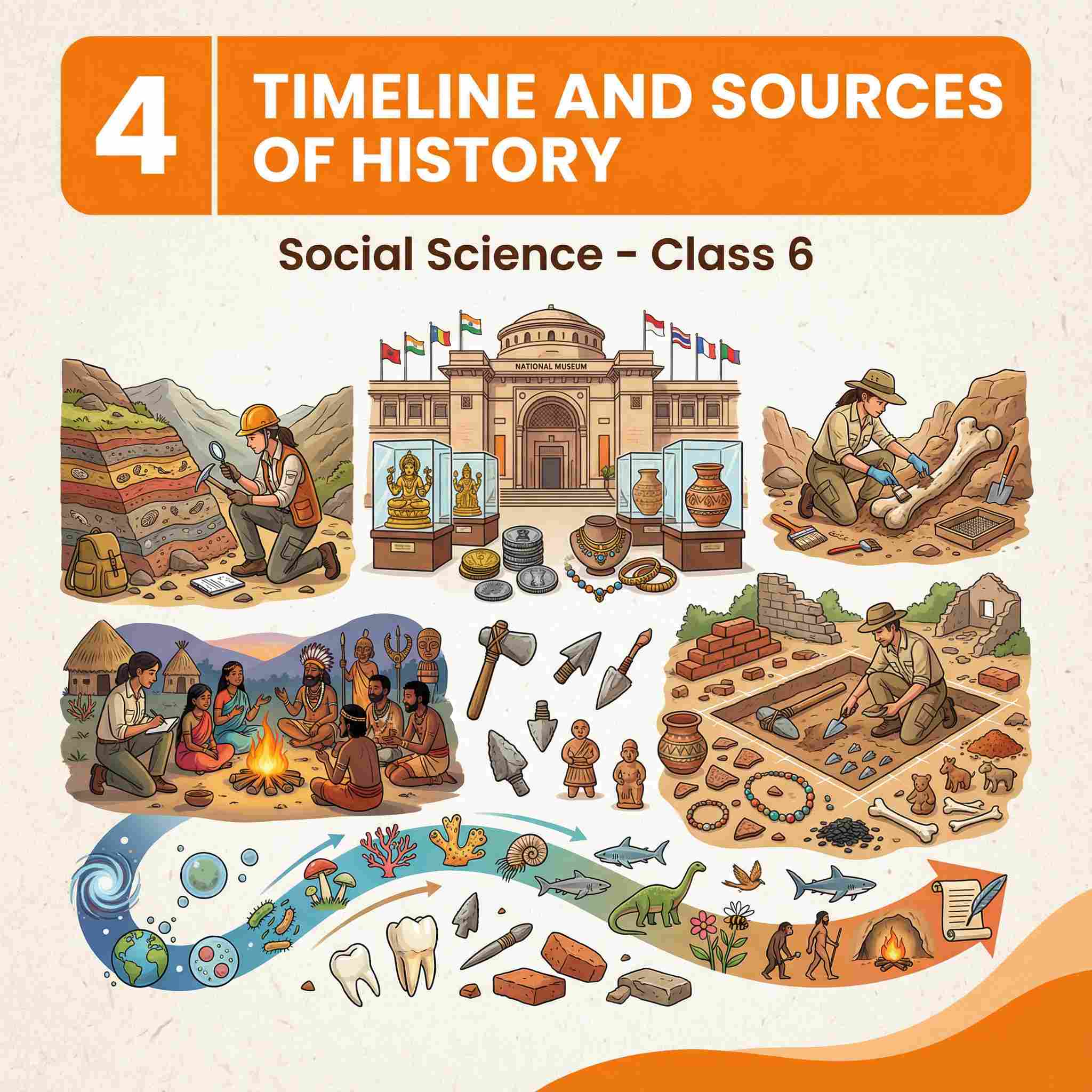
Detailed summary and explanation of Chapter 4 ‘Timeline and Sources of History’ from the NCERT Class VI Social Science textbook, covering the meaning of history and historical time, BCE/CE, centuries and millenniums, constructing and reading timelines, different sources of history (archaeological, literary, oral, artistic), roles of geologists, palaeontologists, anthropologists and archaeologists, family and local history, rock art and material remains, early human life as hunters and gatherers, the beginnings of agriculture and settled life—along with all NCERT questions, answers, activities, and projects.
Read article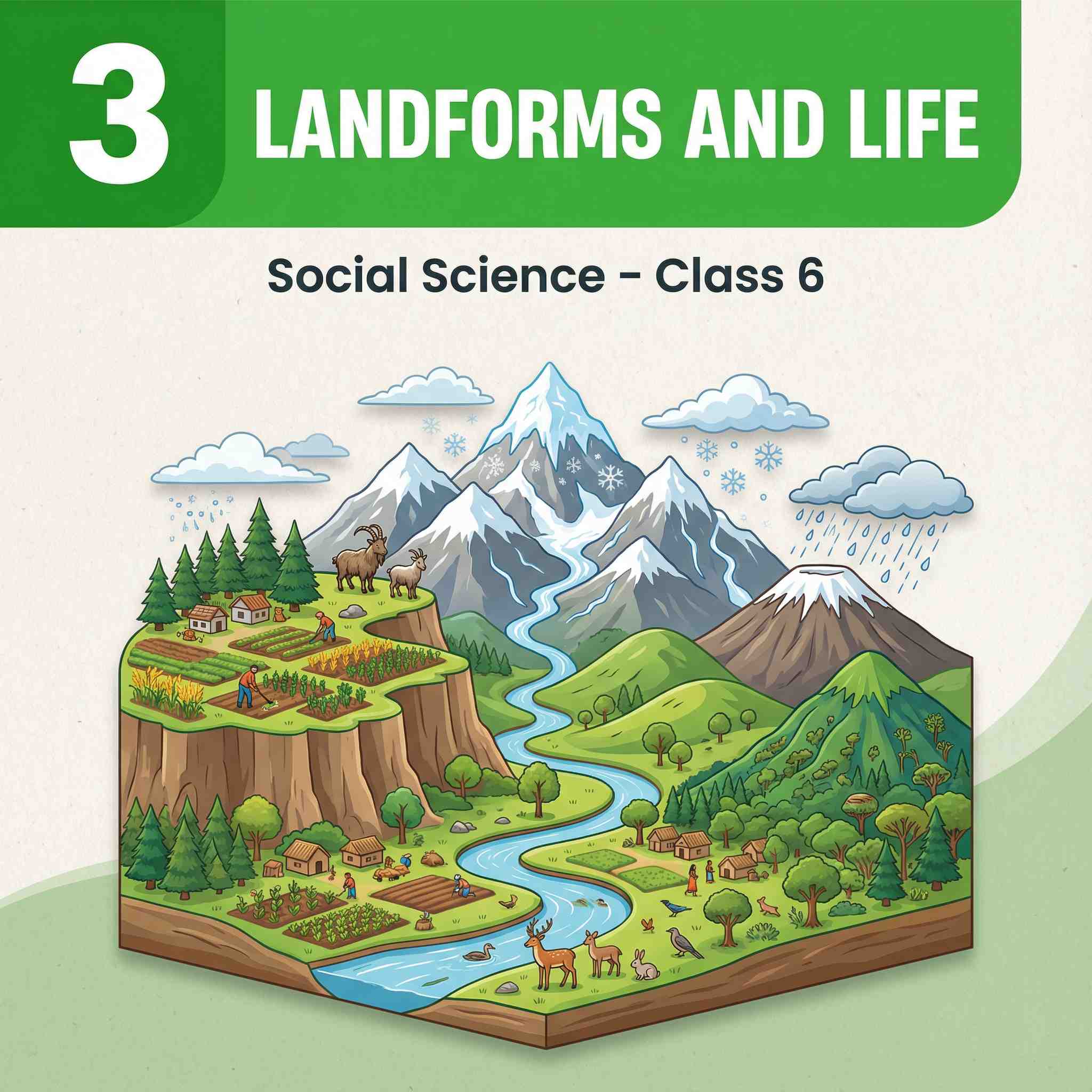
Detailed summary and explanation of Chapter 3 ‘Landforms and Life’ from the NCERT Class VI Social Science textbook, covering major landforms (mountains, plateaus, plains and deserts), their formation and characteristics, mountain ranges of the world, montane forests and mountain fauna, plateau environments and mineral resources, plains and floodplains (including the Ganga plain), links between landforms, climate, vegetation and human occupations, challenges of living in different terrains, and cultural reflections such as Himalayan hymns and the five tiņais of Sangam poetry—along with all NCERT questions, answers, activities, and map-based exercises.
Read article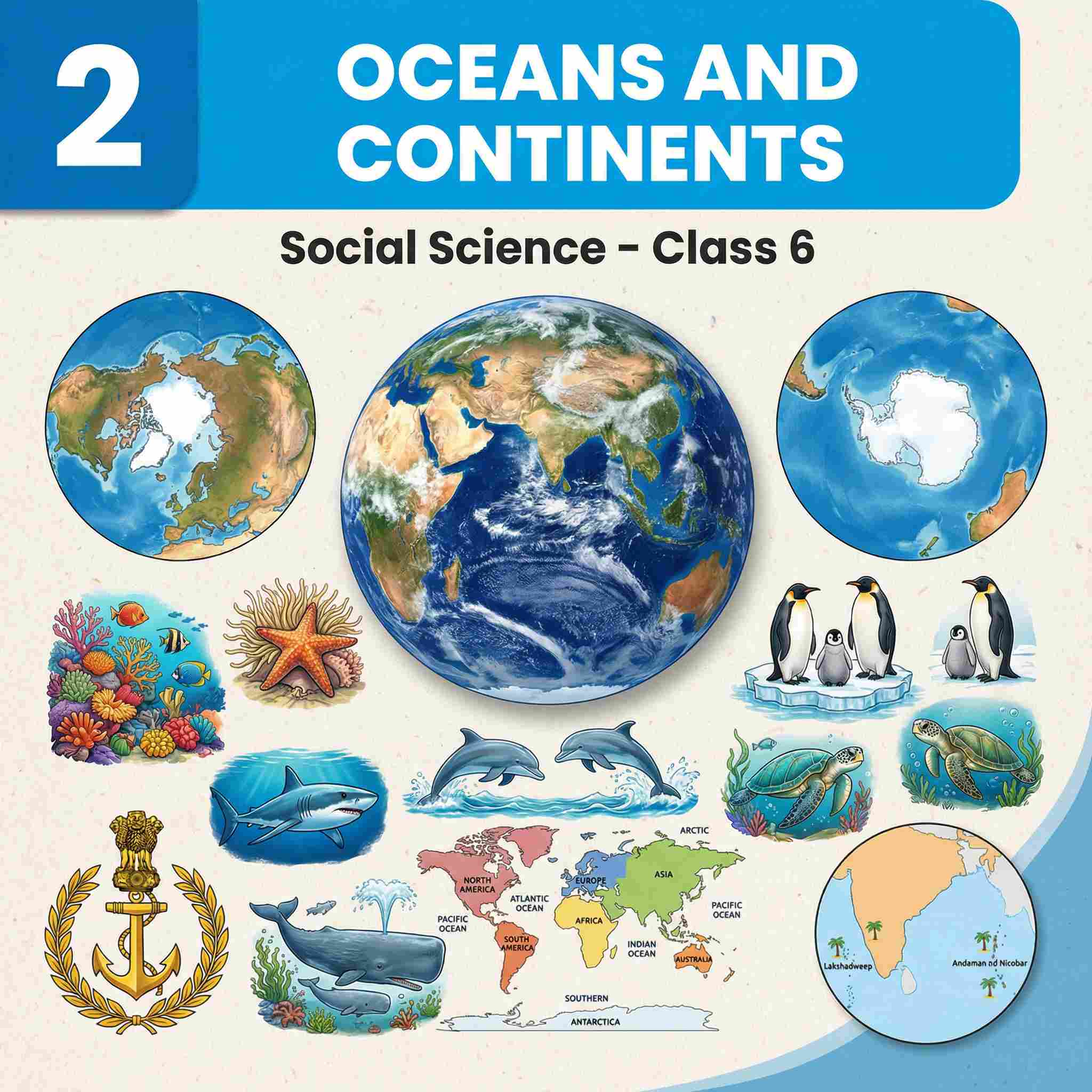
Detailed summary and explanation of Chapter 2 ‘Oceans and Continents’ from the NCERT Class VI Social Science textbook, covering Earth as the ‘blue planet’, distribution of water and land between hemispheres, definitions of oceans, seas, bays and gulfs, the five oceans and their relative sizes, marine flora and fauna, ocean-origin disasters (cyclones, tsunamis) and disaster management, the counting and relative sizes of the seven continents, major islands (including Indian island groups), and the role of oceans and continents in climate, water cycle, oxygen production, human migration, trade and culture—along with all NCERT questions, answers, activities, and map-based exercises.
Read article
Detailed summary and explanation of Chapter 1 ‘Locating Places on the Earth’ from the NCERT Class VI Social Science textbook, covering maps and their components (distance, direction, symbols), types of maps, globes, grid of latitudes and longitudes, coordinates, parallels and meridians, hemispheres, Indian and ancient Ujjain prime meridians, time zones, Greenwich Mean Time (GMT), Indian Standard Time (IST), and the International Date Line—along with all NCERT questions, answers, activities, and map-based exercises.
Read article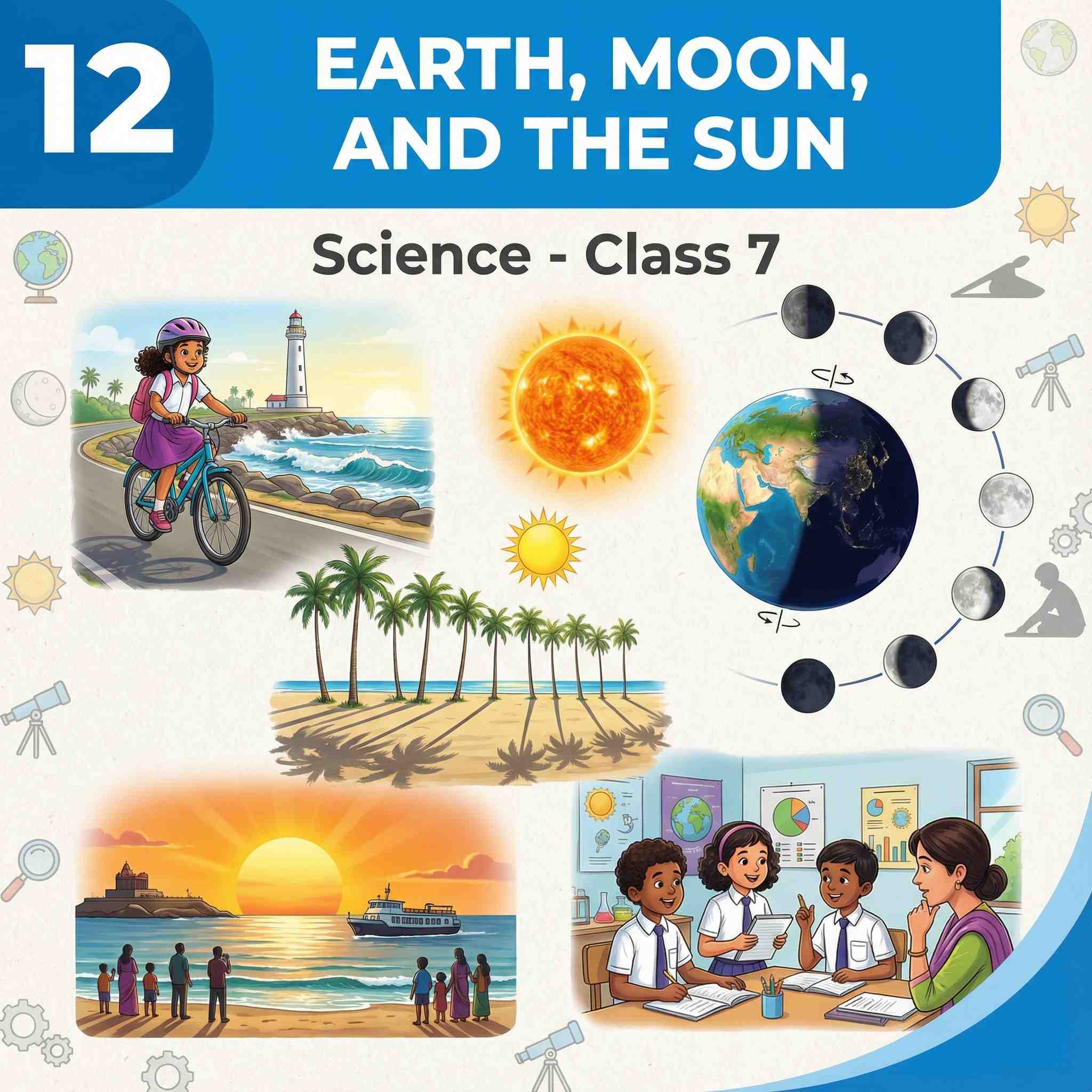
Complete Chapter 12 guide: Earth’s rotation (west to east) and 24‑hour day, day–night with globe–torch activity, revolution and year length, seasons overview, phases of the Moon and why only one side is seen, basic idea of solar and lunar eclipses, Foucault pendulum evidence of Earth’s rotation, plus NCERT-style activities, diagrams and exam questions for CBSE
Read article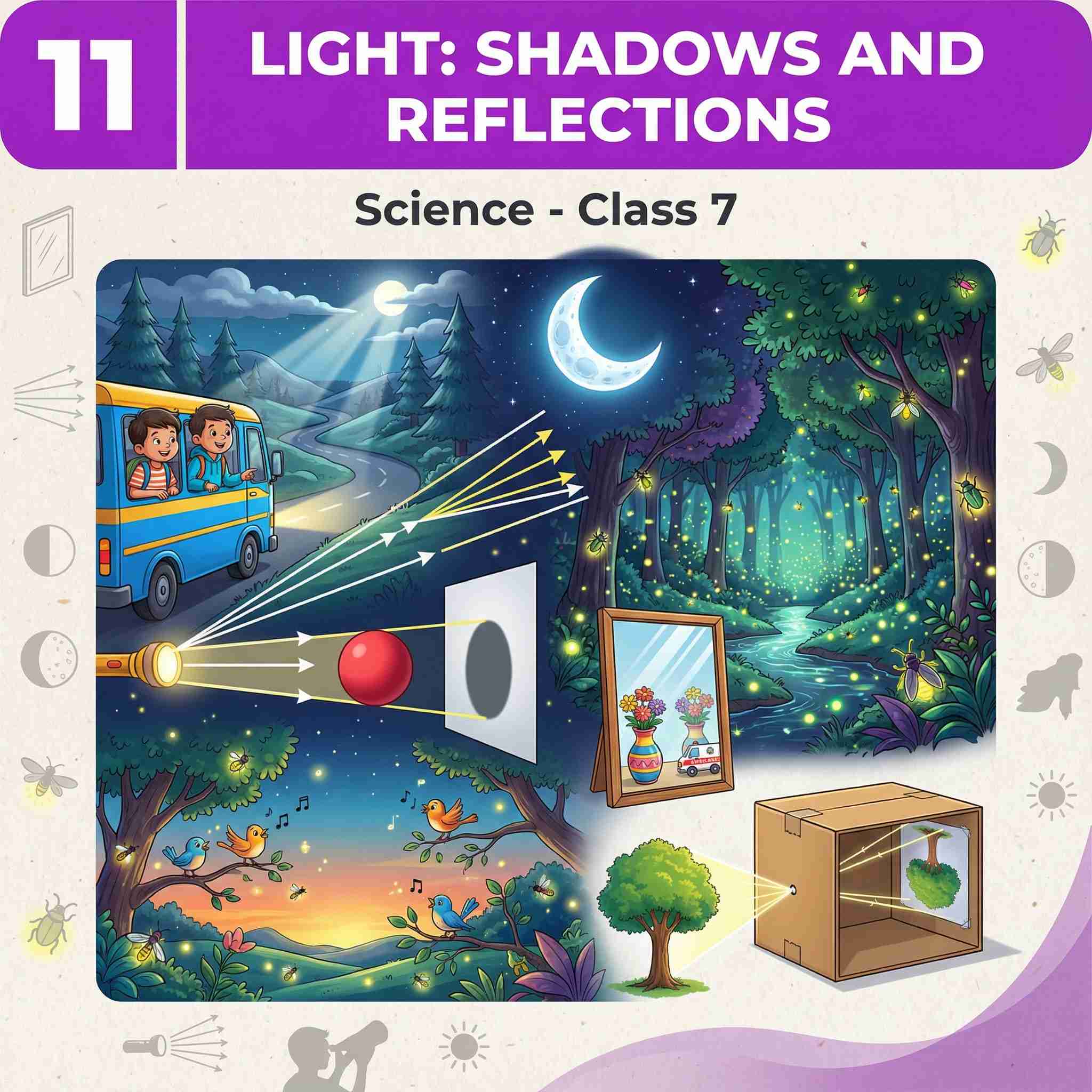
Complete Chapter 11 guide: natural and artificial sources of light (Sun, stars, fire, LEDs), luminous vs non‑luminous objects, light travelling in straight lines (matchbox and pipe activities), formation of shadows (umbra/penumbra), eclipses idea link, simple pinhole camera, reflection from plane mirrors, everyday applications, LED energy saving note, plus exam-oriented definitions, diagrams, and conceptual questions for CBSE
Read article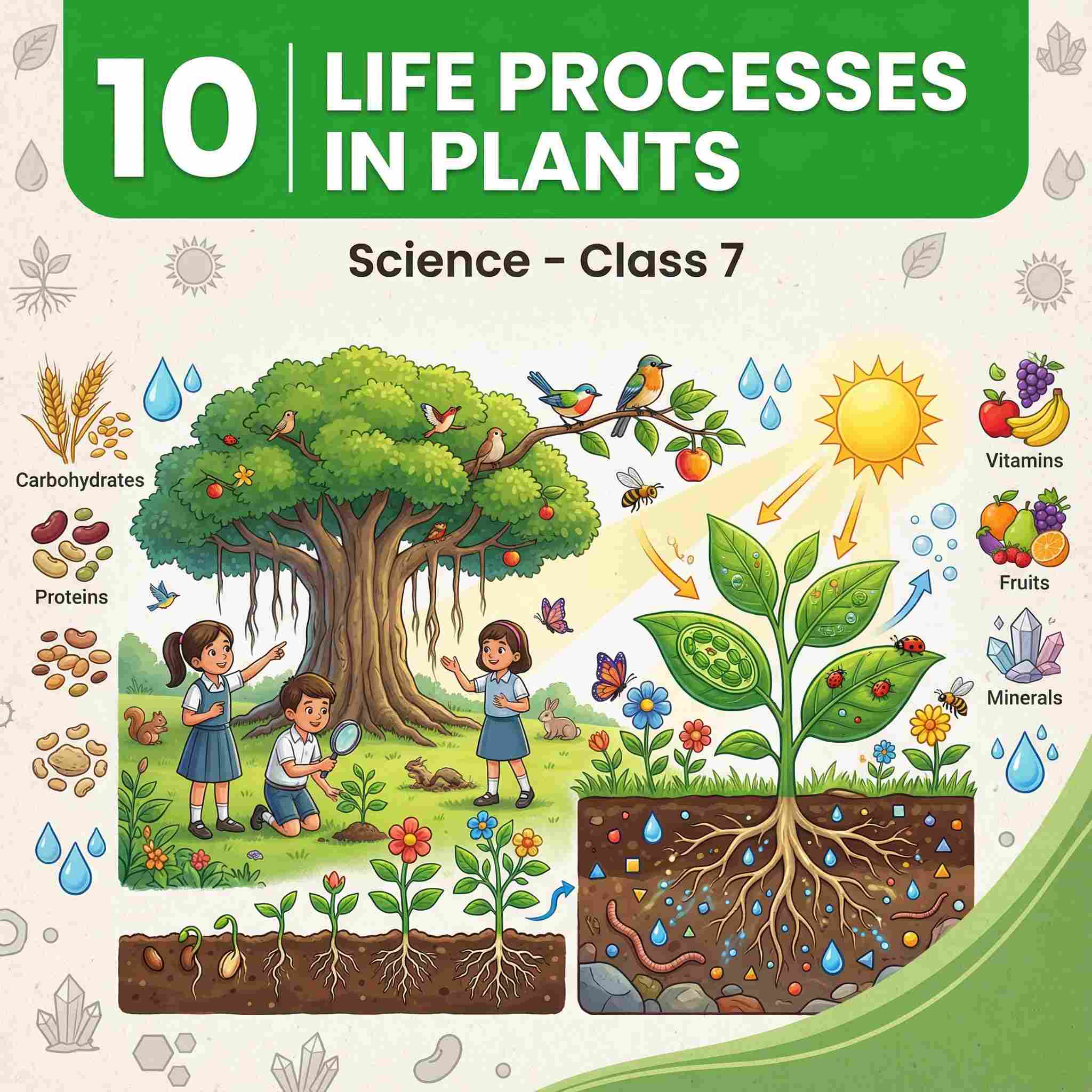
Complete Chapter 10 Guide: Photosynthesis (Sunlight+Water+CO2+Chlorophyll→Glucose+Oxygen), Activity 10.1 Plant Growth Sunlight Water Test, Activity 10.2 Leaf Starch Iodine Test, Activity 10.3 Green vs Non-Green Leaf Starch, Activity 10.4 CO2 Essential Test, Xylem Water Transport, Phloem Food Transport, Plant Respiration Lime Water Test, Bottle Garden Self-Sustaining Ecosystem, Vrikshayurveda Ancient Knowledge, 25+ Practice Questions & Answers CBSE Exam
Read article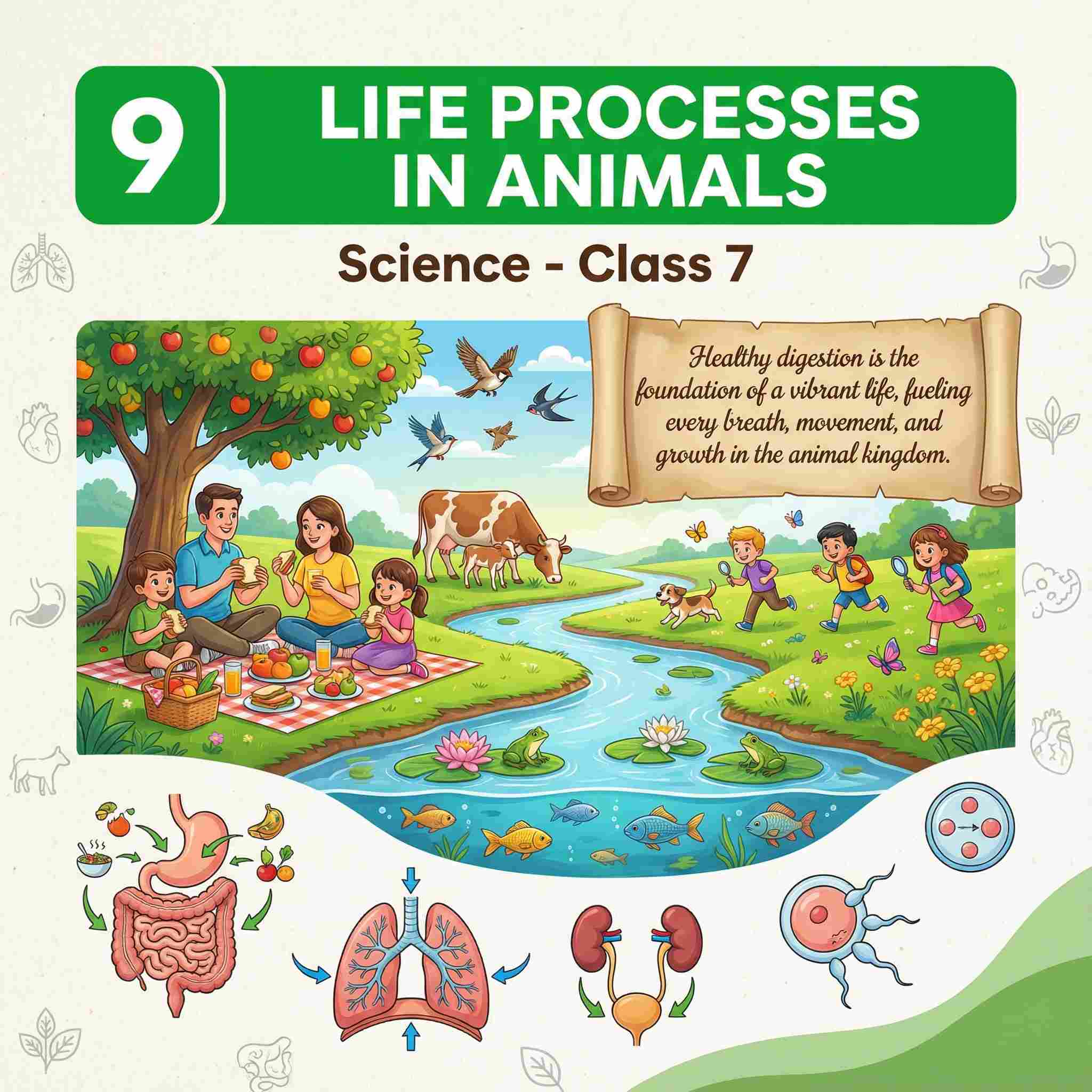
Complete Chapter 9 Guide: Human Digestive System (Mouth→Oesophagus→Stomach→Small Intestine→Large Intestine), Activity 9.1 Saliva on Starch Iodine Test, Respiration (Alveoli Gas Exchange), Breathing Mechanism (Diaphragm+Ribs), Ruminants (Cow Rumination), Birds Gizzard, Gills in Fish, Oral Hygiene, Lime Water CO2 Test, 25+ Practice Questions & Answers, CBSE Board Exams 2025
Read article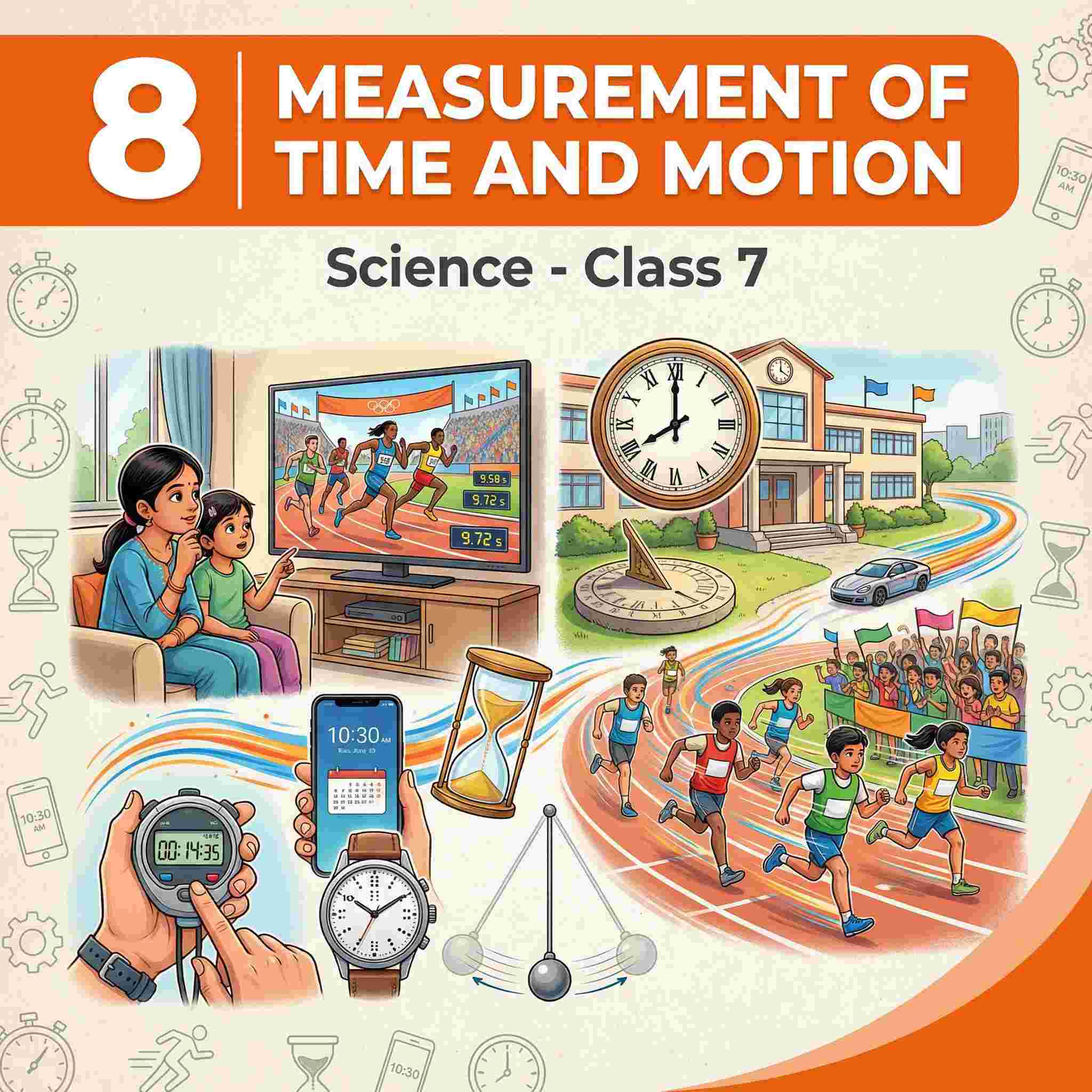
Complete Chapter 8 Guide: Ancient Timekeeping (Sundial, Water Clock, Hourglass, Candle Clock), Activity 8.1 Water Clock Construction, Simple Pendulum Time Period, Speed = Distance/Time, Uniform vs Non-uniform Motion, SI Unit Second (s), Train Speed Calculations, Average Speed Examples Solved, Olympic Sprint Analysis, CBSE Exam Questions with Solutions
Read article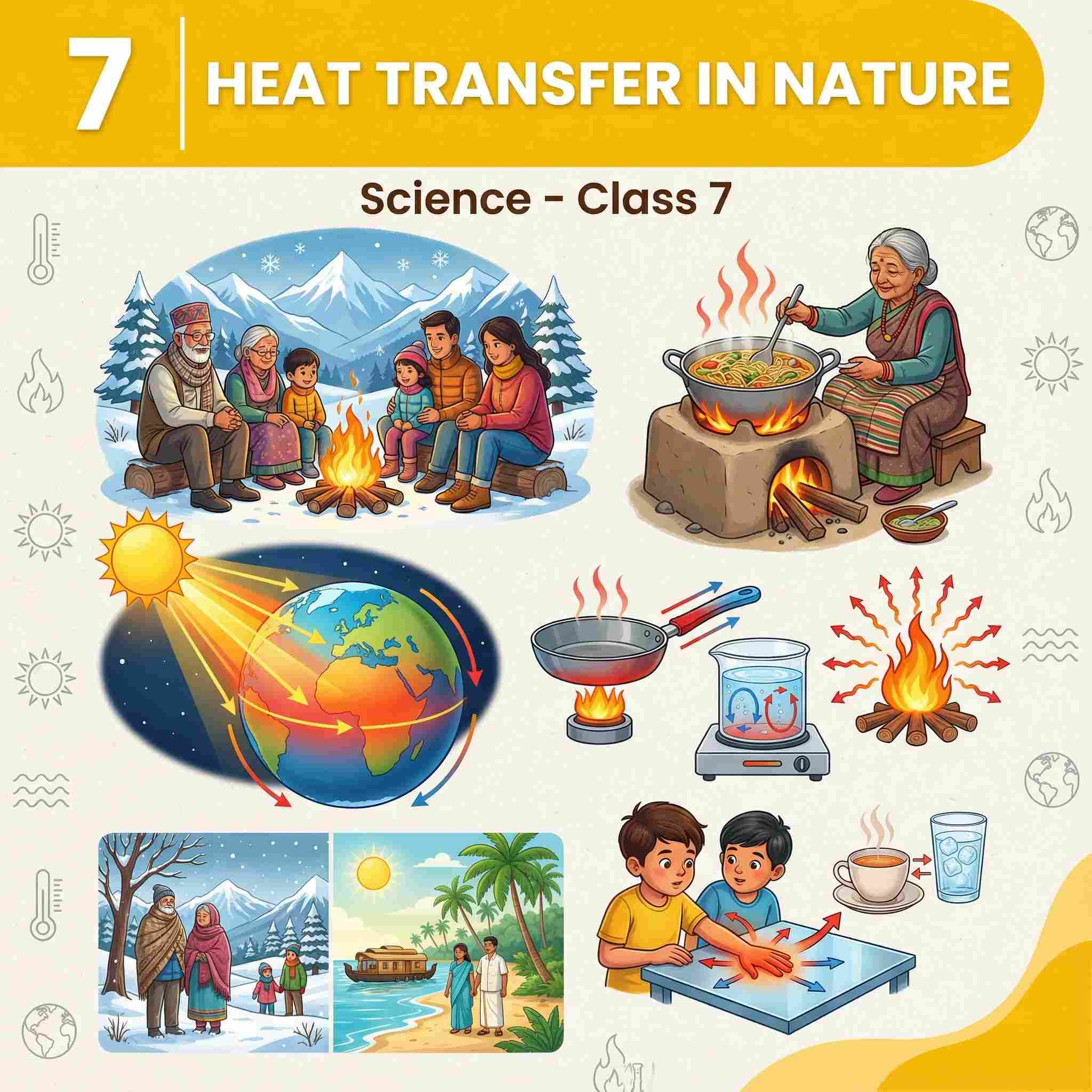
Complete Chapter 7 Guide: Conduction (Metal Strip Pins Activity), Convection (Coloured Water, Land-Sea Breeze), Radiation (Sun Heat, Light/Dark Clothes), Water Cycle (Evaporation-Precipitation-Aquifers), Activities 7.1-7.5 Step-by-Step Solved, 25+ Practice Questions & Answers, Poor Conductors (Wool-Air-Clay), Exam Revision Notes, Mnemonics for CBSE Board Exams
Read article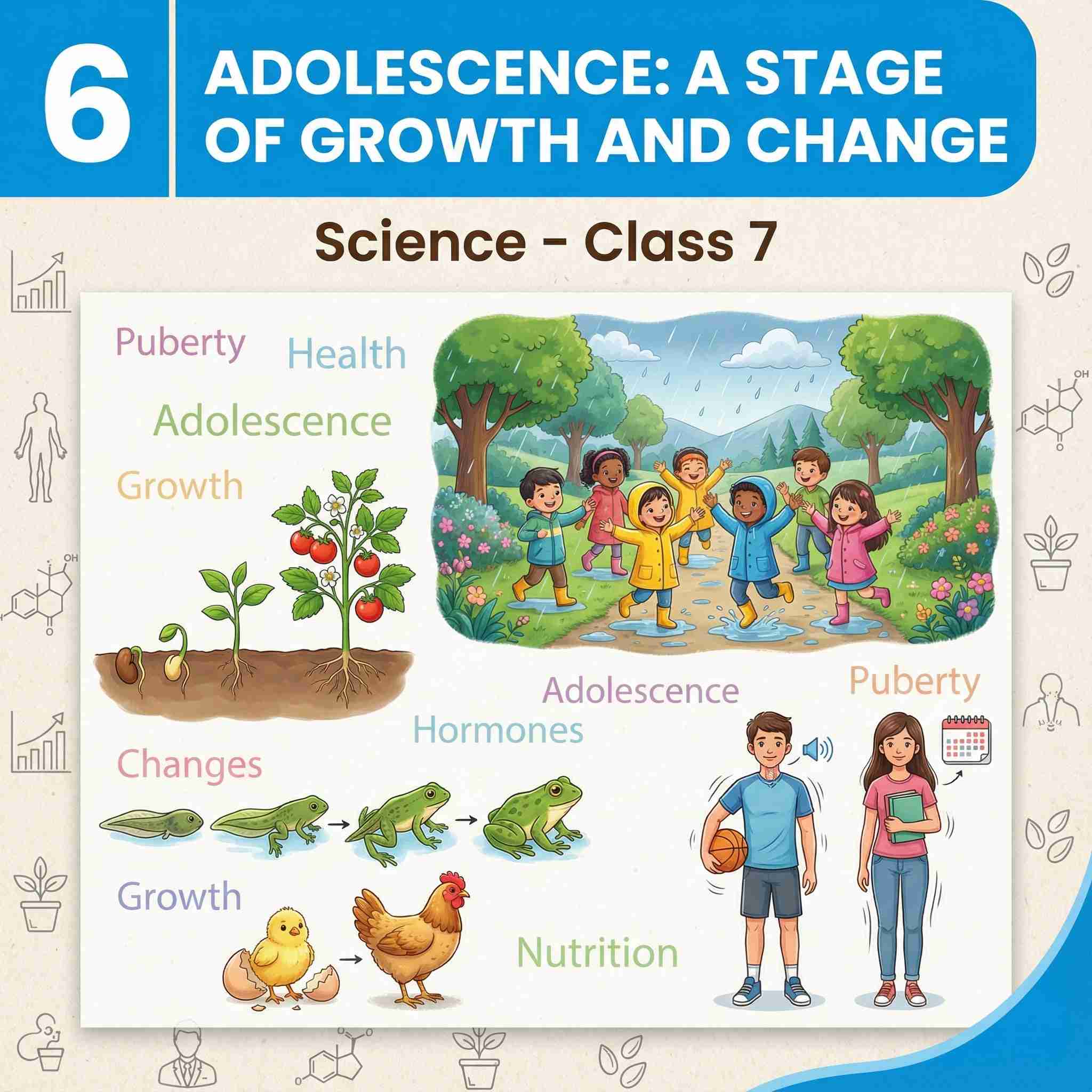
Complete Guide: Puberty Changes, Secondary Sexual Characteristics, Menstrual Cycle (28-30 days), Adam's Apple, Acne Treatment, Emotional Changes, Nutrition Tips, Menstrual Hygiene, Substance Abuse Prevention, Government Schemes (MHS, RKSK), All NCERT Activities Solved + 25+ Practice Questions & Answers for CBSE Board Exams
Read article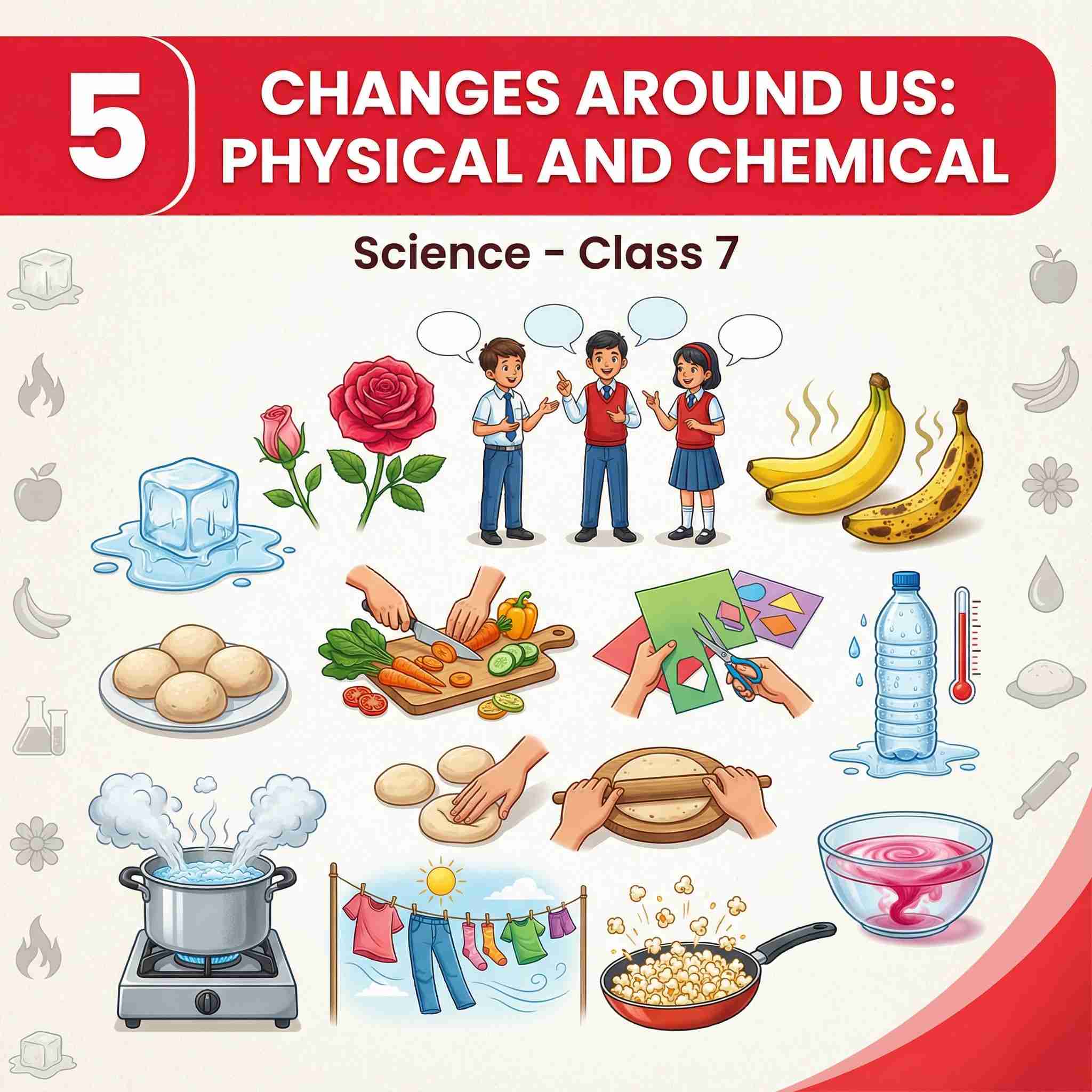
Full Chapter Summary, Physical vs Chemical Changes, Reversible/Irreversible, All Activities 5.1-5.8 Solved Step-by-Step, NCERT "Let Us Enhance Our Learning" Questions, 25+ Extra Practice Questions & Answers, Fire Triangle, Rusting, Weathering, Revision Tables, Mnemonics for CBSE Board Exams
Read article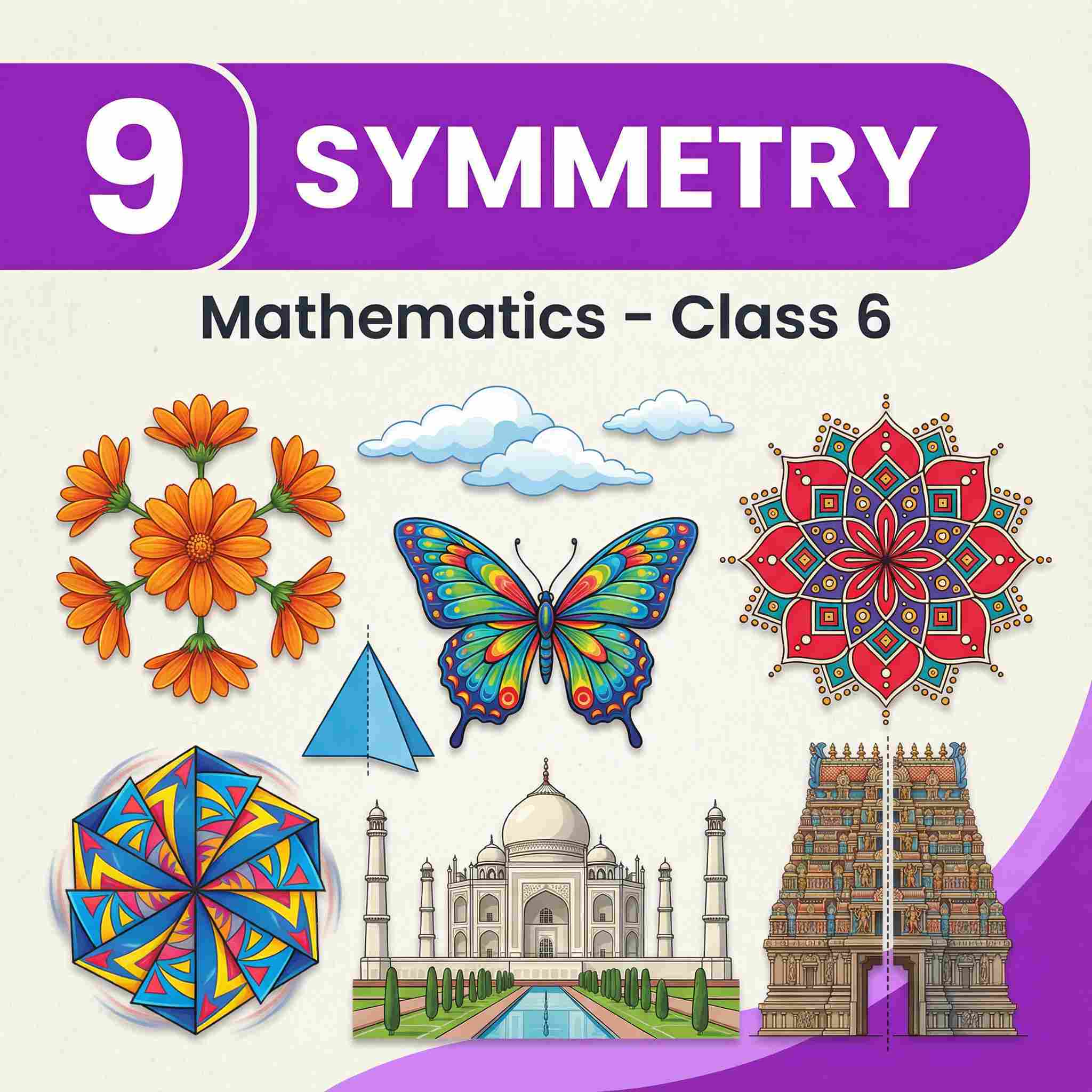
Detailed summary and explanation of Chapter 9 'Symmetry' from the Ganita Prakash Mathematics textbook for Class VI, covering line of symmetry, mirror halves, reflection symmetry, multiple lines of symmetry, paper folding and cutting activities, ink blot patterns, punching game, rotational symmetry, centre of rotation, angles of symmetry, radial arms, symmetries of circle, figures with both line and rotational symmetry—along with all NCERT questions, answers, and step-by-step solutions.
Read article