Formation of a Company
Class 11 Business Studies · Business Studies · Chapter 7
163 members in the CBSE community
View all











CBSE Class 11 · Business Studies
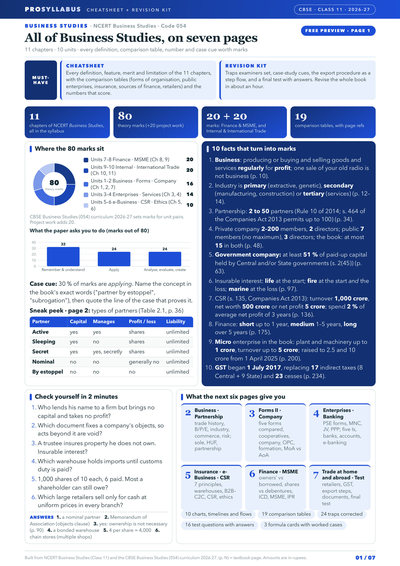
Every merit and limitation of 11 chapters- Marks booster + cheatsheet: key concepts in 2 lines each, common traps
- 20 marks: finance and MSME units
- 20 marks: internal and international trade
- Five comparison tables, insurance to retail
- Case cues for each chapter
- Common traps, corrected
Summary
The formation of a company involves three stages: promotion, incorporation and capital subscription, though a private company — which cannot raise funds from the public — undergoes only the first two stages. Promotion is the conception of a business opportunity and taking steps to give it shape, carried out by a promoter who, under the Companies Act, conceives the idea, conducts technical, financial and economic feasibility studies, gets the name approved by the Registrar of Companies, fixes the signatories to the memorandum, appoints professionals and prepares the necessary documents. Promoters occupy a fiduciary position, are neither agents nor trustees of the company, must not make secret profits and are personally liable for preliminary contracts, which cannot be ratified by the company. The two most important documents are the Memorandum of Association, which defines the objectives through its name, registered office, objects, liability and capital clauses, and the Articles of Association, which contain the rules of internal management and must not contradict the memorandum. On filing these and other documents with the Registrar, a Certificate of Incorporation — the birth certificate of the company and conclusive evidence of its existence — is issued, along with a Corporate Identity Number. A public company then raises capital by obtaining SEBI approval, filing a prospectus, appointing bankers, brokers and underwriters, ensuring minimum subscription (90% of the issue), applying to a stock exchange and allotting shares, filing a Return of Allotment with the Registrar.