मातृभूमि
Class 6 Hindi · मल्हार · Chapter 1
Visual story
Watch as storyTap a card to open it full-screen — swipe through like a story.
158 members in the CBSE community
View all







CBSE Class 6 · All available subjectsTrending
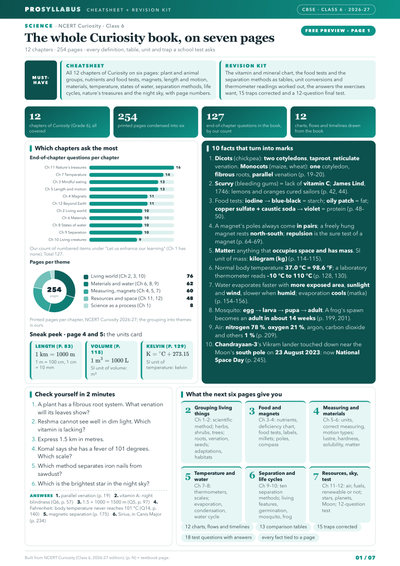
All 5 Class 6 kits: each book, by chapter- Science: 12 chapters, with traps corrected
- Maths: 10 chapters, primes to integers
- Hindi: 13 मल्हार lessons, 16 grammar points
- English: all 16 Poorvi texts, unit by unit
- Social Science: 14 chapters, maps to sectors
- 5 kits, one per subject
CBSE Class 6 · Science
12 chapters: food tests to the night sky- Marks booster + cheatsheet: key concepts in 2 lines each, common traps
- Plant and animal groups, Ch 2
- Temperature and its measurement, Ch 7
- Common traps, corrected
- Methods of separation, Ch 9
- 10 must-know facts with a self-check
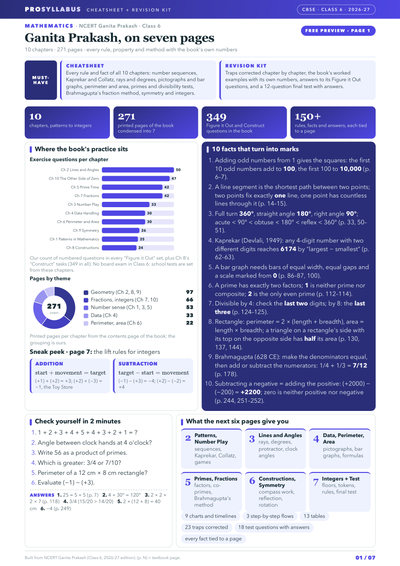
CBSE Class 6 · Mathematics
10 chapters: Kaprekar, Collatz to integers- Marks booster + cheatsheet: key concepts in 2 lines each, common traps
- Primes and divisibility tests, Ch 5
- Brahmagupta's fraction method, Ch 7
- Common traps, corrected
- Perimeter and area rules, Ch 6
- Types of angles and the protractor, Ch 2
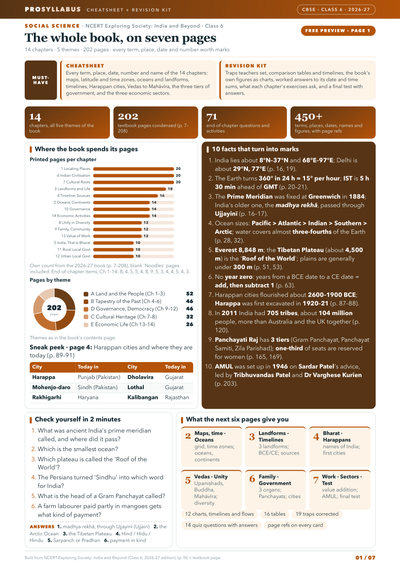
CBSE Class 6 · Social ScienceTrending
14 chapters: maps to economic sectors- Marks booster + cheatsheet: key concepts in 2 lines each
- Latitude and time zones, Ch 1
- Timelines and sources of history, Ch 4
- Harappan cities, Ch 6
- Vedas to Mahāvīra, Ch 7
- 3 tiers of government, Ch 10–12

CBSE Class 6 · English
All 16 Poorvi texts, unit by unit- Marks booster + cheatsheet: key concepts in 2 lines each
- 5 units: authors, plots and characters
- Poem devices with short quotes
- Grammar point of every lesson
- Word meanings with page numbers
- Writing formats a school test asks
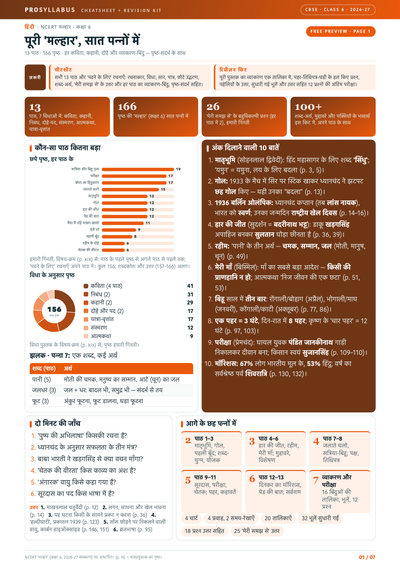
CBSE Class 6 · हिंदी
All 13 मल्हार lessons + 16 grammar points- Marks booster + cheatsheet: key concepts in 2 lines each
- Author, genre and summary for each lesson
- 'मेरी समझ से' answers, lesson by lesson
- Writers in time order
- Word meanings with page references
- 12 common mistakes
The story in short
सोहनलाल द्विवेदी की यह देशभक्ति-गीत शैली की कविता भारत-माता के गौरव और प्राकृतिक सौंदर्य का मनोहारी चित्र खींचती है। कवि कहते हैं कि ऊँचा हिमालय आकाश को छूता खड़ा है, उसके चरणों में सिंधु लहराता है और गंगा-यमुना तथा त्रिवेणी की नदियाँ कलकल बहती हैं। पहाड़ियों में झरने झरते हैं, झाड़ियों में चिड़ियाँ चहकती हैं, घनी अमराइयों में कोयल कूकती है और शीतल मलय पवन तन-मन को सँवारती है। कवि बार-बार दोहराते हैं कि यही पुण्यभूमि, स्वर्णभूमि, जन्मभूमि और मातृभूमि उन्हें प्रिय है। वे यह भी स्मरण कराते हैं कि इसी भूमि पर श्रीराम, सीता और श्रीकृष्ण जन्मे, गीता का उपदेश हुआ और गौतम बुद्ध ने जन्म लेकर जग को दया और प्रकाश का मार्ग दिखाया। इस प्रकार कविता भारत की प्राकृतिक शोभा के साथ-साथ उसकी आध्यात्मिक और सांस्कृतिक महिमा को भी गौरव से प्रस्तुत करती है। तुकांत, पंक्तियों की पुनरावृत्ति और सहज भाषा इस गीत को प्रभावशाली बनाती है।