Fog
Class 10 English · First Flight – Poems · Chapter 8
Visual story
Watch as storyTap a card to open it full-screen — swipe through like a story.

 2
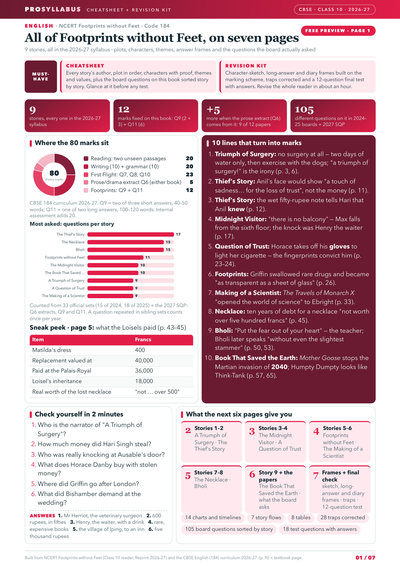
2- First Flight
- Footprints without Feet


- Mathematics
- Science
- + 10 more
- 19 texts summarised
- Poetic devices
- Writing formats
- 9 stories
- Character sketches
- Board questions

 4
4- History
- Economics
- + 2 more

- 70+ formulas and theorems
- Board-paper chapter counts
- 24 traps corrected
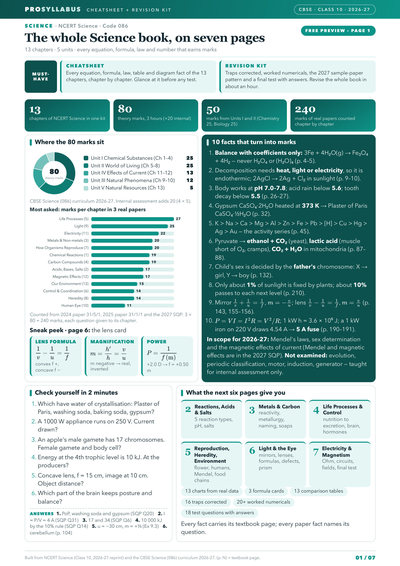
- Equations and formulas
- Book tables as charts
- Traps corrected
- Timelines
- Map list
- Traps corrected
- Full map list
- Crop and mineral tables
- Traps corrected

- Case studies
- Census tables
- Traps corrected
- Book data as charts
- Answer frames
- 18 traps corrected

- 15 पाठ
- व्याकरण
- लेखन प्रारूप
- HTML & CSS examples
- Protocol tables
- Cyber ethics

- 17 पाठ
- व्याकरण
- लेखन प्रारूप

- 9 पाठ
- सन्धि-समास
- प्रत्यय
The story in short
Carl Sandburg’s “Fog” is a very short imagist poem that compares the fog to a cat. In just a few lines, the poet says the fog comes on “little cat feet”, silently and softly, the way a cat moves without a sound. It sits looking over the harbour and the city on its silent haunches, just as a cat sits quietly observing its surroundings, and then it moves on. Through this single, vivid metaphor, Sandburg captures the quiet, gentle and fleeting nature of fog — the way it arrives unnoticed, settles over a place for a while, and then drifts away. The poem is admired for showing how a powerful image can convey a whole idea in very few words, and it is a fine example of imagery and personification, comparing a natural phenomenon to a familiar living creature.
The story in 6 beats
- 1The fog arrives quietly and softly, like a cat walking on little feet.
- 2It reaches the harbour without making any sound.
- 3It also covers the city in the same silent way.
- 4The fog pauses and seems to sit on its haunches like a cat.
- 5It looks over the harbour and the city for a while.
- 6Then it moves away quietly, just as it came.