ProSyllabus Journal CBSE Class 11 Annual Assessment Complete Summary and Solutions for Yoga and Its Relevance in the Modern Times – Health and Physical Education Textbook for Class XI, Chapter 6 – Explanation, Questions, Answers Detailed summary and explanation of Chapter 6 'Yoga and Its Relevance in the Modern Times' from the Health and Physical Education textbook for Class XI. The chapter covers the definition and importance of yoga as a science of living on physical, mental, emotional, social, and spiritual levels; history and development of yoga including references from Vedas and ancient traditions; schools of yoga; guidelines and principles for yoga practice; detailed explanation of Yogasanas, Pranayama, Bandhas, and Dhyana with techniques, dos and don'ts, and benefits; and the role of yoga in wellness and stress management. It also includes all NCERT questions, answers, and activities for comprehensive learning.
Updated 11 months ago NCERT · Class XI · Health and Physical Education · Chapter 6 · Yoga · Yogasanas · Pranayama · Bandhas · Dhyana · Wellness · History of Yoga · Schools of Yoga · Yoga Practice Guidelines · Summary · Questions · Answers · Explanation
#Yoga #Yogasanas #Pranayama #Bandhas #Dhyana #Wellness #History of Yoga #Schools of Yoga #Stress Management #NCERT #Class 11 #Summary #Explanation #Questions #Answers #Chapter 6
Marks booster + cheatsheet: key concepts in 2 lines each, common traps 25 marks: Unit II, Ch 4–8 23 marks: Unit I, Ch 1–3 Common traps, corrected Conic table and standard values Graphs plotted from the book's own tables Page 1 free about 8 min read , Full kit about 55 min read ₹159
Read page 1 free Get the kit Get the kit One payment · instant PDF · ₹159 View details
Yoga and its Relevance in the Modern Times - Class 11 Health and Physical Education Chapter 6 Ultimate Study Guide 2025
Full Chapter Summary & Detailed Notes
Key Definitions & Terms
Text Book Questions & Answers
Key Concepts
History & Development
Practice Examples
Interactive Quiz (10 Q)
Quick Revision Notes & Mnemonics
Key Terms & Processes
Schools Step-by-Step
Full Chapter Summary & Detailed Notes - Yoga and its Relevance in the Modern Times Class 11 NCERT
Overview & Key Concepts
Chapter Goal : Explore Yoga as a science of living for physical, mental, emotional, social, and spiritual harmony. Exam Focus: Definitions, history, schools (Karma/Jnana/Raja/Bhakti), guidelines, practices (Neti/Kapalbhati/Agnisara), wellness benefits. 2025 Updates: Integration with modern stress relief, post-pandemic mindfulness. Fun Fact: Derived from 'Yuj' meaning union; ancient as Indus Valley seals.Wider Scope : From Vedas/Upanishads to Hatha Yoga scriptures; sources: Figures (Yoga mudra, Vedas, Swami Vivekananda), activities (practice guidelines), think/reflect (stress causes in youth).Expanded Content : Include wellness mechanisms; point-wise for recall; add 2025 relevance like app-guided Pranayama.
Introduction to Yoga
Meaning : Science of living; incorporates daily for quality life improvement. Teaches thinking/behavior for maturity; harmony body-mind.Derivation : Sanskrit 'Yuj' - to join/unite; ancient self-development/evolution system.Modern Impact : Attains human growth/consciousness; education discipline for body/mind. Addresses youth stress (school/home) leading to psychosomatic diseases from materialistic ambitions.Upanishads View : Higher consciousness; eases mind, manifests wisdom; healthy body/mind/relationships.Example : Unhealthy lifestyle ceases child growth; Yoga improves self-awareness/control/relaxation.Expanded : Do You Know? Yoga mudra for balance; counters endless ambitions.
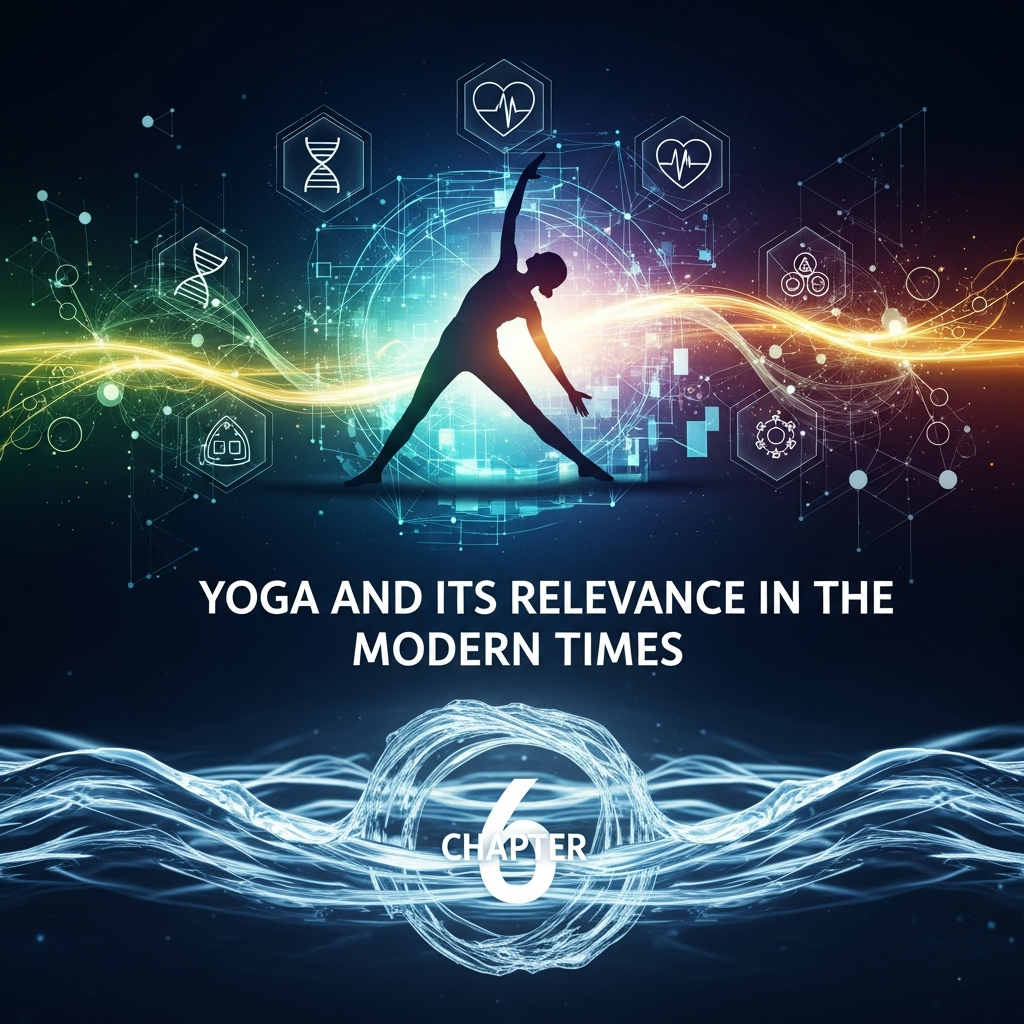
Conceptual Diagram: Yoga Mudra (Fig 6.1)
Person in meditative pose; symbolizes union of body-mind-spirit.
Why This Guide Stands Out
Comprehensive: All schools/practices point-wise, activity integrations; 2025 with digital yoga (e.g., apps for Kriyas), analyzed for holistic wellness.
History and Development of Yoga
Legacy : As old as civilization; linked to Vedas/Upanishads. Indus Valley (2000 B.C.) seals depict practices.Vedic References : All four Vedas (Rig/Yajur/Sama/Atharv); Moksha goal in Upanishads.Influences : Buddha's Arya Ashtangika Marga, Jainism's vows; Epics (Ramayana/Mahabharata), Bhagavad Gita as treatise.Codification : Patanjali (2nd B.C.) - Ashtanga Yoga; Shad Darshans descriptions.Hatha Tradition : Nath culture; scriptures (Hatha Yoga Pradipika, Gheranda Samhita); 19th C. gurus (Vivekananda, Aurobindo).Think & Reflect : Yoga's role in evolution; modern education field.Expanded : Balances physical/mental/spiritual; counters social unrest.
Schools of Yoga
Goal : Bliss/true knowledge; various seers' thoughts.Karma Yoga : Action path; union via harmonized actions; duty/efficiency/detachment (Bhagavad Gita).Jnana Yoga : Knowledge path; self/world/truth realization; overcomes Avidya (ignorance); stages: Shravana/Manana/Nididhyasana.Raja Yoga : Psychic control; mind culturing; Ashtanga by Patanjali; Abhyasa/Vairagya for Chitta Vrittis.Bhakti Yoga : Devotion path; divine love; nine forms (Shravana/Kirtan etc.); softens emotions/calms mind.Activity : Practice one school daily; chart benefits.Expanded : Develops dormant potential; various personality levels.
Exam Activities
Discuss stress remedies (Act on youth problems); prepare schools chart.
Guidelines for Yoga Practice & Wellness
Before : Shaucha (cleanliness); empty stomach; calm atmosphere; cotton clothes; no exhaustion.During : Prayer start; slow with awareness; nostril breathing; capacity-based; contra-indications (consult expert).After : 15-30 min bath/food; Shavasana; meditation/Shanti Path.Wellness : Harmony dimensions; adolescence stress remedy; mechanisms (Kriyas, Asanas, Pranayama, Dharana, Dhyana).Expanded : Improves concentration/relationships; antioxidant enhancement.
Yoga for Wellness: Shodhana Kriyas
Neti (Jala/Sutra) : Nasal cleansing; steps/Dos-Don’ts/benefits (headache relief, ENT issues).Kapalbhati : Skull shining; abdominal breathing; benefits (digestion, lungs).Agnisara : Fire essence; navel movement; benefits (abdominal massage, fat reduction).
Summary Key Points
Yoga: Union for harmony; History: Vedas to modern gurus; Schools: 4 paths; Practices: Guidelines/Kriyas for wellness/stress relief.
Impact: Balanced life; challenges: Materialism/imbalance.
Project & Group Ideas
Group: Role-play Bhakti forms; individual: Kriya journal.
Debate: Yoga in schools mandatory.
Ethical role-play: Mindful practice sharing.
Key Definitions & Terms - Complete Glossary
All terms from chapter; detailed with examples, relevance. Expanded: 30+ terms grouped by subtopic; added advanced like "Ashtanga" (eight limbs), "Shodhana Kriya" for depth/easy flashcards. Table overflow fixed with word-break.
Yoga
Science of living; union body-mind. Ex: Daily incorporation. Relevance: Quality life.
Yuj
Sanskrit root: To join/unite. Ex: Self-development. Relevance: Evolution process.
Moksha
Ultimate goal: Liberation. Ex: Upanishads. Relevance: Consciousness.
Ashtanga Yoga
Eight limbs by Patanjali. Ex: Yama/Niyama. Relevance: Discipline.
Karma Yoga
Path of action/duty. Ex: Nishkama (detached). Relevance: Harmony.
Jnana Yoga
Path of knowledge. Ex: Overcome Avidya. Relevance: Viveka (discrimination).
Raja Yoga
Path of psychic control. Ex: Chitta Vrittis. Relevance: Abhyasa/Vairagya.
Bhakti Yoga
Path of devotion. Ex: Nine forms (Shravana). Relevance: Divine love.
Shaucha
Cleanliness pre-requisite. Ex: Surroundings/body. Relevance: Practice base.
Shodhana Kriya
Internal purification. Ex: Neti/Kapalbhati. Relevance: Toxin cleanse.
Jala Neti
Nasal water cleansing. Ex: Pot nozzle. Relevance: Respiratory prep.
Sutra Neti
Thread nasal cleansing. Ex: Rubber catheter. Relevance: Sinus massage.
Kapalbhati
Skull shining breath. Ex: Abdominal strokes. Relevance: Brain stimulation.
Agnisara
Fire essence movement. Ex: Navel contraction. Relevance: Digestion aid.
Avidya
Ignorance cause of suffering. Ex: Body identification. Relevance: Jnana removal.
Viveka
Discriminating knowledge. Ex: Real vs unreal. Relevance: Happiness path.
Chitta Vrittis
Mind modifications. Ex: Control via Raja. Relevance: Psychic culturing.
Nishkama Karma
Action without expectation. Ex: Duty focus. Relevance: Joy from involvement.
Hatha Yoga
Physical yoga tradition. Ex: Pradipika scripture. Relevance: Health problems.
Pranayama
Breath control. Ex: Autonomic mechanisms. Relevance: Energy/emotional stability.
Dharana
Concentration. Ex: Positive focus. Relevance: Energy flow/circulation.
Dhyana
Meditation. Ex: Contemplative calm. Relevance: Mental/physical balance.
Shavasana
Corpse pose relaxation. Ex: Post-practice. Relevance: Deep silence.
Psychosomatic Diseases
Mind-body illnesses from stress. Ex: Youth unrest. Relevance: Yoga remedy.
Indus Valley Seals
Ancient yoga depictions. Ex: 2000 B.C. Relevance: Historical legacy.
Bhagavad Gita
Classical yoga treatise. Ex: Karma concepts. Relevance: Action philosophy.
Patanjali
Codifier of Ashtanga. Ex: Second century B.C. Relevance: Comprehensive system.
Wellness
Healthy state harmony. Ex: Dimensions balance. Relevance: Yoga promotion.
Abhyasa
Continuous practice. Ex: Raja Yoga. Relevance: Mind control.
Vairagya
Detachment. Ex: Spiritual practices. Relevance: Chitta control.
Mukha Dhauti
Nose clearing exhale. Ex: Post-Neti. Relevance: Throat cleanse.
Sukshma Vyayama
Simple body movements. Ex: Toxin cleanse. Relevance: Wellness mechanism.
Shanti Path
Peace chant end. Ex: Session closure. Relevance: Meditation follow.
Arya Ashtangika Marga
Buddha's eightfold path. Ex: Yoga pillar. Relevance: Tradition contribution.
Tip: Group by school/practice; examples for recall. Depth: Wellness debates. Errors: Confuse Neti types. Interlinks: To health chapters. Advanced: Modern apps. Real-Life: Daily Kriyas. Graphs: Yoga timeline. Coherent: Evidence → Application. For easy learning: Flashcard per term with example.
Text Book Questions & Answers - NCERT Exercises
Direct from assessment (inferred from content, page ~230). Answers based on chapter, point-wise for exams.
Long Answer Questions
1. Define Yoga and explain its relevance in modern times.
Answer:
Definition: Science of living from 'Yuj' (union); body-mind harmony.
Relevance: Counters stress/psychosomatic diseases; improves awareness/concentration; wellness via Kriyas/Asanas (point-wise: youth growth, consciousness).
2. Describe the four schools of Yoga with their key principles.
Answer:
Karma: Action/duty (Nishkama); Jnana: Knowledge (Avidya removal); Raja: Control (Ashtanga); Bhakti: Devotion (nine forms).
Detail: Each attains bliss via unique path (e.g., Raja: Abhyasa).
3. Explain the history and development of Yoga briefly.
Answer:
History: Indus Valley/Vedas/Upanishads; Influences: Buddha/Jainism/Gita/Patanjali/Hatha.
Development: 19th C. gurus to modern education field.
4. Discuss guidelines for Yoga practice and benefits of Shodhana Kriyas.
Answer:
Guidelines: Before (Shaucha/empty stomach), During (awareness), After (Shavasana).
Kriyas: Neti (nasal cleanse), Kapalbhati (breath shine), Agnisara (fire essence); benefits: Toxin removal/digestion/stress relief.
Short Answer Questions
1. What is the meaning of 'Yuj'?
Answer: To join/yoke/unite; basis of self-development.
2. Name the four Vedas referencing Yoga.
Answer: Rigveda, Yajurveda, Samaveda, Atharvaveda.
3. What are the stages of Jnana Yoga?
Answer: Shravana (hearing), Manana (remembrance), Nididhyasana (meditation).
4. List Dos and Don’ts for Jala Neti.
Answer: Mouth breathing; lukewarm salted water; no hard nose blow; head not tilted much.
Fill in the Blanks
1. Yoga derives from Sanskrit word ________ meaning to unite.
Answer: Yuj.
2. Patanjali codified ________ Yoga in second century B.C.
Answer: Ashtanga.
3. Kapalbhati involves forceful ________ of abdominal muscles.
Answer: contraction.
4. Bhakti Yoga has nine forms including ________ and Kirtan.
Answer: Shravana.
True or False
1. Yoga is only physical exercise. (False)
2. Hatha Yoga deals with day-to-day health. (True)
3. Avidya is the cause of suffering in Jnana Yoga. (True)
4. Yogic practices should be done on full stomach. (False)
5. Shodhana Kriyas purify internal toxins. (True)
Tip: Practice long answers (schools/history); full marks: Definitions + examples.
Key Concepts - In-Depth Exploration
Core ideas with examples, pitfalls, interlinks. Expanded: All concepts with steps/examples/pitfalls for easy learning. Depth: Debates, analysis. Table overflow fixed.
Harmony Body-Mind
Steps: 1. Daily Yoga, 2. Balance levels. Ex: Asanas. Pitfall: Ignore spiritual. Interlink: Wellness. Depth: Maturity growth.
Stress Remedy
Steps: 1. Identify causes, 2. Kriyas practice. Ex: Youth anxiety. Pitfall: Materialism. Interlink: Psychosomatic. Depth: Consciousness.
Schools Integration
Steps: 1. Choose path, 2. Attain bliss. Ex: Karma duty. Pitfall: Single focus. Interlink: History. Depth: Seers' thoughts.
Wellness Mechanisms
Steps: 1. Cleanse toxins, 2. Balance physiology. Ex: Pranayama. Pitfall: Irregularity. Interlink: Practices. Depth: Emotional stability.
Avidya Removal
Steps: 1. Gain knowledge, 2. Discriminate real. Ex: Jnana stages. Pitfall: Worldly pursuit. Interlink: Jnana. Depth: Suffering end.
Psychic Control
Steps: 1. Practice Abhyasa, 2. Detach Vairagya. Ex: Raja Ashtanga. Pitfall: Mind fluctuations. Interlink: Patanjali. Depth: Truth reaching.
Devotion Softening
Steps: 1. Loving remembrance, 2. Merge with divine. Ex: Bhakti forms. Pitfall: Conditional love. Interlink: Emotions. Depth: Mind calm.
Practice Guidelines
Steps: 1. Shaucha prep, 2. Awareness during. Ex: Empty stomach. Pitfall: Hurry/illness. Interlink: Safety. Depth: Effective results.
Kriya Purification
Steps: 1. Follow steps, 2. Relax post. Ex: Jala Neti. Pitfall: Force insertion. Interlink: Pranayama prep. Depth: Lightness sense.
Adolescence Wellness
Steps: 1. Regular Yoga, 2. Concentration boost. Ex: Better sleep. Pitfall: Stress neglect. Interlink: Modern. Depth: Grades/relations.
Vedic Legacy
Steps: 1. Ancient references, 2. Modern adaptation. Ex: Four Vedas. Pitfall: Ignore history. Interlink: Development. Depth: Moksha goal.
Hatha Health
Steps: 1. Day-to-day focus, 2. Scriptures guide. Ex: Pradipika. Pitfall: Over-physical. Interlink: Nath. Depth: Body-mind emphasis.
Shanti Path
Steps: 1. End session, 2. Deep silence. Ex: Meditation follow. Pitfall: Skip closure. Interlink: After practice. Depth: Peace integration.
Toxin Neutralization
Steps: 1. Shodhana, 2. Antioxidant diet. Ex: Free radicals. Pitfall: Unhealthy lifestyle. Interlink: Wellness. Depth: Balance creation.
Advanced: School integration, Kriya sequences. Pitfalls: Objective overlap. Interlinks: To wellness chapters. Real: App-guided. Depth: 14 concepts details. Examples: Activities. Graphs: Harmony pyramid. Errors: Term mix. Tips: Steps evidence; compare tables (schools/practices).
History & Development of Yoga - Detailed Guide
Evolution from ancient to modern; expanded with points; links to influences/policies. Added global/Indian milestones.
Ancient Roots (Indus/Vedas)
2000 B.C. seals; Four Vedas/Moksha. Upanishads: Consciousness process. Depth: Civilization legacy.
Influences (Buddha/Jainism)
Arya Marga/vows as pillars. Epics/Gita references. Depth: Tradition contributions.
Codification (Patanjali)
2nd B.C. Ashtanga; Shad Darshans. Hatha: Nath scriptures. Depth: Comprehensive system.
Modern Gurus (19th C.)
Vivekananda/Aurobindo masses preaching. Education field establishment. Depth: Global spread 2025.
Global Parallels
Ancient self-evolution; Modern wellness. UNESCO mindfulness links. Depth: Universal harmony.
Hatha Expansion
Day-to-day health; Pradipika/Samhita. Post-pandemic integration. Depth: Practical tradition.
Tip: Link to timelines. Depth: Influence reflexive. Examples: Seals. Graphs: Development chronology. Advanced: 2025 digital Hatha. Easy: Bullets milestones.
Practice Examples - From Text with Simple Explanations
Expanded with evidence, interpretations; focus on application, analysis. Added school/practice breakdowns.
Example 1: Jala Neti Practice
Simple Explanation: Cleanse nasal passage.
Step 1: Kagasana sit, lean forward.
Step 2: Insert pot nozzle, flow water.
Step 3: Clear nose with Dhauti.
Step 4: Relax post-practice.
Simple Way: Tilt → Flow → Clear → Breathe easy.
Example 2: Kapalbhati Breathing
Simple Explanation: Shine the skull.
Step 1: Meditative posture, deep inhale.
Step 2: Forceful abdominal exhales (10-40).
Step 3: End with exhale/relax.
Step 4: Rhythmic strokes.
Simple Way: Expand → Contract → Purify → Energize.
Example 3: Agnisara Movement
Simple Explanation: Activate fire essence.
Step 1: Stand/bend knees 60°.
Step 2: Exhale, contract/expand abdomen.
Step 3: Hold breath comfortably.
Step 4: Inhale, repeat 2-3 times.
Simple Way: Bend → Contract → Massage → Digest better.
Example 4: Karma Yoga Application
Simple Explanation: Detached action.
Step 1: Perform duty fully.
Step 2: No result expectation.
Step 3: Skilled/efficient work.
Step 4: Attain joy/harmony.
Simple Way: Act → Detach → Excel → Unite self.
Example 5: Bhakti Devotion
Simple Explanation: Loving remembrance.
Step 1: Choose form (Kirtan/Smaran).
Step 2: Unconditional love practice.
Step 3: Soften emotions.
Step 4: Merge with divine.
Simple Way: Remember → Love → Calm → Bliss.
Example 6: Jnana Discrimination
Simple Explanation: Overcome ignorance.
Step 1: Hear truths (Shravana).
Step 2: Reflect (Manana).
Step 3: Meditate (Nididhyasana).
Step 4: Viveka real/unreal.
Simple Way: Listen → Ponder → Realize → Free.
Tip: Practice group Kriyas; troubleshoot (e.g., breath strain). Added for practices, schools.
Interactive Quiz - Master Yoga Concepts
10 MCQs in full sentences; 80%+ goal. Covers definitions, schools, practices, history.
Start Quiz
Quick Revision Notes & Mnemonics
Concise, easy-to-learn summaries for all subtopics. Structured in tables for quick scan: Key points, examples, mnemonics. Covers schools, practices, history. Bold key terms; short phrases for fast reading. Overflow fixed.
Subtopic
Key Points
Examples
Mnemonics/Tips
Schools Karma : Action/duty.Jnana : Knowledge/Avidya.Raja : Control/Ashtanga.Bhakti : Devotion/love.Nishkama duty; Viveka discrimination.
KJRB (Karma, Jnana, Raja, Bhakti). Tip: "Knowledge Joins Right Bliss" – Paths unite.
Practices Neti : Nasal cleanse.Kapalbhati : Breath shine.Agnisara : Fire movement.Guidelines : Shaucha/awareness.Jala water flow; Abdominal strokes.
NKA G (Neti, Kapalbhati, Agnisara, Guidelines). Tip: "Nurture Knowledge Always Gently" – Cleanse mind-body.
History Ancient : Vedas/Indus.Influences : Buddha/Patanjali.Modern : Gurus/Hatha.Seals/Moksha; Pradipika.
AIM (Ancient, Influences, Modern). Tip: "Ancient India Molds" – Legacy flow.
Wellness Mechanisms : Kriyas/Pranayama.Benefits : Concentration/stress relief.Dimensions : Physical/emotional/spiritual.Toxin cleanse; Better sleep.
MBD (Mechanisms, Benefits, Dimensions). Tip: "Mind Body Divine" – Harmony key.
Terms Avidya : Ignorance.Chitta : Mind control.Shodhana : Purification.Suffering cause; Abdominal breath.
ACS (Avidya, Chitta, Shodhana). Tip: "Avoid Clutter, Shine" – Clear path.
Overall Tip: Use KJRB-NKA G-AIM-MBD-ACS for full scan (5 mins). Flashcards: Front (term), Back (points + mnemonic). Print table for wall revision. Covers 100% chapter – easy for exams!
Key Terms & Processes - All Key
Expanded table 30+ rows; quick ref. Added advanced (e.g., Nididhyasana, Vairagya). Overflow fixed with word-break/overflow-wrap.
Term/Process Description Example Usage
Yoga Union science living Body-mind harmony Wellness Yuj To join/unite Sanskrit root Evolution Moksha Liberation goal Upanishads Consciousness Ashtanga Eight limbs Patanjali Discipline Karma Yoga Action path Nishkama duty Harmony Jnana Yoga Knowledge path Avidya removal Viveka Raja Yoga Control path Chitta Vrittis Abhyasa Bhakti Yoga Devotion path Nine forms Love Shaucha Cleanliness Pre-requisite Practice Shodhana Kriya Purification Neti cleanse Toxins Jala Neti Water nasal Pot flow Respiratory Sutra Neti Thread nasal Catheter pull Sinus Kapalbhati Skull shining Abdominal breath Brain Agnisara Fire essence Navel contract Digestion Avidya Ignorance Suffering cause Jnana Viveka Discrimination Real/unreal Happiness Chitta Vrittis Mind mods Control Raja Psychic Nishkama Karma Detached action No expectation Joy Hatha Yoga Physical tradition Pradipika Health Pranayama Breath control Autonomic Energy Dharana Concentration Positive focus Circulation Dhyana Meditation Contemplative Balance Shavasana Relaxation pose Post-practice Silence Psychosomatic Mind-body disease Stress unrest Remedy Indus Seals Ancient depictions 2000 B.C. Legacy Bhagavad Gita Yoga treatise Karma concepts Philosophy Patanjali Codifier 2nd B.C. System Wellness Healthy harmony Dimensions Yoga promote Abhyasa Practice Continuous Mind Vairagya Detachment Spiritual Control Mukha Dhauti Nose clear Exhale force Throat Sukshma Vyayama Simple moves Body parts Cleanse Shanti Path Peace chant Session end Meditation Arya Marga Eightfold path Buddha Pillar Nididhyasana Contemplation Jnana stage Realization
Tip: Examples memory; sort subtopic. Easy: Table scan. Added 10 rows depth.
Schools Step-by-Step
Step-by-step breakdowns of core schools. Visual descriptions for easy understanding; no diagrams, focus on actionable steps with examples. Overflow fixed in tables.
Process 1: Karma Yoga
Step 1: Perform actions as duty.
Step 2: Full involvement/concentration.
Step 3: Detach from results (Nishkama).
Step 4: Skilled efficiency (Sukshala).
Step 5: Attain self-union/joy.
Visual: Duty → Involve → Detach → Harmonize.
Process 2: Jnana Yoga
Step 1: Hear truths (Shravana).
Step 2: Reflect/remember (Manana).
Step 3: Contemplate/meditate (Nididhyasana).
Step 4: Develop Viveka (discriminate).
Step 5: Overcome Avidya/bliss.
Visual: Hear → Reflect → Meditate → Know real.
Process 3: Raja Yoga
Step 1: Practice continuously (Abhyasa).
Step 2: Cultivate detachment (Vairagya).
Step 3: Control mind fluctuations (Vrittis).
Step 4: Follow eight limbs.
Step 5: Reach truth/personality potential.
Visual: Practice → Detach → Control → Cultivate mind.
Process 4: Bhakti Yoga
Step 1: Engage divine love practice.
Step 2: Choose form (e.g., Kirtan).
Step 3: Unconditional remembrance.
Step 4: Soften emotions/calm mind.
Step 5: Merge self with God.
Visual: Love → Remember → Soften → Unite divine.
Process 5: Shodhana Kriya (General)
Step 1: Prepare (empty stomach/clean).
Step 2: Follow specific steps (e.g., Neti flow).
Step 3: Observe Dos-Don’ts.
Step 4: Relax/clear post.
Step 5: Integrate for lightness.
Visual: Prep → Cleanse → Relax → Purify internal.
Process 6: Wellness Integration
Step 1: Balance dimensions.
Step 2: Adopt yogic lifestyle/diet.
Step 3: Practice Asana/Pranayama.
Step 4: Focus/Dhyana daily.
Step 5: Achieve harmony/stress-free.
Visual: Balance → Practice → Focus → Wellness state.
Tip: Follow steps like yogi; apply to daily. Easy: Number + example per step.
CBSE Class 11 kits Marks booster + cheatsheet: key concepts in 2 lines each, common traps 25 marks: Unit II, Ch 4–8 23 marks: Unit I, Ch 1–3 Common traps, corrected Conic table and standard values Graphs plotted from the book's own tables Page 1 free about 8 min read , Full kit about 55 min read ₹159
Read page 1 free Get the kit Get the kit One payment · instant PDF · ₹159 View details Marks booster + cheatsheet: key concepts in 2 lines each, common traps 23-mark block: Ch 1–4 17-mark block: Ch 5–7 Common traps, corrected 7 chapters: every solved-example result Every unit and dimension, listed Page 1 free about 8 min read , Full kit about 55 min read ₹159
Read page 1 free Get the kit Get the kit One payment · instant PDF · ₹159 View details Marks booster + cheatsheet: key concepts in 2 lines each, common traps 20-mark block: Ch 8–12 10-mark block: Oscillations and Waves Common traps, corrected 7 chapters: every solved-example result Sound, standing waves and beats covered Page 1 free about 8 min read , Full kit about 55 min read ₹159
Read page 1 free Get the kit Get the kit One payment · instant PDF · ₹159 View details Marks booster + cheatsheet: key concepts in 2 lines each, common traps 9 marks each: Atom and Thermodynamics Constants and formulas, with page numbers Common traps, corrected Periodic trends from the real data pH, buffers and solubility product Page 1 free about 8 min read , Full kit about 55 min read ₹159
Read page 1 free Get the kit Get the kit One payment · instant PDF · ₹159 View details Marks booster + cheatsheet: key concepts in 2 lines each, common traps 10 marks: Hydrocarbons Every reaction with reagent and condition Common traps that cost marks, listed IUPAC naming rules Oxidation-number rules and balancing Page 1 free about 8 min read , Full kit about 55 min read ₹159
Read page 1 free Get the kit Get the kit One payment · instant PDF · ₹159 View details Marks booster + cheatsheet: key concepts in 2 lines each, common traps 18 marks: Unit V, breathing to hormones 15 marks each: Units I and III Common traps, corrected Five kingdoms classification table Physiological numbers, with page numbers Page 1 free about 8 min read , Full kit about 55 min read ₹159
Read page 1 free Get the kit Get the kit One payment · instant PDF · ₹159 View details Marks booster + cheatsheet: key concepts in 2 lines each, common traps 44 marks: Unit 2, recording to depreciation Journal formats and special purpose books Traps from all seven chapters Bank reconciliation adjustments Depreciation formulas, book's worked figures Page 1 free about 8 min read , Full kit about 55 min read ₹159
Read page 1 free Get the kit Get the kit One payment · instant PDF · ₹159 View details Marks booster + cheatsheet: key concepts in 2 lines each 12 exam traps, listed Five calculations the paper keeps asking Each adjustment: one entry, two effects Both formats: trading and P&L, balance sheet Yogita illustration solved line by line Page 1 free about 8 min read , Full kit about 55 min read ₹159
Read page 1 free Get the kit Get the kit One payment · instant PDF · ₹159 View details Marks booster + cheatsheet: key concepts in 2 lines each, common traps 20 marks: finance and MSME units 20 marks: internal and international trade Five comparison tables, insurance to retail Case cues for each chapter Common traps, corrected Page 1 free about 8 min read , Full kit about 55 min read ₹159
Read page 1 free Get the kit Get the kit One payment · instant PDF · ₹159 View details Marks booster + cheatsheet: key concepts in 2 lines each, common traps 15 marks: Ch 1–4, data to diagrams 7 chapters: every formula, worked numbers Common mistakes, corrected Book exercise answers included Part C project route Page 1 free about 8 min read , Full kit about 55 min read ₹159
Read page 1 free Get the kit Get the kit One payment · instant PDF · ₹159 View details Marks booster + cheatsheet: key concepts in 2 lines each, common traps 14 marks: Production and Costs, Unit 6 8 marks: Market Equilibrium, Unit 7 Common traps, corrected PPF, TU–MU, MRS and cost table drawn Demand and supply schedules from the book Page 1 free about 8 min read , Full kit about 55 min read ₹159
Read page 1 free Get the kit Get the kit One payment · instant PDF · ₹159 View details Marks booster + cheatsheet: key concepts in 2 lines each, common traps 20 marks: Empires section 20 marks: Changing Cultural Traditions 15 marks: Paths to Modernisation, Japan 5 marks: map work on the book's maps Common traps, corrected Page 1 free about 8 min read , Full kit about 55 min read ₹159
Read page 1 free Get the kit Get the kit One payment · instant PDF · ₹159 View details Marks booster + cheatsheet: key concepts in 2 lines each, common traps 8 marks: Climate unit, Ch 7–10 5 marks: map work, covered 4 marks: ocean data as charts, Unit V Heat budget and five air layers as charts Common traps, corrected Page 1 free about 8 min read , Full kit about 55 min read ₹159
Read page 1 free Get the kit Get the kit One payment · instant PDF · ₹159 View details Marks booster + cheatsheet: key concepts in 2 lines each, common traps 12 marks: Climate, Vegetation (Unit III) Full CBSE map-work list, chapter by chapter Indus, Ganga, Brahmaputra river systems Monsoon mechanism, onset and four seasons Common traps, corrected Page 1 free about 8 min read , Full kit about 55 min read ₹159
Read page 1 free Get the kit Get the kit One payment · instant PDF · ₹159 View details Marks booster + cheatsheet: key concepts in 2 lines each 4 marks: Map Scale, conversions worked 4 marks: Latitude, Longitude and Time 4 marks: Topographical Maps, contours 5 marks: practical file and viva Conical and Mercator's construction steps Page 1 free about 8 min read , Full kit about 55 min read ₹159
Read page 1 free Get the kit Get the kit One payment · instant PDF · ₹159 View details Marks booster + cheatsheet: key concepts in 2 lines each, common traps 8 marks together: Citizenship, Nationalism 6 marks each: Social Justice, Secularism 8 chapters: thinkers and a timeline Liberty, equality, justice side by side Common traps, corrected Page 1 free about 8 min read , Full kit about 55 min read ₹159
Read page 1 free Get the kit Get the kit One payment · instant PDF · ₹159 View details Marks booster + cheatsheet: key concepts in 2 lines each 12 marks: Executive to Judiciary Constitution-making timeline Institution-by-institution comparisons 6 marks: elections, FPTP, PR, reserved seats Fundamental Rights and Directive Principles Page 1 free about 8 min read , Full kit about 55 min read ₹159
Read page 1 free Get the kit Get the kit One payment · instant PDF · ₹159 View details Marks booster + cheatsheet: key concepts in 2 lines each, common traps 10 marks each: Units 1 and 2 20 marks: project work, covered Tables: groups, stratification, marriage Every thinker and concept of Chapters 1–4 Common traps, corrected Page 1 free about 8 min read , Full kit about 55 min read ₹159
Read page 1 free Get the kit Get the kit One payment · instant PDF · ₹159 View details Marks booster + cheatsheet: key concepts in 2 lines each, common traps 12 marks each: Units 7, 9 and 10 7 thinkers: dates, works, examples Four Indian sociologists, in tables Ideal type, bureaucracy, division of labour Common traps, corrected Page 1 free about 8 min read , Full kit about 55 min read ₹159
Read page 1 free Get the kit Get the kit One payment · instant PDF · ₹159 View details Marks booster + cheatsheet: key concepts in 2 lines each 11 marks each: Units I and III 9 marks: Learning, Unit V 8 marks each: Perception and Memory Every school with its founder Comparisons examiners ask for Page 1 free about 8 min read , Full kit about 55 min read ₹159
Read page 1 free Get the kit Get the kit One payment · instant PDF · ₹159 View details Marks booster + cheatsheet: key concepts in 2 lines each, common traps 8 marks: note-making and summary 5 poems compared, cross-text themes Common traps, corrected Poetic devices with short quotes Grammar each chapter teaches Page 1 free about 8 min read , Full kit about 55 min read ₹159
Read page 1 free Get the kit Get the kit One payment · instant PDF · ₹159 View details Marks booster + cheatsheet: key concepts in 2 lines each, common traps 4-, 3- and 6-mark answers: how to write them Plot timeline for every text Common traps, corrected Every character, with evidence Cross-text themes, side by side Page 1 free about 8 min read , Full kit about 55 min read ₹159
Read page 1 free Get the kit Get the kit One payment · instant PDF · ₹159 View details Marks booster + cheatsheet: key concepts in 2 lines each, common traps Poetic forms and rhyme schemes Devices with short quotes Common traps, corrected Essay arguments, essay by essay Words each chapter teaches Page 1 free about 8 min read , Full kit about 55 min read ₹159
Read page 1 free Get the kit Get the kit One payment · instant PDF · ₹159 View details Marks booster + cheatsheet: key concepts in 2 lines each 16 writers placed on one timeline 60- and 40-word answer frames 8 काव्य पाठ: प्रतीक and काव्य-सौंदर्य Lines worth remembering, with page refs 12 common mistakes, corrected Page 1 free about 8 min read , Full kit about 55 min read ₹159
Read page 1 free Get the kit Get the kit One payment · instant PDF · ₹159 View details Marks booster + cheatsheet: key concepts in 2 lines each 10 marks (2 × 5): answer frames 5-mark answers in about 60 words 4 lessons: argument, events, characters Lines worth remembering, by page 12 common mistakes, corrected Page 1 free about 8 min read , Full kit about 55 min read ₹159
Read page 1 free Get the kit Get the kit One payment · instant PDF · ₹159 View details Marks booster + cheatsheet: key concepts in 2 lines each 16 writers placed on one timeline 40-word and व्याख्या answer frames 8 काव्य पाठ: प्रतीक, उपमान, काव्य-सौंदर्य Lines worth remembering, with page refs 12 common mistakes, corrected Page 1 free about 8 min read , Full kit about 55 min read ₹159
Read page 1 free Get the kit Get the kit One payment · instant PDF · ₹159 View details Marks booster + cheatsheet: key concepts in 2 lines each 5-mark, 100-word answer frames 9 exercise questions: आवारा मसीहा 7 exercise questions: हुसैन की कहानी Life events linked to the works 12 common mistakes, corrected Page 1 free about 8 min read , Full kit about 55 min read ₹159
Read page 1 free Get the kit Get the kit One payment · instant PDF · ₹159 View details Marks booster + cheatsheet: key concepts in 2 lines each 20 marks: grammar, from text words Sandhi, pratyaya and lakar examples Anvaya and bhavartha answer method Source text and author for every lesson 10 common errors, corrected Page 1 free about 8 min read , Full kit about 55 min read ₹159
Read page 1 free Get the kit Get the kit One payment · instant PDF · ₹159 View details Marks booster + cheatsheet: key concepts in 2 lines each 20 marks: grammar, भाग ग, from the text 10 marks: history of literature Sandhi, samasa, pratyaya, upapada examples Source text and author for every lesson Common errors, corrected Page 1 free about 8 min read , Full kit about 55 min read ₹159
Read page 1 free Get the kit Get the kit One payment · instant PDF · ₹159 View details Marks booster + cheatsheet: key concepts in 2 lines each Author, genre and characters per lesson Couplets explained: Insha and Fani ghazals Grammar for Section A Letter and advertisement formats 10 common mistakes, corrected Page 1 free about 8 min read , Full kit about 55 min read ₹159
Read page 1 free Get the kit Get the kit One payment · instant PDF · ₹159 View details Marks booster + cheatsheet: key concepts in 2 lines each 38 marks: the answer frame 13 genres, each introduced 18 writers and poets: dates and works Literary devices (صنعتیں) and key words Common mistakes, corrected Page 1 free about 8 min read , Full kit about 55 min read ₹159
Read page 1 free Get the kit Get the kit One payment · instant PDF · ₹159 View details Marks booster + cheatsheet: key concepts in 2 lines each 10 marks: literary forms, covered 5 geets, each with its poet Nazm defined, with its four kinds Answer points for the book's questions Common mistakes, corrected Page 1 free about 8 min read , Full kit about 55 min read ₹159
Read page 1 free Get the kit Get the kit One payment · instant PDF · ₹159 View details Marks booster + cheatsheet: key concepts in 2 lines each, common traps 15 marks: Unit 3, society, law and ethics 10 marks: Unit 1, number-system conversions Common traps that cost marks, listed Truth tables for Boolean logic String, list and dictionary methods Page 1 free about 8 min read , Full kit about 55 min read ₹159
Read page 1 free Get the kit Get the kit One payment · instant PDF · ₹159 View details Marks booster + cheatsheet: key concepts in 2 lines each, common traps 25 marks: Python, lists, NumPy (Unit 2) 10 marks: Computer System (Unit 1) Common traps, corrected Every list and dictionary method, with output SQL queries re-run on the book's tables Page 1 free about 8 min read , Full kit about 55 min read ₹159
Read page 1 free Get the kit Get the kit One payment · instant PDF · ₹159 View details Marks booster + cheatsheet: key concepts in 2 lines each, common traps 23 marks: Unit II 15 marks: Unit III, health and hygiene Common traps, corrected Five food groups, RDA and the pyramid Nine fibres and the burning test Page 1 free about 8 min read , Full kit about 55 min read ₹159
Read page 1 free Get the kit Get the kit One payment · instant PDF · ₹159 View details Marks booster + cheatsheet: key concepts in 2 lines each 15 marks each: Childhood and Adulthood units RDAs and diet quantities by age Vaccine ages Budget steps and investment principles Stain-removal methods Page 1 free about 8 min read , Full kit about 55 min read ₹159
Read page 1 free Get the kit Get the kit One payment · instant PDF · ₹159 View details Marks booster + cheatsheet: key concepts in 2 lines each 15 marks each: the two theory units What to write when asked to appreciate Bharhut, Sanchi and the cave sites Temple architecture: how a temple is built Bronzes and Indo-Islamic buildings Page 1 free about 8 min read , Full kit about 55 min read ₹159
Read page 1 free Get the kit Get the kit One payment · instant PDF · ₹159 View details Marks booster + cheatsheet: key concepts in 2 lines each, common traps 20 marks each: Units II and III Enzyme kinetics and bioenergetics Common traps, corrected Mendel-to-operon genetics Tables and numbers, each with its page Page 1 free about 8 min read , Full kit about 55 min read ₹159
Read page 1 free Get the kit Get the kit One payment · instant PDF · ₹159 View details Marks booster + cheatsheet: key concepts in 2 lines each, common traps 15 marks: language and literature 14 marks: the nine darśanas Common traps, corrected 13 marks: astronomy in India 4 chapters, each with answer frames Page 1 free about 8 min read , Full kit about 55 min read ₹159
Read page 1 free Get the kit Get the kit One payment · instant PDF · ₹159 View details Marks booster + cheatsheet: key concepts in 2 lines each Frames for news, interview and review Inverted pyramid and the six ककार Play-writing frame Translation rules, with solved examples Common mistakes, corrected Page 1 free about 8 min read , Full kit about 55 min read ₹159
Read page 1 free Get the kit Get the kit One payment · instant PDF · ₹159 View details Marks booster + cheatsheet: key concepts in 2 lines each 50 marks: games and sports strand 25 marks: health and fitness strand Eight team games, side by side Fitness tests, norms and formulas Yoga asanas for wellness Page 1 free about 8 min read , Full kit about 55 min read ₹159
Read page 1 free Get the kit Get the kit One payment · instant PDF · ₹159 View details Marks booster + cheatsheet: key concepts in 2 lines each 22 श्रुतियाँ and 10 थाट, defined बिहाग, भीमपलासी, भैरवी with बंदिश notation तीनताल, एकताल, चौताल: ठाह, दुगुन, चौगुन तानसेन, भातखंडे, पलुस्कर profiled 12 common mistakes, corrected Page 1 free about 8 min read , Full kit about 55 min read ₹159
Read page 1 free Get the kit Get the kit One payment · instant PDF · ₹159 View details Marks booster + cheatsheet: key concepts in 2 lines each वादी-संवादी, पकड़ and बंदिश for each राग तीनताल, एकताल, चौताल: ठाह, दुगुन, चौगुन तानसेन, भातखंडे, पलुस्कर profiled Four classes of instruments, तानपुरा, सितार 12 common mistakes, corrected Page 1 free about 8 min read , Full kit about 55 min read ₹159
Read page 1 free Get the kit Get the kit One payment · instant PDF · ₹159 View details Marks booster + cheatsheet: key concepts in 2 lines each 6 marks each: all five units ठाह, दुगुन, तिगुन, चौगुन written out 14 artists with dates कुदऊ सिंह and नाना पानसे: two lives 14 common mistakes, corrected Page 1 free about 8 min read , Full kit about 55 min read ₹159
Read page 1 free Get the kit Get the kit One payment · instant PDF · ₹159 View details Get alerts for CBSE Class 11 Annual Assessment
Dates, results and cutoffs, by email when they are announced. Free.
Google, Apple, or a code to your phone or email. It is saved to your account.
This chapter is part of the CBSE Class 11 Annual Assessment Board Examination Explore every chapter — summary, notes, extra questions & MCQ quizzes Preparing for CBSE Class 11 Annual Assessment? Students also sit JEE is set on the Class 11 and 12 Physics, Chemistry and Maths syllabus; students prepare for boards and JEE together.
Tests are played signed in — sign in (free, 10 seconds) so your attempts, rank and XP are saved to you #1
Discovering Tut: the Saga Continues
Start here
#2
#3
Constitution: Why and How?
#4
#5
#6
#7
#8
Methods of Enquiry in Psychology
#9
#10
An Empire Across Three Continents
#11
#12
The Summer of the Beautiful White Horse
#13
#14
#15
We're Not Afraid to Die... if We Can All Be Together
#16
#17
Election and Representation
#18
Political Theory: An Introduction
#19
#20
Biological Classification
#21
Motion in a Straight Line
#22
Accountancy (Class 11) Practice Quiz | CBSE Class 11 Annual Assessment
#23
Sets and Venn Operations Fundamentals — Free CBSE Class 11 Annual Assessment Quiz
#24
#25
#26
#27
Rights in the Indian Constitution
#28
#29
#30
#31
#32
Changing Cultural Traditions
#33
#34
#35
#36
#37
Private, Public and Global Enterprises
#38
Depreciation, Provisions and Reserves
#39
Introduction to Accounting
#40
Cell Cycle and Cell Division
#41
#42
Anatomy of Flowering Plants
#43
Organic Chemistry – Some Basic Principles and Techniques
#44
#45
#46
#47
#48
#49
#50
#51
#52
#53
#54
#55
The Ailing Planet: the Green Movement's Role
#56
#57
#58
#59
Sensory, Attentional and Perceptual Processes
#60
#61
#62
Introducing Western Sociologists
#63
#64
Social Change and Social Order in Rural and Urban Society
#65
Social Structure, Stratification and Social Processes in Society
#66
Doing Sociology: Research Methods
#67
Culture and Socialisation
#68
Understanding Social Institutions
#69
Terms, Concepts and Their Use in Sociology
#70
#71
The Philosophy of the Constitution
#72
Constitution as a Living Document
#73
#74
#75
#76
#77
#78
#79
#80
#81
#82
Natural Hazards and Disasters
#83
#84
#85
#86
Structure and Physiography
#87
Biodiversity and Conservation
#88
#89
#90
World Climate and Climate Change
#91
Atmospheric Circulation and Weather Systems
#92
Solar Radiation, Heat Balance and Temperature
#93
Composition and Structure of Atmosphere
#94
Landforms and their Evolution
#95
#96
Distribution of Oceans and Continents
#97
#98
The Origin and Evolution of the Earth
#99
Geography as a Discipline
#100
Displacing Indigenous Peoples
#101
#102
Comparative Development Experiences of India and its Neighbours
#103
Environment and Sustainable Development
#104
Employment: Growth, Informalisation and Other Issues
#105
#106
Human Capital Formation in India
#107
Liberalisation, Privatisation and Globalisation: An Appraisal
#108
Indian Economy on the Eve of Independence
#109
#110
#111
#112
Measures of Central Tendency
#113
#114
#115
#116
#117
MSME and Business Entrepreneurship
#118
Sources of Business Finance
#119
#120
Social Responsibilities of Business and Business Ethics
#121
Emerging Modes of Business
#122
#123
Forms of Business Organisation
#124
Business, Trade and Commerce
#125
Financial Statements - II
#126
#127
Trial Balance and Rectification of Errors
#128
Bank Reconciliation Statement
#129
Recording of Transactions - II
#130
Recording of Transactions - I
#131
Theory Base of Accounting
#132
#133
#134
#135
Introduction to Three Dimensional Geometry
#136
#137
#138
#139
#140
Permutations and Combinations
#141
#142
Complex Numbers and Quadratic Equations
#143
#144
#145
Chemical Coordination and Integration
#146
Neural Control and Coordination
#147
#148
Excretory Products and their Elimination
#149
Body Fluids and Circulation
#150
Breathing and Exchange of Gases
#151
Plant Growth and Development
#152
#153
Photosynthesis in Higher Plants
#154
#155
Structural Organisation in Animals
#156
Morphology of Flowering Plants
#157
#158
#159
Chemical Bonding and Molecular Structure
#160
Classification of Elements and Periodicity in Properties
#161
Some Basic Concepts of Chemistry
#162
#163
#164
#165
#166
Thermal Properties of Matter
#167
Mechanical Properties of Fluids
#168
Mechanical Properties of Solids
#169
#170
Systems of Particles and Rotational Motion
#171
#172
#173
Business Studies (Class 11) Practice Quiz | CBSE Class 11 Annual Assessment
#174
Economics (Class 11) Practice Quiz | CBSE Class 11 Annual Assessment
#175
Humanities Subjects Practice Quiz | CBSE Class 11 Annual Assessment
#176
Motion in a Straight Line Practice Quiz | CBSE Class 11 Annual Assessment
#177
Thermodynamic Processes and Laws Advanced Challenge | CBSE Class 11 Annual Assessment
More on CBSE Class 11 Annual Assessment19 guides Tuples and Dictionaries – NCERT Class 11 Computer Science Chapter 10 – Tuple Operations and Dictionary Handling in Python Strings – NCERT Class 11 Computer Science Chapter 8 – String Operations, Traversal, and Methods in Python Getting Started with Python – NCERT Class 11 Computer Science Chapter 5 – Basics, Data Types, Operators, and Debugging Functions – NCERT Class 11 Computer Science Chapter 7 – Defining, Calling, and Understanding Functions in Python Complete Summary and Solutions for Emerging Trends – NCERT Class XI Informatics Practices, Chapter 2 – Explanation, Questions, Answers Mathematical Modelling – NCERT Class 11 Mathematics Appendix 2 – Concepts, Importance, and Applications in Real-world Problems Complete Summary and Solutions for Database Concepts – NCERT Class XI Informatics Practices, Chapter 7 – Explanation, Questions, Answers Encoding Schemes and Number System – NCERT Class 11 Computer Science Chapter 2 – ASCII, ISCII, UNICODE, Binary, Octal, Decimal, Hexadecimal Complete Summary and Solutions for Brief Overview of Python – NCERT Class XI Informatics Practices, Chapter 3 – Explanation, Questions, Answers Complete Summary and Solutions for Computer System – NCERT Class XI Informatics Practices, Chapter 1 – Explanation, Questions, Answers Introduction to Problem Solving – NCERT Class 11 Computer Science Chapter 4 – Algorithms, Flowcharts, Pseudocode, and Control Structures Flow of Control – NCERT Class 11 Computer Science Chapter 6 – Conditional and Looping Constructs in Python Alerts and Updates for CBSE Class 11 Annual Assessment Complete Summary and Solutions for Adventure Sports – Health and Physical Education Textbook for Class XI, Chapter 11 – Explanation, Questions, Answers Complete Summary and Solutions for Tournaments and Competitions – Health and Physical Education Textbook for Class XI, Chapter 10 – Explanation, Questions, Answers Complete Summary and Solutions for Measurement and Evaluation – Health and Physical Education Textbook for Class XI, Chapter 9 – Explanation, Questions, Answers Complete Summary and Solutions for Health Related Physical Fitness – Health and Physical Education Textbook for Class XI, Chapter 8 – Explanation, Questions, Answers Complete Summary and Solutions for Safety and Security – Health and Physical Education Textbook for Class XI, Chapter 7 – Explanation, Questions, Answers Complete Summary and Solutions for Team Games – Health and Physical Education Textbook for Class XI, Chapter 5 – Explanation, Questions, Answers Notebook backup + AI Save your notes. Revise with AI. Learn more → Share this article