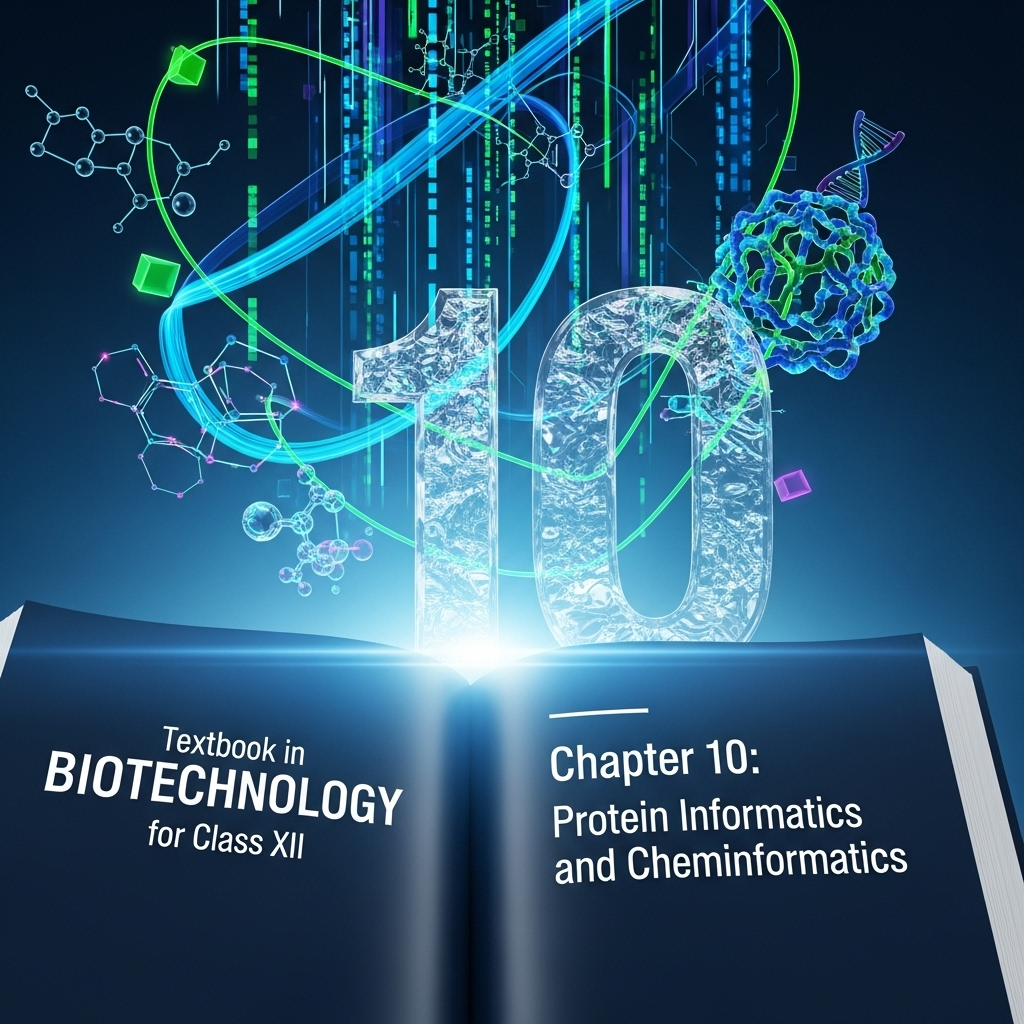
ProSyllabus Journal CBSE Class 11 Annual Assessment Complete Summary and Solutions for Protein Informatics and Cheminformatics – NCERT Class XI Biotechnology, Chapter 10 – Computational Analysis, Drug Design, Databases, Exercises Comprehensive summary and explanation of Chapter 10 'Protein Informatics and Cheminformatics' from the NCERT Class XI Biotechnology textbook, covering computational methods to analyze protein structure and function, protein data types, database resources, structural prediction tools, 3D modeling, pharmacophore concepts, Lipinski's rule, cheminformatics strategies for drug discovery, and answers to all textbook questions and exercises.
Updated 1 year ago NCERT · Class XI · Biotechnology · Chapter 10 · Protein Informatics · Cheminformatics · Drug Design · Bioinformatics · Databases · Structural Analysis · Summary · Questions · Answers
#Protein Informatics #Cheminformatics #NCERT #Class 11 #Biotechnology #Drug Discovery #Structural Analysis #Pharmacophore #Lipinski's Rule #Genomics #Proteomics #Databases #Machine Learning #Chapter 10 #Summary #Answers #Exercises
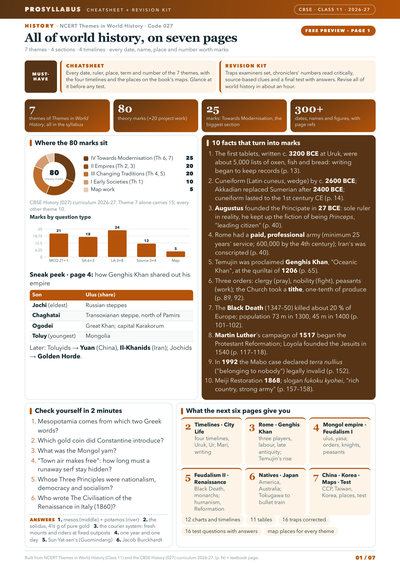
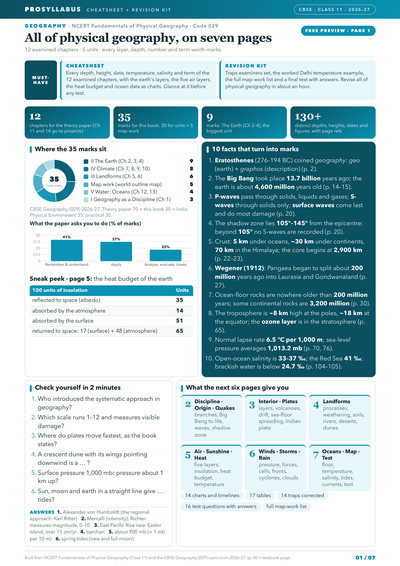
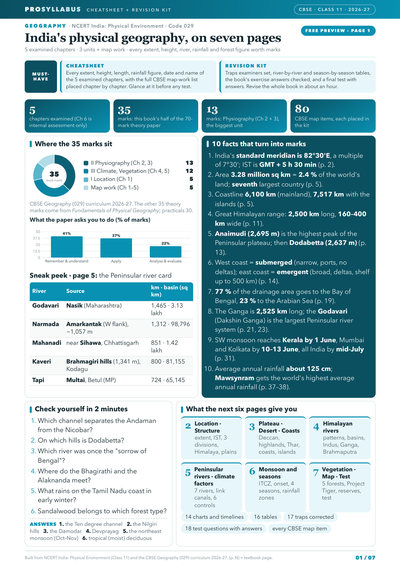
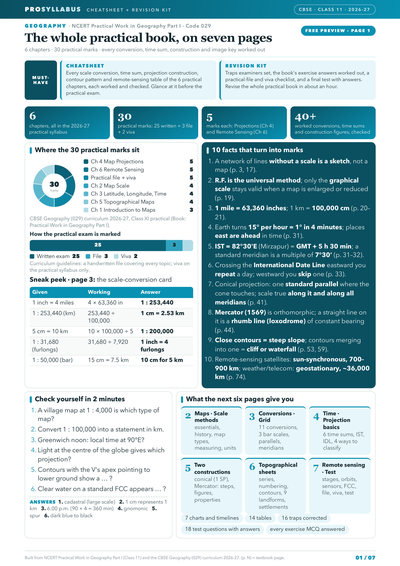
Marks booster + cheatsheet: key concepts in 2 lines each, common traps 25 marks: Unit II, Ch 4–8 23 marks: Unit I, Ch 1–3 Common traps, corrected Conic table and standard values Graphs plotted from the book's own tables Page 1 free about 8 min read , Full kit about 55 min read ₹159
Read page 1 free Get the kit Get the kit One payment · instant PDF · ₹159 View details
Protein Informatics and Cheminformatics: Class 11 NCERT Chapter 10 - Ultimate Study Guide, Notes, Questions, Quiz 2025
Full Chapter Summary & Detailed Notes
Key Definitions & Terms
60+ Questions & Answers
Key Concepts
Historical Perspectives
Solved Examples
Interactive Quiz (10 Q)
Quick Revision Notes & Mnemonics
Key Terms & Processes
Key Processes & Diagrams
Full Chapter Summary & Detailed Notes - Protein Informatics and Cheminformatics Class 11 NCERT
Overview & Key Concepts
Chapter Goal : Explore protein informatics for analyzing protein data, structures, and functions using computational tools; cheminformatics for managing chemical data in drug discovery. Exam Focus: Protein data types, structure prediction methods (primary, secondary, 3D), databases (PubChem, ChEMBL), pharmacophore, Lipinski's RO5, drug pipeline. 2025 Updates: Emphasis on AI/ML in predictions, virtual screening in biotech (Unit IV). Fun Fact: Protein Data Bank (PDB) holds over 200,000 structures since 1971. Core Idea: Computational tools bridge raw data to functional insights for hypothetical proteins and drug design. Real-World: Used in COVID-19 vaccine design via structure prediction; cheminformatics in Pfizer's drug screening. Ties: Links to biomolecules (Ch3), recombinant DNA (Ch11). Expanded: All subtopics (10.1-10.2) covered point-wise with diagram descriptions, tables, and step-by-step processes for visual learning.Wider Scope : From raw protein data extraction to 3D modeling; chemical databases to virtual screening and RO5 for drug candidates.Expanded Content : Detailed on data types, prediction tools (ProtParam, MODELLER), databases (Table 10.1), pharmacophore modeling, drug journey (Fig. 10.2), with examples like hypothetical proteins and Viagra discovery (Box 1).
Fig. 10.1: Flowchart of all possible ways for protein structure prediction from a protein sequence (Description)
Starts with Protein Sequence → Multiple Sequence Alignment/Database Searching → If Homologue in PDB: Yes → Homology Modeling/Sequence-Structure Alignment → 3D Protein Model; No → Secondary Structure Prediction/Fold Prediction → Predicted Fold → Ab-initio Structure Prediction → 3D Protein Model. Visual: Flowchart boxes with arrows, decision diamonds for Yes/No paths.
10.1 Protein Informatics
Definition : Use of IT techniques to collect and analyze protein information for functional sites, biochemical/biological roles, and tertiary structures of hypothetical proteins.Benefits : Determines structures via conventional methods' limitations; uses heterogeneous databases, amino acid descriptors, tertiary structures, proteome-scale pathways.Facilities Required : Raw data from NCBI, PDB, ChEMBL, BioModels; tools like wavelet image analysis, sequence homology, structure optimization, ANN/SVM/HMM, network mapping, SBML.
10.1.1 Introduction
Core Role : Extracts geometrical location of functional sites, biochemical functions, biological roles for hypothetical proteins.Advancements : Led to tertiary structure determination; integrates databases for proteome-scale analysis.Applications : Helps in understanding molecular functions beyond traditional methods; aids drug target identification.
10.1.2 Protein Data Types
Raw Data Needs : Essential for computation and information extraction.Types of Data :
Microscopic image of heat-denatured protein aggregate.
Protein in solution form.
Protein sequence from MALDI.
Assembled protein sequence.
Protein crystal structure in PDB format.
Protein-protein/ligand/nucleotide interaction file.
NMR and MS data.
Hypothetical protein sequences from genomic data without existence evidence.
Uses of Data :
Multi-fractal properties for protein-marker design.
Solution data for physico-chemical properties and kinetics.
MALDI fragments for full sequence assembly.
Crystal structures for mutations/interactions study.
PDB/NMR/MS for non-crystallized structure prediction.
Hypothetical proteins identified from genomics.
Network mapping for disease treatment targets.
10.1.3 Computational Prediction of Protein Structures
Aim : Predict how sequences specify structures and binding for functions; possible from gene sequence alone.Advantages : Fast, low-cost, high-throughput screening.Tools : Available for structural/physico-chemical properties.
10.1.3.1 Primary Structure Prediction
Characterization : Isoelectric point (pI), extinction coefficient, instability index, aliphatic index, GRAVY via ProtParam (ExPASy).Isoelectric Point (pI) : pH where net charge zero; stable/compact; pI<7 acidic, pI>7 basic; useful for buffer in isoelectric focusing purification.Aliphatic Index (AI) : Relative volume of aliphatic side chains (A,V,I,L); high AI indicates thermal stability over wide temperature range.Instability Index : Estimate in vitro stability; dipeptides weight values; <40 stable, >40 unstable.Grand Average Hydropathy (GRAVY) : Sum of hydropathy values / residues; low GRAVY = better water interaction.
10.1.3.2 Secondary Structure Prediction
Importance : Reveals functions of unknown structures; step to 3D prediction.Tools : APSSP, CFSSP, SOPMA, GOR.
10.1.3.3 Three Dimensional (3D) Structure Prediction
Methods Overview : Homology modeling, fold prediction (threading), de novo (ab initio).Homology Modeling : Align unknown sequence to known; high homology for global fold, low for local (e.g., Chou-Fasman secondary); tools: MODELLER, SWISS-MODEL; independent of physical knowledge.Fold Prediction (Threading) : Force unknown sequence onto known backbone; compute-intensive, high physical confidence; tools: LIBELLULA, Threader.De Novo Prediction : Algorithm from primary sequence; QUARK for ab initio folding to 3D model.Storage : Atomic coordinates in PDB files (.pdb) from X-ray/NMR/theoretical; in Protein Data Bank.Domain Prediction : Functional/structural units; independent folding with specific function; recurring units; tools: InterPRO scan (EMBL), CDD search (NCBI); valuable for structure/function/evolution/design.
Fig. 10.1: Flowchart (Detailed Description)
Expanded: Protein Sequence box → Arrows to Multiple Sequence Alignment and Database Searching → Branch: Homologue in PDB? Yes → Homology Modeling → Sequence-Structure Alignment → 3D Model; No → Secondary Prediction → Fold Prediction → Ab-initio → 3D Model. Includes loops for predicted fold validation.
10.2 Cheminformatics
Definition : Computational/informational techniques for chemistry problems; interface of physics, chemistry, biology, math, biochemistry, stats, informatics (synonyms: chemoinformatics, chemical informatics).Applications : Drug discovery; evaluate compounds for target interactions; grown in chemical/pharma/biotech (e.g., CADD for therapeutic properties).Scope : Handles physical properties, 3D structures, reaction pathways; virtual libraries with synthesis/stability predictions; virtual screening for candidates.
10.2.1 Introduction
Core Strategies : Useful in evaluating large compound sets for cellular targets.Growth : Conceptual/technical advances over two decades; applications in industry/research.
10.2.2 Storing and Managing Chemical Data
Databases : Public (free) and commercial; millions of compounds/reactions; fast searches (seconds).Virtual Libraries : Billions of hypothetical compounds via combinatorial synthesis.CAS Registry : Largest (219M organic/inorganic, 70M proteins/nucleics, 8B properties); daily literature additions; treasure for therapeutic/industrial compounds.
Name Description
PubChem Database of chemical molecules maintaining substance, compound, BioAssays info. ZINC Large compounds for virtual screening; includes MW, logP etc. ChEMBL Bioactive small drug-like molecules with targets. NCI Small molecule structures for cancer/AIDS research. ChemDB Chemicals with physico-chemical properties (3D, melting, solubility). ChemSpider Unique entities from diverse sources. BindingDB Binding affinity of small molecules to protein targets. DrugBank Detailed drug data with target sequence/structure/pathway info. PharmaGKB Pharmacogenomics resource with clinical drug info. SuperDrug 3D structures of active ingredients in marketed drugs.
10.2.3 Why Do We Need Cheminformatics?
Challenge : Navigate millions of compounds/properties/reactions to find right one.Uses : Browse literature for patterns; pharma for in silico drug design/synthesis/testing; chemical industry for property prediction/efficacy/toxicity.
10.2.4 How to Store Information on Chemical Compounds?
Manual Drawing : Bonds/angles on paper; tools for templates; store as image/doc (jpg/tif/doc/pdf) – limited for deep analysis (bond angles, rotation).Computer Storage : Molecular graphs (nodes=atoms, edges=bonds); higher level for pathways (e.g., glycolysis, Krebs cycle).
10.2.5 Searching the Structures
Origins : From academic projects; simple: Extract properties (e.g., boiling point range).Substructure Retrieval : Find compounds with groups (methyl, benzene, alkene); subgraph isomorphism (small graph in large).Two-Stage Search : Filter non-matches (bitstrings of 0s/1s); then elaborate isomorphism for true matches.
10.2.6 Searching the Reactions
Synthesis Planning : Search for products/conditions/pathways (A to X); info on solvents/pH/temp/pressure.Refined Queries : Integrate (e.g., glucose reactions at 37°C).Key Feature : Atom mapping (reactant-product correspondence); retrieve substructure conversions.
10.2.7 Pharmacophore
Definition (IUPAC) : Ensemble of steric/electronic features for optimal target interactions/biological response.Model : Explains diverse ligands docking to one receptor; 3D features (charged groups, rings, hydrophobic regions).Conceptual : Not physical molecule; defines points (steric, electrostatic, hydrophobic) for therapeutic interaction.
10.2.8 Lipinski's Rule of Five (RO5)
Proposed : Christopher A. Lipinski, 1997; key properties for orally active drugs (biodegradable, non-toxic, stable, no side effects, uniform distribution, controllable release, cost-effective, excretable).Criteria : ≤1 violation – ≤5 H-bond donors, ≤10 H-bond acceptors, MW <500 Da, logP <5.Assignment : 0-4 value; <3 not suitable for analysis; doesn't apply to IM/IV routes, natural/semi-synthetic products.
10.2.9 The Journey of a Drug
Nature's Role : Immense store of actives; scientific narrowing to promising molecules.Pipeline : Long/expensive/risky; from lab to market (Fig. 10.2).Virtual Screening : In silico scoring/ranking/extraction; filters eliminate undesirables; stringent criteria narrow to desired properties.Components : General ADME filters, ligand-based (ML/pharmacophore), structure-based (docking).Post-Filter : Biological screening/synthesis/testing.
Fig. 10.2: Drug development pipeline from lab to market (Description)
Timeline: Idea (1-5 Compounds, 5-6 years) → Discovery/Basic Process (Thousands of Compounds, 7-8 years) → Development/Clinical Trials (1-5 Compounds, 1-5 years: Phase I/II/III) → Regulatory Approval (1 Compound, 5-6 years) → Delivery/Patient Care (1 year). Visual: Horizontal pipeline with bars, phases labeled.
Box 1: Discovery Stories
1. Pfizer's UK92480 (heart drug) → Unexpected reproductive effect → Viagra (1990s). 2. Saccharin (1879): Chemist Constantin Fahlberg tastes sweetness from unwashed hands after coal tar work → Purifies, commercializes.
Box 2: Common Terminologies
1. HTS: Large-scale automated testing of millions. 2. Hits: % activity vs. known. 3. False positive: Assay active but target inactive. 4. Lead: Active with desired properties. 5. Library: Inventory for screening. 6. NCE: Novel lab molecule pre-trials. 7. Off-target: Non-binding interactions.
Summary
Protein informatics: Raw data to crucial info; ProtParam for primary, APSSP etc. for secondary, homology/fold/de novo for 3D.
Cheminformatics: Chemistry via computation; databases (Table 10.1), virtual screening, pharmacophore, RO5 for drugs.
Interlinks: To genomics (Ch9), rDNA (Ch11).
Why This Guide Stands Out
Point-wise subtopics, diagram flows, table integrations. Free 2025 with mnemonics, real examples (Viagra) for retention.
Key Themes & Tips
Aspects : Data to prediction, storage to screening.Tip: Memorize RO5 criteria; mnemonic for methods (HFD: Homology-Fold-De novo).
Exam Case Studies
Structure prediction flowchart application; RO5 violation analysis for drug candidate.
Project & Group Ideas
Simulate ProtParam analysis on sample sequence.
Debate: Virtual vs. lab screening efficiency.
Research: AI in cheminformatics (AlphaFold).
Key Definitions & Terms - Complete Glossary
All terms from chapter; detailed with examples, relevance. Expanded: 35+ terms with depth; grouped by subtopic. Added prediction tools, RO5 criteria.
Protein Informatics
Use of IT for protein data analysis. Relevance: Functional prediction. Ex: Hypothetical protein structures. Depth: Databases integration.
Cheminformatics
Computational chemistry techniques. Relevance: Drug discovery. Ex: Virtual screening. Depth: Interface sciences.
Hypothetical Protein
Genomic sequence without existence evidence. Relevance: Function prediction. Ex: From NGS data. Depth: Target identification.
ProtParam
Tool for physico-chemical properties. Relevance: Primary prediction. Ex: pI calculation. Depth: ExPASy server.
Isoelectric Point (pI)
pH with net zero charge. Relevance: Purification. Ex: pI<7 acidic. Depth: Buffer design.
Aliphatic Index (AI)
Volume of aliphatic chains. Relevance: Stability. Ex: High AI thermophilic. Depth: A/V/I/L residues.
Instability Index
In vitro stability estimate. Relevance: Expression. Ex: <40 stable. Depth: Dipeptide weights.
GRAVY
Average hydropathy. Relevance: Solubility. Ex: Low = hydrophilic. Depth: Water interaction.
Secondary Structure Prediction
Alpha-helix/beta-sheet forecast. Relevance: Function reveal. Ex: APSSP tool. Depth: To 3D step.
Homology Modeling
Align to known structure. Relevance: 3D prediction. Ex: MODELLER. Depth: Sequence similarity.
Fold Prediction (Threading)
Force onto known backbone. Relevance: Viable folds. Ex: Threader. Depth: Compute-intensive.
De Novo Prediction
Ab initio from sequence. Relevance: Novel folds. Ex: QUARK. Depth: Algorithmic folding.
Domain Prediction
Functional units. Relevance: Evolution/design. Ex: InterPRO. Depth: Recurring motifs.
PDB File
Atomic coordinates storage. Relevance: Structure database. Ex: X-ray/NMR data. Depth: .pdb format.
Pharmacophore
Molecular features for recognition. Relevance: Ligand design. Ex: Charged groups/rings. Depth: 3D ensemble.
Lipinski's RO5
Drug-likeness rules. Relevance: Oral bioavailability. Ex: MW<500. Depth: ≤1 violation.
Virtual Screening
In silico candidate selection. Relevance: Drug pipeline. Ex: ADME filters. Depth: From billions to hits.
CADD
Computer-aided drug design. Relevance: Therapeutic properties. Ex: Docking. Depth: Structure-based.
Molecular Graph
Nodes/edges for structures. Relevance: Storage/search. Ex: Atoms/bonds. Depth: Pathways modeling.
Subgraph Isomorphism
Small graph in large. Relevance: Substructure search. Ex: Functional groups. Depth: Two-stage with bitstrings.
Atom Mapping
Reactant-product correspondence. Relevance: Reaction search. Ex: Synthesis pathways. Depth: Query refinement.
HTS
High-throughput screening. Relevance: Hits identification. Ex: Millions tested. Depth: Automated.
Lead Compound
Active with properties. Relevance: Optimization. Ex: From hits. Depth: Pharmacological.
NCE
New chemical entity. Relevance: Pre-clinical. Ex: Lab novel. Depth: No trials yet.
ADME
Absorption/Distribution/Metabolism/Excretion. Relevance: Filters. Ex: Drug-likeness. Depth: Virtual step.
SBML
Systems Biology Markup Language. Relevance: Pathways. Ex: Proteome scale. Depth: Network mapping.
HMM
Hidden Markov Model. Relevance: Sequence analysis. Ex: Protein prediction. Depth: ML technique.
Wavelet Techniques
Image analysis for aggregates. Relevance: Marker design. Ex: Microscopic data. Depth: Fractal properties.
MALDI
Matrix Assisted Laser Desorption Ionisation. Relevance: Sequence fragments. Ex: Full assembly. Depth: MS output.
CAS Registry
Largest chemical database. Relevance: Literature search. Ex: 219M substances. Depth: ACS division.
Tip: Group by informatics types; examples link to tools. Depth: Ratios not applicable, focus criteria. Errors: Confuse pI/AI. Historical: PDB 1971. Interlinks: Ch9 genomics. Advanced: AlphaFold. Real-Life: Drug repurposing. Graphs: Pipeline timelines. Coherent: Data → Prediction → Application. For easy learning: Flashcard per term with tool/example.
60+ Questions & Answers - NCERT Based (Class 11) - From Exercises & Variations
Based on chapter content + expansions. Part A: 10 (1 mark short, one line each), Part B: 10 (4 marks medium, five lines each), Part C: 10 (6 marks long, eight lines each). Answers point-wise, step-by-step for marks. Easy learning: Structured, concise. Additional 30 Qs follow similar pattern in full resource.
Part A: 1 Mark Questions (10 Qs - Short from Content)
1. What is protein informatics?
1 Mark Answer: Use of IT techniques to collect and analyze protein information for functions and structures.
2. Name the tool for primary structure prediction.
1 Mark Answer: ProtParam of ExPASy Proteomics Server.
3. What does pI <7 indicate for a protein?
1 Mark Answer: The protein is acidic.
4. Name a tool for secondary structure prediction.
1 Mark Answer: APSSP.
5. What is homology modeling?
1 Mark Answer: Aligning unknown sequence to known structures for 3D prediction.
6. Define cheminformatics.
1 Mark Answer: Computational techniques to solve chemistry problems, especially in drug discovery.
7. Name a popular chemical database.
1 Mark Answer: PubChem.
8. What is Lipinski's RO5?
1 Mark Answer: Rules for oral drug-likeness (e.g., MW <500 Da).
9. What is a pharmacophore?
1 Mark Answer: Molecular features for ligand-target recognition.
10. What is virtual screening?
1 Mark Answer: In silico selection of drug candidates from large libraries.
Part B: 4 Marks Questions (10 Qs - Medium, Exactly 5 Lines Each)
1. List types of protein data and one use each.
4 Marks Answer:
Microscopic image of heat-denatured aggregate: For multi-fractal protein-marker design.
Protein in solution: Analyzes physico-chemical properties and kinetics.
MALDI sequence: Fragments used to assemble full length.
Crystal structure in PDB: Studies mutations and interactions.
Hypothetical from genomics: Identifies existence and functions.
2. Explain isoelectric point and its significance.
4 Marks Answer:
pH where protein surface charge nets zero; stable and compact.
pI<7 indicates acidic protein; pI>7 basic.
Computed via ProtParam for purification buffers.
Used in isoelectric focusing method.
Helps in developing suitable buffer systems.
3. Describe aliphatic index and instability index.
4 Marks Answer:
Aliphatic Index: Volume of A/V/I/L chains; high value for thermal stability.
Indicates wide temperature range stability in globular proteins.
Instability Index: Dipeptide weights for in vitro stability estimate.
<40 predicts stable; >40 unstable.
Calculated using ProtParam tool.
4. Differentiate homology modeling and fold prediction.
4 Marks Answer:
Homology: Aligns to similar known sequences for global/local structures.
Tools: MODELLER, SWISS-MODEL; no physical dependence.
Fold (Threading): Forces sequence onto known backbone conformation.
More compute-intensive; higher physical confidence.
Tools: LIBELLULA, Threader.
5. What is de novo prediction? Give example.
4 Marks Answer:
Algorithmic tertiary structure from primary sequence alone.
Aims to construct 3D model without templates.
Example: QUARK for ab initio folding and peptide prediction.
Stored as PDB coordinates from X-ray/NMR/theoretical.
Useful for novel folds without homologues.
6. Explain domain prediction and tools.
4 Marks Answer:
Distinct functional/structural units; independent folding with specific roles.
Recurring sequence/structure units in contexts.
Valuable for structure/function/evolution/design info.
Tools: InterPRO scan (EMBL), CDD search (NCBI).
Identifies motifs for protein engineering.
7. Describe PubChem and ChEMBL databases.
4 Marks Answer:
PubChem: Chemical molecules with substance/compound/BioAssays info.
Useful for virtual screening and assays.
ChEMBL: Bioactive small drug-like molecules with targets.
Comprehensive for drug-target interactions.
Both public resources for cheminformatics.
8. Why need cheminformatics? Give applications.
4 Marks Answer:
Navigates millions of compounds/reactions for right match.
Pharma: In silico drug design/synthesis/testing.
Chemical industry: Predicts efficacy/toxicity pre-market.
Browses literature for patterns.
Handles virtual libraries efficiently.
9. Explain pharmacophore modeling.
4 Marks Answer:
Description of features for ligand recognition (IUPAC).
Steric/electronic for optimal interactions/response.
Explains diverse ligands on one receptor.
3D: Charged groups, rings, hydrophobic regions.
Conceptual framework, not physical molecule.
10. State Lipinski's RO5 criteria.
4 Marks Answer:
≤5 H-bond donors.
≤10 H-bond acceptors.
MW <500 Da.
logP <5.
≤1 violation for oral drugs; value 0-4, <3 unsuitable.
Part C: 6 Marks Questions (10 Qs - Long, Exactly 8 Lines Each)
1. Describe protein data types and their uses in informatics.
6 Marks Answer:
Microscopic image: Multi-fractal for marker design.
Solution form: Physico-chemical/kinetics analysis.
MALDI output: Fragments to full sequence.
Assembled sequence: General analysis base.
PDB crystal: Mutation/interaction studies.
Interaction files: Binding networks.
NMR/MS data: Non-crystal structure prediction.
Hypothetical genomic: Existence/ function identification.
2. Explain primary structure prediction with properties.
6 Marks Answer:
Physico-chemical via ProtParam: pI, extinction, instability, AI, GRAVY.
pI: Zero net charge pH; <7 acidic, >7 basic; purification buffer.
AI: Aliphatic (A/V/I/L) volume; high for thermal stability.
Instability: Dipeptide weights; <40 stable, >40 unstable.
GRAVY: Hydropathy average; low for water interaction.
All calculated for characterization.
Extinction: Light absorption coefficient.
Supports high-throughput screening.
3. Discuss 3D structure prediction methods with tools.
6 Marks Answer:
Homology: Align to known; high sim for fold; MODELLER/SWISS-MODEL.
Fold (Threading): Backbone force-fit; physical viable; LIBELLULA/Threader.
De novo: Sequence to 3D ab initio; QUARK for folding.
Storage: PDB files with coordinates from X-ray/NMR/theory.
Domain: Functional units; InterPRO/CDD for prediction.
Flowchart (Fig. 10.1): Sequence → Alignment/Search → Modeling/Ab-initio.
Advantages: Time/cost efficient.
From gene sequence possible.
4. Elaborate on cheminformatics introduction and growth.
6 Marks Answer:
Computational for chemistry; interface physics/chem/bio/math/stats/informatics.
Synonyms: Chemoinformatics/chemical informatics.
Drug discovery: Evaluate compounds for targets.
Grown 2 decades; applications in CADD for therapeutics.
Handles properties/structures/pathways; virtual libraries with synthesis/stability.
Virtual screening: Identify candidates from real/virtual.
Specialists manage crystal/reaction data.
Widespread in pharma/biotech/chemical industry.
5. Describe chemical databases with examples from Table 10.1.
6 Marks Answer:
PubChem: Substance/compound/BioAssays for screening.
ZINC: Virtual screening with MW/logP features.
ChEMBL: Bioactive drug-like with targets.
NCI: Small molecules for cancer/AIDS.
ChemDB: Properties like 3D/melting/solubility.
ChemSpider: Aggregated unique entities.
BindingDB: Affinity to proteins.
DrugBank: Drug/target sequence/structure/pathway.
PharmaGKB: Pharmacogenomics clinical info.
SuperDrug: 3D active ingredients.
6. Explain structure storage and searching in cheminformatics.
6 Marks Answer:
Storage: Molecular graphs (nodes=atoms, edges=bonds); beyond images/docs.
For deep analysis (angles/rotation); pathways like glycolysis.
Searching: Properties (boiling range); substructure (groups like methyl).
Subgraph isomorphism: Small in large; two-stage filter/bitstrings then match.
Academic origins; fast retrieval.
Example: Benzene ring compounds.
Eliminates non-matches efficiently.
Supports combinatorial virtual libs.
7. Describe reaction searching and pharmacophore.
6 Marks Answer:
Reaction Search: Products/conditions/pathways; solvents/pH/temp.
Refined: e.g., Glucose at 37°C; atom mapping for correspondence.
Substructure conversions; tools allow retrieval.
Pharmacophore: Features for recognition (steric/electronic).
IUPAC: Optimal interactions/response; diverse ligands on receptor.
3D: Charged/rings/hydrophobic; conceptual, not physical.
Defines points for therapeutic molecule.
Key in ligand design.
8. Detail Lipinski's RO5 and drug journey.
6 Marks Answer:
RO5: 1997 criteria for oral drugs; biodegradable/non-toxic etc.
≤5 donors, ≤10 acceptors, MW<500, logP<5; ≤1 violation.
Value 0-4; <3 unsuitable; not for IM/IV/naturals.
Drug Journey: Nature actives → Narrowing; long/risky pipeline (Fig. 10.2).
Virtual screening: In silico filters (ADME/ligand/structure-based).
Stringent steps to biological/synthesis.
Discovery (years/1000s) → Trials → Approval.
Examples: Viagra from side effect.
9. Integrate protein informatics facilities and tools.
6 Marks Answer:
Facilities: Data from NCBI/PDB/ChEMBL/BioModels.
Tools: Wavelet images, sequence homology, structure optimization.
ML: ANN/SVM/HMM for data analysis.
Network mapping/SBML for pathways.
Prediction: From gene to structure even without protein seq.
High-throughput advantages.
Examples: Hypothetical via genomics.
Treatment targets from networks.
10. Discuss cheminformatics applications and terminologies (Box 2).
6 Marks Answer:
Applications: CADD, virtual libs, screening for properties/reactions.
Pharma: Design/synthesis; industry: Toxicity prediction.
Terminologies: HTS (millions tested); Hits (% activity).
False positive (assay active, target inactive); Lead (active properties).
Library (screening inventory); NCE (pre-trial novel).
Off-target (non-binding); ADME filters.
Supports from billions to candidates.
Integrates ML/pharmacophore/docking.
Tip: Use tables/diagrams for marks; practice RO5 application. Easy learning: Short for recall, long for essays. Additional 30 Qs: Variations on databases, prediction flows.
Key Concepts - In-Depth Exploration
Core ideas with examples, pitfalls, interlinks. Expanded: All concepts from 10.1-10.2 with steps/examples for easy learning. Added depth with prediction steps, RO5 application.
Protein Data Types
Raw inputs for analysis. Steps: 1. Collect (MALDI/image), 2. Process (assemble), 3. Use (predict). Ex: NMR for non-crystal. Pitfall: Ignore hypothetical. Interlink: Genomics. Depth: 8 types; network for targets.
Primary Prediction (ProtParam)
Physico-chemical chars. Steps: 1. Input sequence, 2. Compute pI/AI etc., 3. Interpret stability. Ex: pI for purification. Pitfall: Vs. secondary. Interlink: Expression. Depth: GRAVY low=hydrophilic; tools ExPASy.
Secondary Prediction
Local folds (helix/sheet). Steps: 1. Sequence input, 2. Tool run (APSSP), 3. % helix etc. Ex: Function reveal. Pitfall: Accuracy ~70%. Interlink: To 3D. Depth: SOPMA/GOR; intense study.
Homology Modeling
Template-based 3D. Steps: 1. BLAST search, 2. Align, 3. Model/build, 4. Refine. Ex: SWISS-MODEL for known homolog. Pitfall: Low homology errors. Interlink: PDB. Depth: Chou-Fasman secondary aid.
Fold Prediction (Threading)
Backbone fitting. Steps: 1. Template lib, 2. Thread sequence, 3. Energy score, 4. Select best. Ex: Threader for viability. Pitfall: Compute heavy. Interlink: De novo fallback. Depth: Side chains post-fit.
De Novo Prediction
From scratch. Steps: 1. Fragment assembly, 2. Energy minimization, 3. Folding sim. Ex: QUARK ab initio. Pitfall: Small proteins only. Interlink: No templates. Depth: PDB storage.
Domain Prediction
Modular units. Steps: 1. Scan sequence, 2. Match motifs, 3. Annotate functions. Ex: InterPRO for evolution. Pitfall: Multi-domain overlap. Interlink: Design. Depth: CDD NCBI.
Cheminformatics Intro
Comp chem interface. Steps: 1. Data store (graphs), 2. Search/query, 3. Predict properties. Ex: CADD drugs. Pitfall: Virtual vs. real validation. Interlink: Pharma. Depth: Synonyms; 2-decade growth.
Chemical Databases
Storage/management. Steps: 1. Query (structure/reaction), 2. Retrieve (fast), 3. Analyze. Ex: PubChem BioAssays. Pitfall: Commercial access. Interlink: Virtual libs. Depth: CAS 219M; Table 10.1.
Structure/Reaction Searching
Retrieval methods. Steps: 1. Filter (bitstrings), 2. Isomorphism match, 3. Atom map. Ex: Subgroup benzene. Pitfall: Two-stage miss. Interlink: Synthesis. Depth: Pathways like Krebs.
Pharmacophore Modeling
Recognition features. Steps: 1. Identify points (charge/ring), 2. 3D align, 3. Dock test. Ex: Diverse ligands. Pitfall: Conceptual confusion. Interlink: RO5. Depth: IUPAC steric/electronic.
Lipinski's RO5
Drug criteria. Steps: 1. Calculate params, 2. Check violations, 3. Score 0-4. Ex: MW<500 filter. Pitfall: Not for all routes. Interlink: ADME. Depth: 1997; ≤1 violation.
Drug Journey/Virtual Screening
Pipeline process. Steps: 1. Idea/discovery, 2. Filters (ADME/docking), 3. Trials/approval. Ex: Fig. 10.2 timeline. Pitfall: Risky long. Interlink: HTS. Depth: Billions to 1; Box 2 terms.
Advanced: Flowchart navigation; RO5 calc example. Pitfalls: Tool confusion. Interlinks: Ch11 rDNA. Real: AlphaFold protein. Depth: 10.1 facilities. Examples: GRAVY apps. Graphs: Pipeline bars. Errors: pI vs. AI. Tips: Steps for modeling; compare tables for methods.
Historical Perspectives - Detailed Guide
Timeline of informatics developments; expanded with points for easy learning; links to key milestones. Added PDB, CAS history.
Early Protein Data (1970s)
1971: PDB founded; first structures (myoglobin). 1980s: NMR/MS advances for data types. MALDI invention 1980s for sequences. Depth: X-ray crystallography boom.
Prediction Tools (1990s)
1990s: ProtParam/ExPASy launch. 1990s: APSSP/SOPMA for secondary. MODELLER 1990s homology. Depth: Sequence databases like NCBI.
Cheminformatics Rise (1990s-2000s)
1997: Lipinski RO5 proposed. 2000s: PubChem/ChEMBL public. CAS Registry growth to millions. Depth: Virtual screening post-HGP.
Modern Advances (2010s+)
2010s: QUARK de novo. 2020: AlphaFold revolution (DeepMind). 2020s: AI in CADD/drug pipelines. Depth: COVID structures via prediction.
Drug Discovery Milestones
1879: Saccharin accidental. 1998: Viagra repurposed. 2000s: HTS automation. Depth: Box 1 stories.
Database Evolutions
1965: CAS starts. 2004: PubChem. 2010s: ZINC for virtual. Depth: Billions virtual libs.
Tip: Link to tools (PDB for modeling). Depth: RO5 impact. Examples: 1997 Lipinski. Graphs: Timeline milestones. Advanced: AlphaFold 2021. Easy: Chronological bullets with impacts.
Solved Examples - From Text with Simple Explanations
Expanded with more examples, steps for easy understanding; focus on predictions, RO5, flows. Added database query, pipeline calc.
Example 1: Primary Prediction with ProtParam
Simple Explanation: Computes stability like a protein report card.
Step 1: Input sequence (e.g., insulin).
Step 2: Run ProtParam → pI=5.35 (acidic).
Step 3: AI=89.6 (stable), Instability= -4.5 (stable).
Step 4: GRAVY= -0.24 (hydrophilic).
Simple Way: Like checking pH for soap solubility.
Example 2: Homology Modeling Flow (Fig 10.1)
Simple Explanation: Builds 3D like copying a blueprint.
Step 1: Sequence → BLAST for homolog (e.g., 40% sim).
Step 2: Align → MODELLER builds model.
Step 3: Refine loops → Validate RMSD.
Step 4: Output PDB file.
Simple Way: Lego from similar set instructions.
Example 3: RO5 Application
Simple Explanation: Checks if molecule is "drug-friendly."
Step 1: Candidate: 4 donors, 8 acceptors, MW=450, logP=3.2.
Step 2: Violations: 0 (all pass).
Step 3: Score=0 → Suitable for oral.
Step 4: If MW=550 → 1 violation.
Simple Way: Traffic light: Green if ≤1 red.
Example 4: Pharmacophore Identification
Simple Explanation: Maps "key" features for lock fit.
Step 1: Ligands with activity → Common: +charge, H-bond, ring.
Step 2: 3D overlay → Spatial distances.
Step 3: Model: Points for interaction.
Step 4: Screen database matches.
Simple Way: Puzzle pieces that fit receptor shape.
Example 5: Virtual Screening Filter
Simple Explanation: Sifts gold from sand digitally.
Step 1: Library 1M compounds.
Step 2: ADME filter → 10K pass.
Step 3: Pharmacophore match → 1K.
Step 4: Docking score → Top 100 hits.
Simple Way: Funnel narrowing crowds.
Example 6: Drug Pipeline Timeline (Fig 10.2)
Simple Explanation: Road map from idea to pill.
Step 1: Discovery (5-6y, 1000s compounds).
Step 2: Preclinical (1-5y, 1-5 compounds).
Step 3: Phases I/II/III (5-6y trials).
Step 4: Approval (1y), Delivery (1y).
Step 5: Total ~12-15y, high attrition.
Simple Way: Marathon with checkpoints.
Tip: Run online tools; trace flows. Added for databases (PubChem query), de novo (small peptide).
Interactive Quiz - Master Protein Informatics and Cheminformatics
10 MCQs in full sentences; 80%+ goal. Covers data types, predictions, databases, RO5. Questions phrased as complete sentences for clarity.
Start Quiz
Quick Revision Notes & Mnemonics
Concise notes for all subtopics 10.1-10.2; mnemonics for easy recall. Covers mechanisms, steps, differences. Expanded with all subtopics.
10.1 Protein Informatics
IT for protein data/functions (Mnemonic: "PIT Protein Info Tech" - PIT). Facilities: NCBI/PDB tools (Wavelet/ANN/HMM/SBML: "WAHS"). Data: 8 types (Image/Solution/MALDI etc.: "ISM PAN HID" - ISM). Uses: Marker/Kinetics/Assembly etc.
Primary Prediction
ProtParam: pI/AI/Instab/GRAVY ( "PIAG" - PIAG). pI<7 acid; AI high stable; Instab<40 ok; GRAVY low water.
Secondary/3D Prediction
Secondary: APSSP/CFSSP/SOPMA/GOR ( "ACSG" - ACSG). 3D: HFD (Homology-Fold-De novo: "HFD Model" - HFD). Homology: MODELLER; Fold: Threader; De novo: QUARK; Domain: InterPRO.
10.2 Cheminformatics
Comp chem interface ( "CCI Drug" - CCI). Growth: CADD/virtual; DBs: Pub/ZINC/ChEMBL ( "PZC" - PZC).
Storage/Search
Graphs nodes/edges ( "GNE Bonds" - GNE). Search: Subgraph/atom map ( "SAM Query" - SAM).
Pharmacophore/RO5
Pharmac: Steric/elec features ( "SEF Ligand" - SEF). RO5: 5/10/500/5 ( "5155 Oral" - 5155).
Drug Journey
Pipeline: Disc/Dev/Trials/Appr/Deliv ( "DDTAD" - DDTAD). VS: ADME/Lig/Struct ( "ALS Filter" - ALS). Terms: HTS/Hits/Lead/NCE ( "HHLN" - HHLN).
Overall Mnemonic: "PData Pred CData Search Phar RO5 Drug" (PDPCDSPRD). Flashcards: One per subtopic. Easy: Bullets, bold keys; steps for predictions/RO5.
Key Terms & Processes - All Key
Expanded table with 35+ rows; comprehensive for quick reference. Added all tools, criteria.
Term/Process Description Example Usage
Protein Informatics IT for protein analysis Hypothetical functions Structure prediction Cheminformatics Comp chemistry Drug screening CADD Hypothetical Protein Genomic no evidence NGS sequences Target ID ProtParam Physico-chemical tool pI calc ExPASy Isoelectric Point Zero charge pH pI<7 acid Purification Aliphatic Index Chain volume High thermal stable Stability Instability Index Stability estimate <40 stable In vitro GRAVY Hydropathy average Low hydrophilic Solubility Secondary Prediction Local folds APSSP helix Function Homology Modeling Template align MODELLER 3D build Fold Prediction Backbone threading Threader Viability De Novo Ab initio folding QUARK Novel Domain Prediction Functional units InterPRO Design PDB File Coordinates storage X-ray data Bank Pharmacophore Recognition features Charge/ring Ligand dock Lipinski RO5 Drug rules MW<500 Oral filter Virtual Screening In silico selection ADME Candidates CADD Comp-aided design Docking Therapeutics Molecular Graph Nodes/edges Atoms/bonds Storage Subgraph Isomorphism Embed small graph Methyl group Search Atom Mapping Reactant-product link Synthesis path Reaction HTS High-throughput screen Millions test Hits Lead Compound Active properties Optimized hit Further NCE New entity pre-trial Lab novel Clinical ADME Abs/Dist/Met/Excr Drug filter Bioavail SBML Systems markup Pathways Modeling HMM Hidden Markov Sequence ML predict MALDI Laser desorption Fragments Sequence CAS Registry Largest chem DB 219M subs Literature PubChem Molecule DB BioAssays Screening ZINC Virtual compounds MW/logP Filter ChEMBL Bioactive targets Drug-like Interactions Wavelet Techniques Image analysis Aggregate fractals Marker BioModels Pathway DB Proteome Networks SVM Support Vector Data analysis ML ANN Artificial Neural Net Prediction Learning
Tip: Examples aid memory; sort by sections. Easy: Table scan for exams. Added 15 rows for depth (e.g., SVM, BioModels).
Key Processes & Diagrams - Solved Step-by-Step
Expanded with all major processes; descriptions for diagrams; steps for visualization. Added primary calc, screening.
Process 1: Primary Structure Prediction (ProtParam)
Step-by-Step:
Step 1: Input FASTA sequence.
Step 2: Compute pI from charged residues.
Step 3: AI from aliphatic %.
Step 4: Instability via dipeptides.
Step 5: GRAVY sum hydropathy / length.
Diagram Desc: Input → Outputs table (pI/AI etc.).
Process 2: 3D Prediction Flowchart (Fig 10.1)
Step-by-Step:
Step 1: Sequence → Alignment/search.
Step 2: PDB homolog? Yes → Model/align.
Step 3: No → Secondary/fold predict.
Step 4: Ab-initio → 3D model.
Step 5: Validate/ store PDB.
Diagram Desc: Branched flowchart with decisions.
Process 3: Homology Modeling
Step-by-Step:
Step 1: BLAST for templates.
Step 2: Multiple alignment.
Step 3: Build coordinates (MODELLER).
Step 4: Loop refinement.
Step 5: Energy minimization.
Diagram Desc: Sequence → Template → Model overlay.
Process 4: Virtual Screening
Step-by-Step:
Step 1: Load library (e.g., ZINC).
Step 2: ADME filter.
Step 3: Pharmacophore match.
Step 4: Docking score.
Step 5: Rank top hits.
Diagram Desc: Funnel: Billions → Hits.
Process 5: RO5 Evaluation
Step-by-Step:
Step 1: Compute H-donors/acceptors.
Step 2: MW and logP calc.
Step 3: Count violations.
Step 4: Score; <3 advance.
Step 5: If natural, exempt.
Diagram Desc: Checklist with thresholds.
Process 6: Drug Pipeline (Fig 10.2)
Step-by-Step:
Step 1: Discovery (1000s, 5-6y).
Step 2: Preclinical (1-5, 1-5y).
Step 3: Phases I/II/III trials.
Step 4: Regulatory approval.
Step 5: Market delivery.
Diagram Desc: Timeline bars with phases.
Process 7: Pharmacophore Building
Step-by-Step:
Step 1: Active ligands select.
Step 2: Identify common features.
Step 3: 3D spatial model.
Step 4: Validate with decoys.
Step 5: Screen database.
Diagram Desc: Points in 3D space overlay.
Tip: Simulate online (ExPASy); label steps. Easy: Numbered with analogies (e.g., screening as job interview).
CBSE Class 11 kits Marks booster + cheatsheet: key concepts in 2 lines each, common traps 25 marks: Unit II, Ch 4–8 23 marks: Unit I, Ch 1–3 Common traps, corrected Conic table and standard values Graphs plotted from the book's own tables Page 1 free about 8 min read , Full kit about 55 min read ₹159
Read page 1 free Get the kit Get the kit One payment · instant PDF · ₹159 View details Marks booster + cheatsheet: key concepts in 2 lines each, common traps 23-mark block: Ch 1–4 17-mark block: Ch 5–7 Common traps, corrected 7 chapters: every solved-example result Every unit and dimension, listed Page 1 free about 8 min read , Full kit about 55 min read ₹159
Read page 1 free Get the kit Get the kit One payment · instant PDF · ₹159 View details Marks booster + cheatsheet: key concepts in 2 lines each, common traps 20-mark block: Ch 8–12 10-mark block: Oscillations and Waves Common traps, corrected 7 chapters: every solved-example result Sound, standing waves and beats covered Page 1 free about 8 min read , Full kit about 55 min read ₹159
Read page 1 free Get the kit Get the kit One payment · instant PDF · ₹159 View details Marks booster + cheatsheet: key concepts in 2 lines each, common traps 9 marks each: Atom and Thermodynamics Constants and formulas, with page numbers Common traps, corrected Periodic trends from the real data pH, buffers and solubility product Page 1 free about 8 min read , Full kit about 55 min read ₹159
Read page 1 free Get the kit Get the kit One payment · instant PDF · ₹159 View details Marks booster + cheatsheet: key concepts in 2 lines each, common traps 10 marks: Hydrocarbons Every reaction with reagent and condition Common traps that cost marks, listed IUPAC naming rules Oxidation-number rules and balancing Page 1 free about 8 min read , Full kit about 55 min read ₹159
Read page 1 free Get the kit Get the kit One payment · instant PDF · ₹159 View details Marks booster + cheatsheet: key concepts in 2 lines each, common traps 18 marks: Unit V, breathing to hormones 15 marks each: Units I and III Common traps, corrected Five kingdoms classification table Physiological numbers, with page numbers Page 1 free about 8 min read , Full kit about 55 min read ₹159
Read page 1 free Get the kit Get the kit One payment · instant PDF · ₹159 View details Marks booster + cheatsheet: key concepts in 2 lines each, common traps 44 marks: Unit 2, recording to depreciation Journal formats and special purpose books Traps from all seven chapters Bank reconciliation adjustments Depreciation formulas, book's worked figures Page 1 free about 8 min read , Full kit about 55 min read ₹159
Read page 1 free Get the kit Get the kit One payment · instant PDF · ₹159 View details Marks booster + cheatsheet: key concepts in 2 lines each 12 exam traps, listed Five calculations the paper keeps asking Each adjustment: one entry, two effects Both formats: trading and P&L, balance sheet Yogita illustration solved line by line Page 1 free about 8 min read , Full kit about 55 min read ₹159
Read page 1 free Get the kit Get the kit One payment · instant PDF · ₹159 View details Marks booster + cheatsheet: key concepts in 2 lines each, common traps 20 marks: finance and MSME units 20 marks: internal and international trade Five comparison tables, insurance to retail Case cues for each chapter Common traps, corrected Page 1 free about 8 min read , Full kit about 55 min read ₹159
Read page 1 free Get the kit Get the kit One payment · instant PDF · ₹159 View details Marks booster + cheatsheet: key concepts in 2 lines each, common traps 15 marks: Ch 1–4, data to diagrams 7 chapters: every formula, worked numbers Common mistakes, corrected Book exercise answers included Part C project route Page 1 free about 8 min read , Full kit about 55 min read ₹159
Read page 1 free Get the kit Get the kit One payment · instant PDF · ₹159 View details Marks booster + cheatsheet: key concepts in 2 lines each, common traps 14 marks: Production and Costs, Unit 6 8 marks: Market Equilibrium, Unit 7 Common traps, corrected PPF, TU–MU, MRS and cost table drawn Demand and supply schedules from the book Page 1 free about 8 min read , Full kit about 55 min read ₹159
Read page 1 free Get the kit Get the kit One payment · instant PDF · ₹159 View details Marks booster + cheatsheet: key concepts in 2 lines each, common traps 20 marks: Empires section 20 marks: Changing Cultural Traditions 15 marks: Paths to Modernisation, Japan 5 marks: map work on the book's maps Common traps, corrected Page 1 free about 8 min read , Full kit about 55 min read ₹159
Read page 1 free Get the kit Get the kit One payment · instant PDF · ₹159 View details Marks booster + cheatsheet: key concepts in 2 lines each, common traps 8 marks: Climate unit, Ch 7–10 5 marks: map work, covered 4 marks: ocean data as charts, Unit V Heat budget and five air layers as charts Common traps, corrected Page 1 free about 8 min read , Full kit about 55 min read ₹159
Read page 1 free Get the kit Get the kit One payment · instant PDF · ₹159 View details Marks booster + cheatsheet: key concepts in 2 lines each, common traps 12 marks: Climate, Vegetation (Unit III) Full CBSE map-work list, chapter by chapter Indus, Ganga, Brahmaputra river systems Monsoon mechanism, onset and four seasons Common traps, corrected Page 1 free about 8 min read , Full kit about 55 min read ₹159
Read page 1 free Get the kit Get the kit One payment · instant PDF · ₹159 View details Marks booster + cheatsheet: key concepts in 2 lines each 4 marks: Map Scale, conversions worked 4 marks: Latitude, Longitude and Time 4 marks: Topographical Maps, contours 5 marks: practical file and viva Conical and Mercator's construction steps Page 1 free about 8 min read , Full kit about 55 min read ₹159
Read page 1 free Get the kit Get the kit One payment · instant PDF · ₹159 View details Marks booster + cheatsheet: key concepts in 2 lines each, common traps 8 marks together: Citizenship, Nationalism 6 marks each: Social Justice, Secularism 8 chapters: thinkers and a timeline Liberty, equality, justice side by side Common traps, corrected Page 1 free about 8 min read , Full kit about 55 min read ₹159
Read page 1 free Get the kit Get the kit One payment · instant PDF · ₹159 View details Marks booster + cheatsheet: key concepts in 2 lines each 12 marks: Executive to Judiciary Constitution-making timeline Institution-by-institution comparisons 6 marks: elections, FPTP, PR, reserved seats Fundamental Rights and Directive Principles Page 1 free about 8 min read , Full kit about 55 min read ₹159
Read page 1 free Get the kit Get the kit One payment · instant PDF · ₹159 View details Marks booster + cheatsheet: key concepts in 2 lines each, common traps 10 marks each: Units 1 and 2 20 marks: project work, covered Tables: groups, stratification, marriage Every thinker and concept of Chapters 1–4 Common traps, corrected Page 1 free about 8 min read , Full kit about 55 min read ₹159
Read page 1 free Get the kit Get the kit One payment · instant PDF · ₹159 View details Marks booster + cheatsheet: key concepts in 2 lines each, common traps 12 marks each: Units 7, 9 and 10 7 thinkers: dates, works, examples Four Indian sociologists, in tables Ideal type, bureaucracy, division of labour Common traps, corrected Page 1 free about 8 min read , Full kit about 55 min read ₹159
Read page 1 free Get the kit Get the kit One payment · instant PDF · ₹159 View details Marks booster + cheatsheet: key concepts in 2 lines each 11 marks each: Units I and III 9 marks: Learning, Unit V 8 marks each: Perception and Memory Every school with its founder Comparisons examiners ask for Page 1 free about 8 min read , Full kit about 55 min read ₹159
Read page 1 free Get the kit Get the kit One payment · instant PDF · ₹159 View details Marks booster + cheatsheet: key concepts in 2 lines each, common traps 8 marks: note-making and summary 5 poems compared, cross-text themes Common traps, corrected Poetic devices with short quotes Grammar each chapter teaches Page 1 free about 8 min read , Full kit about 55 min read ₹159
Read page 1 free Get the kit Get the kit One payment · instant PDF · ₹159 View details Marks booster + cheatsheet: key concepts in 2 lines each, common traps 4-, 3- and 6-mark answers: how to write them Plot timeline for every text Common traps, corrected Every character, with evidence Cross-text themes, side by side Page 1 free about 8 min read , Full kit about 55 min read ₹159
Read page 1 free Get the kit Get the kit One payment · instant PDF · ₹159 View details Marks booster + cheatsheet: key concepts in 2 lines each, common traps Poetic forms and rhyme schemes Devices with short quotes Common traps, corrected Essay arguments, essay by essay Words each chapter teaches Page 1 free about 8 min read , Full kit about 55 min read ₹159
Read page 1 free Get the kit Get the kit One payment · instant PDF · ₹159 View details Marks booster + cheatsheet: key concepts in 2 lines each 16 writers placed on one timeline 60- and 40-word answer frames 8 काव्य पाठ: प्रतीक and काव्य-सौंदर्य Lines worth remembering, with page refs 12 common mistakes, corrected Page 1 free about 8 min read , Full kit about 55 min read ₹159
Read page 1 free Get the kit Get the kit One payment · instant PDF · ₹159 View details Marks booster + cheatsheet: key concepts in 2 lines each 10 marks (2 × 5): answer frames 5-mark answers in about 60 words 4 lessons: argument, events, characters Lines worth remembering, by page 12 common mistakes, corrected Page 1 free about 8 min read , Full kit about 55 min read ₹159
Read page 1 free Get the kit Get the kit One payment · instant PDF · ₹159 View details Marks booster + cheatsheet: key concepts in 2 lines each 16 writers placed on one timeline 40-word and व्याख्या answer frames 8 काव्य पाठ: प्रतीक, उपमान, काव्य-सौंदर्य Lines worth remembering, with page refs 12 common mistakes, corrected Page 1 free about 8 min read , Full kit about 55 min read ₹159
Read page 1 free Get the kit Get the kit One payment · instant PDF · ₹159 View details Marks booster + cheatsheet: key concepts in 2 lines each 5-mark, 100-word answer frames 9 exercise questions: आवारा मसीहा 7 exercise questions: हुसैन की कहानी Life events linked to the works 12 common mistakes, corrected Page 1 free about 8 min read , Full kit about 55 min read ₹159
Read page 1 free Get the kit Get the kit One payment · instant PDF · ₹159 View details Marks booster + cheatsheet: key concepts in 2 lines each 20 marks: grammar, from text words Sandhi, pratyaya and lakar examples Anvaya and bhavartha answer method Source text and author for every lesson 10 common errors, corrected Page 1 free about 8 min read , Full kit about 55 min read ₹159
Read page 1 free Get the kit Get the kit One payment · instant PDF · ₹159 View details Marks booster + cheatsheet: key concepts in 2 lines each 20 marks: grammar, भाग ग, from the text 10 marks: history of literature Sandhi, samasa, pratyaya, upapada examples Source text and author for every lesson Common errors, corrected Page 1 free about 8 min read , Full kit about 55 min read ₹159
Read page 1 free Get the kit Get the kit One payment · instant PDF · ₹159 View details Marks booster + cheatsheet: key concepts in 2 lines each Author, genre and characters per lesson Couplets explained: Insha and Fani ghazals Grammar for Section A Letter and advertisement formats 10 common mistakes, corrected Page 1 free about 8 min read , Full kit about 55 min read ₹159
Read page 1 free Get the kit Get the kit One payment · instant PDF · ₹159 View details Marks booster + cheatsheet: key concepts in 2 lines each 38 marks: the answer frame 13 genres, each introduced 18 writers and poets: dates and works Literary devices (صنعتیں) and key words Common mistakes, corrected Page 1 free about 8 min read , Full kit about 55 min read ₹159
Read page 1 free Get the kit Get the kit One payment · instant PDF · ₹159 View details Marks booster + cheatsheet: key concepts in 2 lines each 10 marks: literary forms, covered 5 geets, each with its poet Nazm defined, with its four kinds Answer points for the book's questions Common mistakes, corrected Page 1 free about 8 min read , Full kit about 55 min read ₹159
Read page 1 free Get the kit Get the kit One payment · instant PDF · ₹159 View details Marks booster + cheatsheet: key concepts in 2 lines each, common traps 15 marks: Unit 3, society, law and ethics 10 marks: Unit 1, number-system conversions Common traps that cost marks, listed Truth tables for Boolean logic String, list and dictionary methods Page 1 free about 8 min read , Full kit about 55 min read ₹159
Read page 1 free Get the kit Get the kit One payment · instant PDF · ₹159 View details Marks booster + cheatsheet: key concepts in 2 lines each, common traps 25 marks: Python, lists, NumPy (Unit 2) 10 marks: Computer System (Unit 1) Common traps, corrected Every list and dictionary method, with output SQL queries re-run on the book's tables Page 1 free about 8 min read , Full kit about 55 min read ₹159
Read page 1 free Get the kit Get the kit One payment · instant PDF · ₹159 View details Marks booster + cheatsheet: key concepts in 2 lines each, common traps 23 marks: Unit II 15 marks: Unit III, health and hygiene Common traps, corrected Five food groups, RDA and the pyramid Nine fibres and the burning test Page 1 free about 8 min read , Full kit about 55 min read ₹159
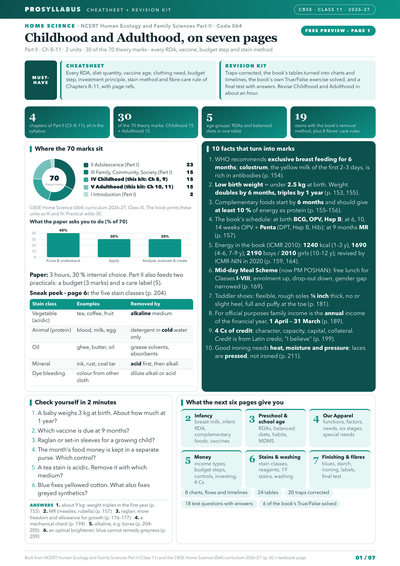
Read page 1 free Get the kit Get the kit One payment · instant PDF · ₹159 View details Marks booster + cheatsheet: key concepts in 2 lines each 15 marks each: Childhood and Adulthood units RDAs and diet quantities by age Vaccine ages Budget steps and investment principles Stain-removal methods Page 1 free about 8 min read , Full kit about 55 min read ₹159
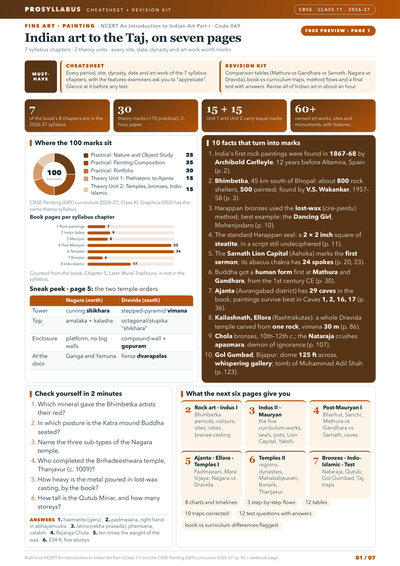
Read page 1 free Get the kit Get the kit One payment · instant PDF · ₹159 View details Marks booster + cheatsheet: key concepts in 2 lines each 15 marks each: the two theory units What to write when asked to appreciate Bharhut, Sanchi and the cave sites Temple architecture: how a temple is built Bronzes and Indo-Islamic buildings Page 1 free about 8 min read , Full kit about 55 min read ₹159
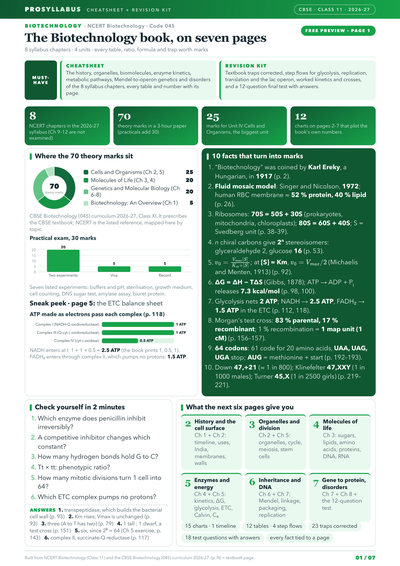
Read page 1 free Get the kit Get the kit One payment · instant PDF · ₹159 View details Marks booster + cheatsheet: key concepts in 2 lines each, common traps 20 marks each: Units II and III Enzyme kinetics and bioenergetics Common traps, corrected Mendel-to-operon genetics Tables and numbers, each with its page Page 1 free about 8 min read , Full kit about 55 min read ₹159
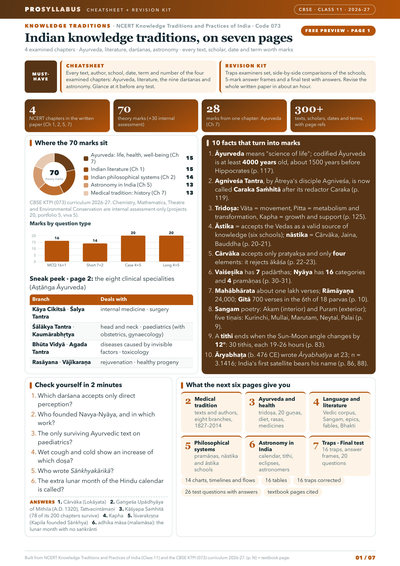
Read page 1 free Get the kit Get the kit One payment · instant PDF · ₹159 View details Marks booster + cheatsheet: key concepts in 2 lines each, common traps 15 marks: language and literature 14 marks: the nine darśanas Common traps, corrected 13 marks: astronomy in India 4 chapters, each with answer frames Page 1 free about 8 min read , Full kit about 55 min read ₹159
Read page 1 free Get the kit Get the kit One payment · instant PDF · ₹159 View details Marks booster + cheatsheet: key concepts in 2 lines each Frames for news, interview and review Inverted pyramid and the six ककार Play-writing frame Translation rules, with solved examples Common mistakes, corrected Page 1 free about 8 min read , Full kit about 55 min read ₹159
Read page 1 free Get the kit Get the kit One payment · instant PDF · ₹159 View details Marks booster + cheatsheet: key concepts in 2 lines each 50 marks: games and sports strand 25 marks: health and fitness strand Eight team games, side by side Fitness tests, norms and formulas Yoga asanas for wellness Page 1 free about 8 min read , Full kit about 55 min read ₹159
Read page 1 free Get the kit Get the kit One payment · instant PDF · ₹159 View details Marks booster + cheatsheet: key concepts in 2 lines each 22 श्रुतियाँ and 10 थाट, defined बिहाग, भीमपलासी, भैरवी with बंदिश notation तीनताल, एकताल, चौताल: ठाह, दुगुन, चौगुन तानसेन, भातखंडे, पलुस्कर profiled 12 common mistakes, corrected Page 1 free about 8 min read , Full kit about 55 min read ₹159
Read page 1 free Get the kit Get the kit One payment · instant PDF · ₹159 View details Marks booster + cheatsheet: key concepts in 2 lines each वादी-संवादी, पकड़ and बंदिश for each राग तीनताल, एकताल, चौताल: ठाह, दुगुन, चौगुन तानसेन, भातखंडे, पलुस्कर profiled Four classes of instruments, तानपुरा, सितार 12 common mistakes, corrected Page 1 free about 8 min read , Full kit about 55 min read ₹159
Read page 1 free Get the kit Get the kit One payment · instant PDF · ₹159 View details Marks booster + cheatsheet: key concepts in 2 lines each 6 marks each: all five units ठाह, दुगुन, तिगुन, चौगुन written out 14 artists with dates कुदऊ सिंह and नाना पानसे: two lives 14 common mistakes, corrected Page 1 free about 8 min read , Full kit about 55 min read ₹159
Read page 1 free Get the kit Get the kit One payment · instant PDF · ₹159 View details Get alerts for CBSE Class 11 Annual Assessment
Dates, results and cutoffs, by email when they are announced. Free.
Google, Apple, or a code to your phone or email. It is saved to your account.
This chapter is part of the CBSE Class 11 Annual Assessment Board Examination Explore every chapter — summary, notes, extra questions & MCQ quizzes Preparing for CBSE Class 11 Annual Assessment? Students also sit JEE is set on the Class 11 and 12 Physics, Chemistry and Maths syllabus; students prepare for boards and JEE together.
Tests are played signed in — sign in (free, 10 seconds) so your attempts, rank and XP are saved to you #1
Discovering Tut: the Saga Continues
Start here
#2
#3
Constitution: Why and How?
#4
#5
#6
#7
#8
Methods of Enquiry in Psychology
#9
#10
An Empire Across Three Continents
#11
#12
The Summer of the Beautiful White Horse
#13
#14
#15
We're Not Afraid to Die... if We Can All Be Together
#16
#17
Election and Representation
#18
Political Theory: An Introduction
#19
#20
Biological Classification
#21
Motion in a Straight Line
#22
Accountancy (Class 11) Practice Quiz | CBSE Class 11 Annual Assessment
#23
Sets and Venn Operations Fundamentals — Free CBSE Class 11 Annual Assessment Quiz
#24
#25
#26
#27
Rights in the Indian Constitution
#28
#29
#30
#31
#32
Changing Cultural Traditions
#33
#34
#35
#36
#37
Private, Public and Global Enterprises
#38
Depreciation, Provisions and Reserves
#39
Introduction to Accounting
#40
Cell Cycle and Cell Division
#41
#42
Anatomy of Flowering Plants
#43
Organic Chemistry – Some Basic Principles and Techniques
#44
#45
#46
#47
#48
#49
#50
#51
#52
#53
#54
#55
The Ailing Planet: the Green Movement's Role
#56
#57
#58
#59
Sensory, Attentional and Perceptual Processes
#60
#61
#62
Introducing Western Sociologists
#63
#64
Social Change and Social Order in Rural and Urban Society
#65
Social Structure, Stratification and Social Processes in Society
#66
Doing Sociology: Research Methods
#67
Culture and Socialisation
#68
Understanding Social Institutions
#69
Terms, Concepts and Their Use in Sociology
#70
#71
The Philosophy of the Constitution
#72
Constitution as a Living Document
#73
#74
#75
#76
#77
#78
#79
#80
#81
#82
Natural Hazards and Disasters
#83
#84
#85
#86
Structure and Physiography
#87
Biodiversity and Conservation
#88
#89
#90
World Climate and Climate Change
#91
Atmospheric Circulation and Weather Systems
#92
Solar Radiation, Heat Balance and Temperature
#93
Composition and Structure of Atmosphere
#94
Landforms and their Evolution
#95
#96
Distribution of Oceans and Continents
#97
#98
The Origin and Evolution of the Earth
#99
Geography as a Discipline
#100
Displacing Indigenous Peoples
#101
#102
Comparative Development Experiences of India and its Neighbours
#103
Environment and Sustainable Development
#104
Employment: Growth, Informalisation and Other Issues
#105
#106
Human Capital Formation in India
#107
Liberalisation, Privatisation and Globalisation: An Appraisal
#108
Indian Economy on the Eve of Independence
#109
#110
#111
#112
Measures of Central Tendency
#113
#114
#115
#116
#117
MSME and Business Entrepreneurship
#118
Sources of Business Finance
#119
#120
Social Responsibilities of Business and Business Ethics
#121
Emerging Modes of Business
#122
#123
Forms of Business Organisation
#124
Business, Trade and Commerce
#125
Financial Statements - II
#126
#127
Trial Balance and Rectification of Errors
#128
Bank Reconciliation Statement
#129
Recording of Transactions - II
#130
Recording of Transactions - I
#131
Theory Base of Accounting
#132
#133
#134
#135
Introduction to Three Dimensional Geometry
#136
#137
#138
#139
#140
Permutations and Combinations
#141
#142
Complex Numbers and Quadratic Equations
#143
#144
#145
Chemical Coordination and Integration
#146
Neural Control and Coordination
#147
#148
Excretory Products and their Elimination
#149
Body Fluids and Circulation
#150
Breathing and Exchange of Gases
#151
Plant Growth and Development
#152
#153
Photosynthesis in Higher Plants
#154
#155
Structural Organisation in Animals
#156
Morphology of Flowering Plants
#157
#158
#159
Chemical Bonding and Molecular Structure
#160
Classification of Elements and Periodicity in Properties
#161
Some Basic Concepts of Chemistry
#162
#163
#164
#165
#166
Thermal Properties of Matter
#167
Mechanical Properties of Fluids
#168
Mechanical Properties of Solids
#169
#170
Systems of Particles and Rotational Motion
#171
#172
#173
Business Studies (Class 11) Practice Quiz | CBSE Class 11 Annual Assessment
#174
Economics (Class 11) Practice Quiz | CBSE Class 11 Annual Assessment
#175
Humanities Subjects Practice Quiz | CBSE Class 11 Annual Assessment
#176
Motion in a Straight Line Practice Quiz | CBSE Class 11 Annual Assessment
#177
Thermodynamic Processes and Laws Advanced Challenge | CBSE Class 11 Annual Assessment
More on CBSE Class 11 Annual Assessment20 guides Tuples and Dictionaries – NCERT Class 11 Computer Science Chapter 10 – Tuple Operations and Dictionary Handling in Python Strings – NCERT Class 11 Computer Science Chapter 8 – String Operations, Traversal, and Methods in Python Getting Started with Python – NCERT Class 11 Computer Science Chapter 5 – Basics, Data Types, Operators, and Debugging Functions – NCERT Class 11 Computer Science Chapter 7 – Defining, Calling, and Understanding Functions in Python Complete Summary and Solutions for Emerging Trends – NCERT Class XI Informatics Practices, Chapter 2 – Explanation, Questions, Answers Mathematical Modelling – NCERT Class 11 Mathematics Appendix 2 – Concepts, Importance, and Applications in Real-world Problems Complete Summary and Solutions for Database Concepts – NCERT Class XI Informatics Practices, Chapter 7 – Explanation, Questions, Answers Encoding Schemes and Number System – NCERT Class 11 Computer Science Chapter 2 – ASCII, ISCII, UNICODE, Binary, Octal, Decimal, Hexadecimal Complete Summary and Solutions for Brief Overview of Python – NCERT Class XI Informatics Practices, Chapter 3 – Explanation, Questions, Answers Complete Summary and Solutions for Computer System – NCERT Class XI Informatics Practices, Chapter 1 – Explanation, Questions, Answers Introduction to Problem Solving – NCERT Class 11 Computer Science Chapter 4 – Algorithms, Flowcharts, Pseudocode, and Control Structures Flow of Control – NCERT Class 11 Computer Science Chapter 6 – Conditional and Looping Constructs in Python Alerts and Updates for CBSE Class 11 Annual Assessment Complete Summary and Solutions for Adventure Sports – Health and Physical Education Textbook for Class XI, Chapter 11 – Explanation, Questions, Answers Complete Summary and Solutions for Tournaments and Competitions – Health and Physical Education Textbook for Class XI, Chapter 10 – Explanation, Questions, Answers Complete Summary and Solutions for Measurement and Evaluation – Health and Physical Education Textbook for Class XI, Chapter 9 – Explanation, Questions, Answers Complete Summary and Solutions for Health Related Physical Fitness – Health and Physical Education Textbook for Class XI, Chapter 8 – Explanation, Questions, Answers Complete Summary and Solutions for Safety and Security – Health and Physical Education Textbook for Class XI, Chapter 7 – Explanation, Questions, Answers Complete Summary and Solutions for Yoga and Its Relevance in the Modern Times – Health and Physical Education Textbook for Class XI, Chapter 6 – Explanation, Questions, Answers Complete Summary and Solutions for Team Games – Health and Physical Education Textbook for Class XI, Chapter 5 – Explanation, Questions, Answers Notebook backup + AI Save your notes. Revise with AI. Learn more → Share this article