CBSE Class 8 — Notes, Chapters & Practice Quizzes
Every Class 8 chapter, made friendly — notes with pictures, key words, and a quiz for each chapter.
10 questions · instant score · weak-chapter diagnosis
Students preparing for CBSE Class 8 Annual Assessment
View all





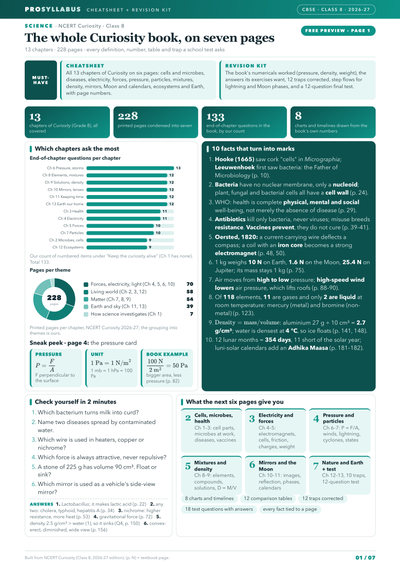
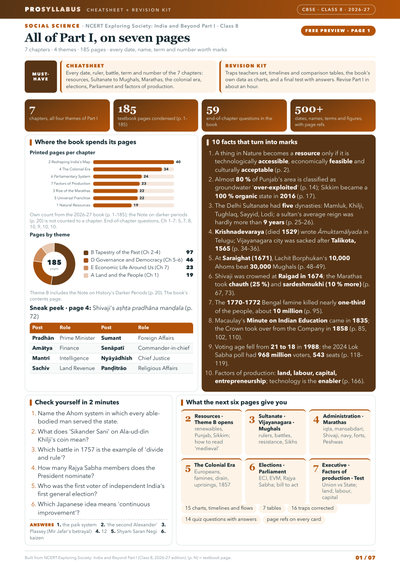
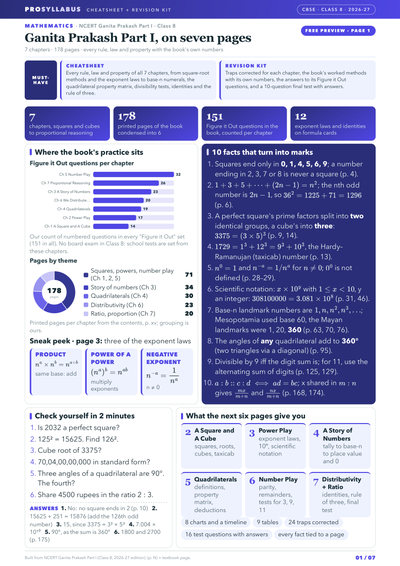 6
6- Mathematics
- Science
- + 3 more
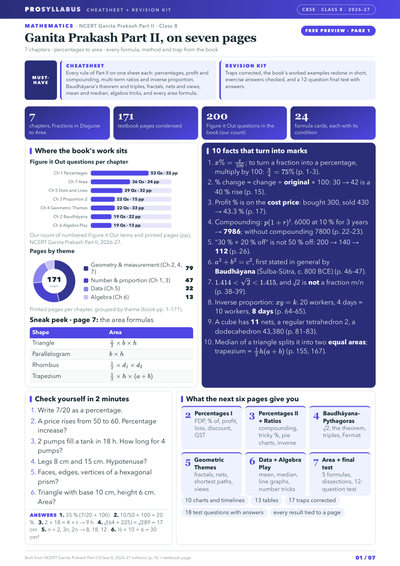
- Space weighted by chapter size
- Charts from the book's own data
- Traps corrected
 2
2- Mathematics
- Space weighted by chapter size
- Charts from the book's own data
- Traps corrected
- Space weighted by chapter size
- Charts from the book's own data
- Traps corrected
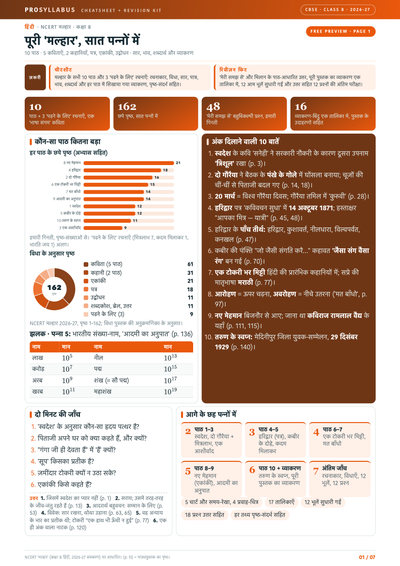
- Space weighted by chapter size
- Charts from the book's own data
- Traps corrected
- Space weighted by chapter size
- Charts from the book's own data
- Traps corrected
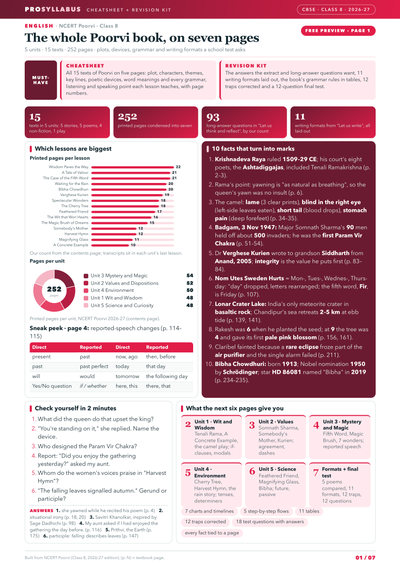
- Space weighted by chapter size
- Charts from the book's own data
- Traps corrected
Class 8 Science — Chapter-wise Notes & Quizzes
Chapter 1: Exploring the Investigative World of Science Class 8 Science — summary, notes, extra questions & NCERT solutions
Summary
This opening chapter invites Grade 8 learners into the investigative world of science, where wonder and the slow evolution of ideas meet. It builds on the idea, met in earlier grades, that science begins with simple "Why?" and "How?" questions about everyday things. The new step is learning not just facts but how to find facts: asking focused questions, designing simple experiments, and using careful observation to improve understanding. The everyday puffing of a puri is used as a worked example of systematic investigation. Investigators decide what they can change or control (thickness and size of the rolled dough, type of flour, oil temperature, way of dropping it) and what they can observe or measure (whether it puffs, how many seconds it takes). A key rule is to change only one thing at a time while keeping other conditions the same, and to keep notes of everything sensed. The chapter previews the whole years journey, from microbes in a drop of water to electricity, forces, pressure, particles, light, the Moon, ecosystems, and the unique conditions of Earth. The symbols of the root (grounded observation) and the kite (soaring curiosity) capture the balance investigation needs.
Key terms
Extra questions & answers
Probe and ponder
Explore interactively
Keyboard: ← → to move · Space to flip
Practice quiz · Exploring the Investigative World of Science
Score on this chapter, climb the leaderboard, and get an AI diagnosis of your mistakes.
Dual AI-verified questions Real exam pattern 1 free quiz every month, then ₹9 per quiz — or a monthly plan
Exploring the Investigative World of Science
Start hereInstant score, answer review and weak-topic diagnosis
Science revision kits
- Space weighted by chapter size
- Charts from the book's own data
- Traps corrected