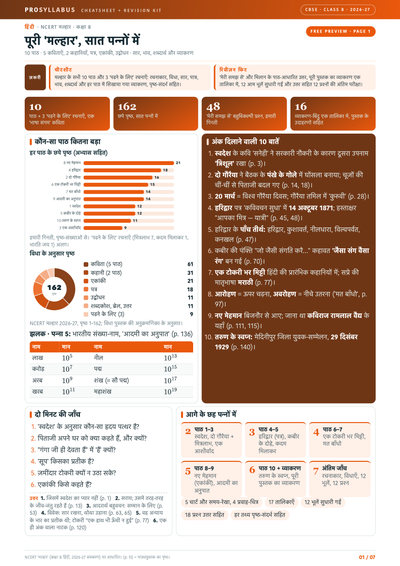
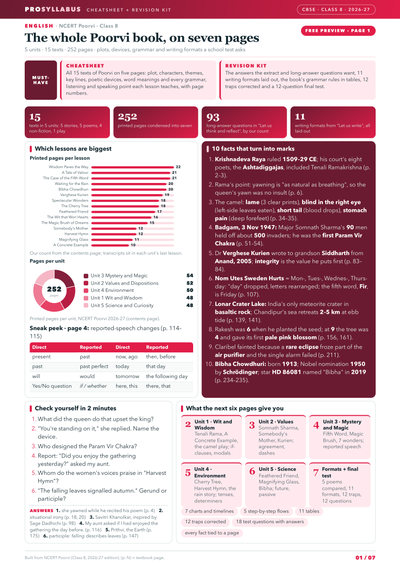
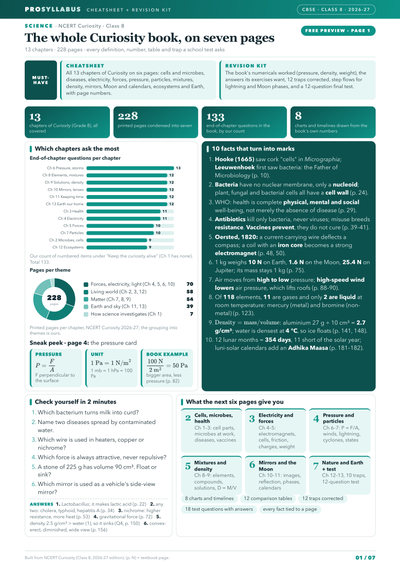
This chapter opens up the hidden world of cells and microorganisms that the unaided eye cannot see. The invention of the lens and then the microscope let humans observe tiny structures for the first time; Robert Hooke first used the word "cell" while looking at cork, and Antonie van Leeuwenhoek, the Father of Microbiology, first saw bacteria. Through activities with onion peel and human cheek cells, students learn that all living beings are made of cells. A typical cell has a cell membrane, cytoplasm, and a nucleus; plant, fungal, and bacterial cells have an extra cell wall, while bacteria lack a well-defined nucleus and instead have a nucleoid. Cells differ in shape and size to suit their functions, such as long branched nerve cells and spindle-shaped muscle cells. The chapter explains the levels of organisation: cell, tissue, organ, organ system, and organism. Microorganisms may be unicellular (bacteria, Amoeba) or multicellular (some fungi and algae) and live almost everywhere. They are deeply connected to us: decomposers recycle nutrients and make manure, Rhizobium fixes nitrogen in root nodules, yeast and Lactobacillus are used in baking and curd-making, and microalgae produce much of Earths oxygen. Viruses are introduced as acellular agents that multiply only inside host cells.
Microscope and discovery of cellsStructure of plant and animal cellsLevels of organisationTypes of microorganismsBeneficial roles of microbes
Key terms
Cell
The basic structural and functional unit of all living organisms, first named by Robert Hooke.
Cell membrane
The porous outer boundary of a cell that controls entry of useful materials and exit of wastes.
Nucleus
The structure that regulates the activities and growth of a cell; absent as a well-defined body in bacteria.
Microorganism
A tiny living being, such as bacteria, fungi, protozoa, or some algae, visible only under a microscope.
Unicellular and multicellular
Unicellular organisms are made of a single cell; multicellular organisms are made of many cells.
Decomposition
The breaking down of dead plant and animal matter by microbes into simpler, nutrient-rich substances.
Extra questions & answers
Probe and ponder
Keep the curiosity alive
Discover, design, and debate
Try one from this chapter
Who first used the word "cell" in science?
Flashcards & interactive practice
Practice quiz · The Invisible Living World: Beyond Our Naked Eye
Score on this chapter, climb the leaderboard, and get an AI diagnosis of your mistakes.
Dual AI-verified questions Real exam pattern 1 free quiz every month, then ₹9 per quiz — or a monthly plan
#1
The Invisible Living World: Beyond Our Naked Eye
Start here
Science 10 Qs · ~10 min
Instant score, answer review and weak-topic diagnosis
 6
6 2
2