Poets and Pancakes
Class 12 English · Flamingo · Chapter 6
Visual story
Watch as storyTap a card to open it full-screen — swipe through like a story.
163 members in the CBSE community
View all










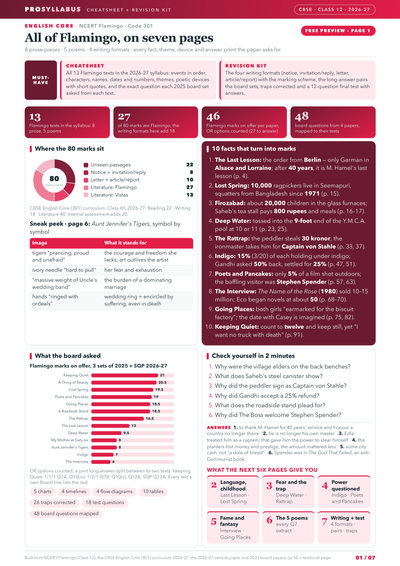
CBSE Class 12 · English Core
All 13 Flamingo texts, with what 2025 asked- Marks booster + cheatsheet: key concepts in 2 lines each, common traps
- 5 poems: Q7 is always one of these
- 4 writing formats, 18 marks
- Common traps, corrected
- 8 prose pieces: events, characters, themes
- Poetic devices with short quotes
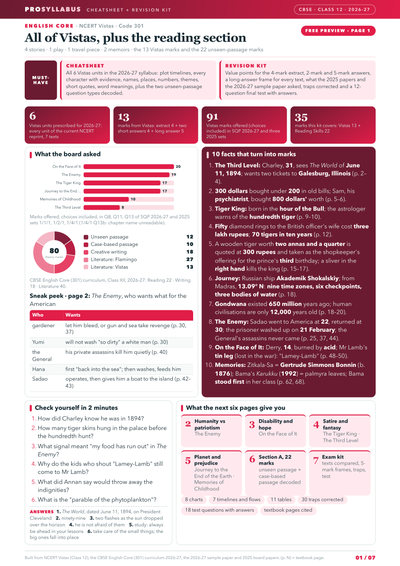
CBSE Class 12 · English Core
13 Vistas marks + 22 unseen-passage marks- Marks booster + cheatsheet: key concepts in 2 lines each, common traps
- 12 marks: unseen passage Q1, decoded
- 10 marks: case-based passage Q2, decoded
- Common traps that cost marks, listed
- Every character, with evidence and quotes
- 7 texts: plot timelines for each
The story in short
An excerpt from 'My Years with Boss' by the Tamil writer Asokamitran, this piece is a humorous, rambling account of the Gemini Studios in Madras, one of the most influential film-producing organisations of early Indian cinema, founded by S.S. Vasan. The author, whose job was to cut out newspaper clippings, observes the studio's personalities with gentle humour and satire. He describes the make-up department, named after the brand 'Pancake', staffed by a 'nationally integrated' team of make-up men from many regions who could turn any face into a hideous crimson monster under the incandescent lights. He paints affectionate portraits of the office boy — a frustrated forty-year-old aspiring poet who blamed all his woes on Kothamangalam Subbu, the cheerful, loyal, many-sided No. 2 of the studios, a poet, novelist and actor who gave direction to Gemini in its golden years. He recalls the studio's Story Department, with its out-of-place legal adviser 'a man of cold logic in a crowd of dreamers'. The khadi-clad poets of Gemini, who worshipped Gandhi but were averse to Communism, warmly hosted Frank Buchman's Moral Re-Armament army in 1952, whose plays influenced Tamil drama. Later an unknown English visitor — the poet and editor Stephen Spender — addressed the baffled, uncomprehending studio audience, a mystery the author only solved years later when he discovered Spender's name in 'The God That Failed'. The essay is an example of a chatty, transitional style where one thought leads to another.