Biotechnology and its Applications
Class 12 Biology · Biology · Chapter 10
163 members in the CBSE community
View all










CBSE Class 12 · Biology
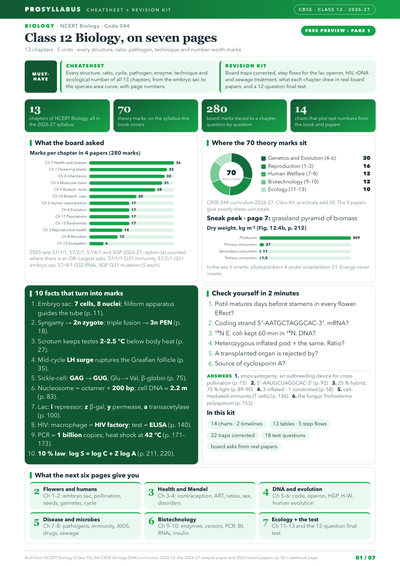
Genetics + Evolution: Unit VII, 20 marks- Marks booster + cheatsheet: key concepts in 2 lines each, common traps
- 16 marks: Reproduction, Unit VI
- 12 marks each: Units VIII and IX
- 10 marks: Ecology, Unit X
- 13 chapters, with page numbers
- Common traps, corrected
CBSE Class 12 · Biology
Genetics + Evolution: Unit VII, 20 marks- Marks booster + cheatsheet: key concepts in 2 lines each, common traps
- 16 marks: Reproduction, Unit VI
- 12 marks each: Units VIII and IX
- 10 marks: Ecology, Unit X
- 13 chapters, with page numbers
- Common traps, corrected
Summary
This chapter surveys the applications of biotechnology in agriculture, medicine and other fields, along with the ethical issues they raise. In agriculture, genetically modified (GM) crops and transgenic plants are produced to improve tolerance to abiotic and biotic stresses, reduce pesticide use, increase nutritional value and reduce post-harvest losses. Examples include Bt cotton (carrying the cry genes of Bacillus thuringiensis for pest resistance), Bt brinjal, pest-resistant plants using RNA interference (RNAi) against nematodes (Meloidogyne incognita), and biofortified crops such as Golden Rice. In medicine, biotechnology enables the production of recombinant therapeutic proteins, exemplified by human insulin (Humulin) made by inserting the gene chains A and B into E. coli, gene therapy to correct genetic defects (the first case treated adenosine deaminase, ADA, deficiency), and molecular diagnostics using PCR, ELISA and recombinant DNA probes for early detection of pathogens and disorders. Transgenic animals are produced for research, biological products, vaccine safety testing and the study of disease. The chapter also addresses ethical issues and biopiracy, the unauthorised exploitation of bio-resources and traditional knowledge, and the role of the GEAC (Genetic Engineering Appraisal Committee) and patents, citing cases like the patenting of Basmati rice and the use of turmeric and neem.