Liberalisation, Privatisation and Globalisation: An Appraisal
Class 11 Economics · Indian Economic Development · Chapter 3
163 members in the CBSE community
View all










CBSE Class 11 · Economics
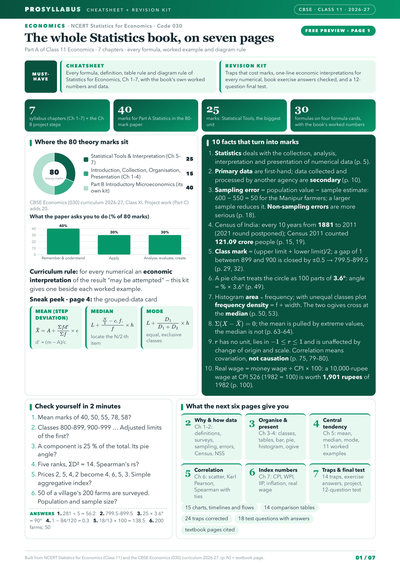
Mean to Index Numbers: Unit 3, 25 marks- Marks booster + cheatsheet: key concepts in 2 lines each, common traps
- 15 marks: Ch 1–4, data to diagrams
- 7 chapters: every formula, worked numbers
- Common mistakes, corrected
- Book exercise answers included
- Part C project route
CBSE Class 11 · Economics
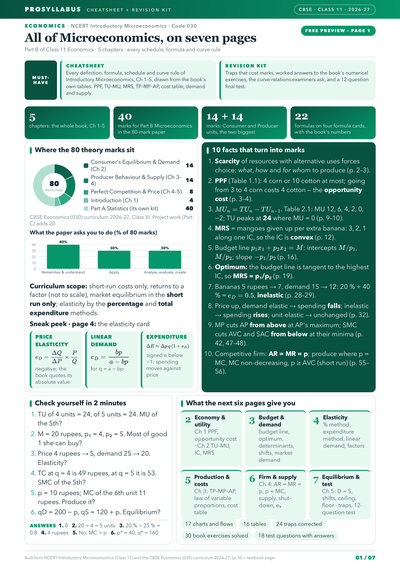
Consumer Behaviour: Unit 5, 14 marks- Marks booster + cheatsheet: key concepts in 2 lines each, common traps
- 14 marks: Production and Costs, Unit 6
- 8 marks: Market Equilibrium, Unit 7
- Common traps, corrected
- PPF, TU–MU, MRS and cost table drawn
- Demand and supply schedules from the book
Summary
By 1991 India faced a severe economic crisis: foreign-exchange reserves had fallen so low they could not cover even a fortnight of imports, government spending exceeded revenue, prices were rising and imports outran exports. India borrowed about seven billion dollars from the World Bank and the IMF, whose conditions required opening up the economy, and announced the New Economic Policy with short-term stabilisation measures and long-term structural reforms under three heads — liberalisation, privatisation and globalisation. Liberalisation deregulated industry, abolishing industrial licensing except for a few sensitive items, freed the financial sector by turning the RBI from regulator to facilitator and allowing private and foreign banks and foreign institutional investors, reformed taxes (later introducing GST in 2016) and made the exchange rate market-determined after devaluing the rupee, while removing quantitative trade restrictions by April 2001. Privatisation meant disinvestment — selling part of the government's equity in public-sector enterprises — and giving greater autonomy to firms classified as Maharatnas, Navratnas and Miniratnas. Globalisation integrated India with the world economy, encouraging outsourcing and benefiting from low wages and skilled labour, supported by the WTO, founded in 1995. The appraisal is mixed: GDP growth, foreign investment and foreign-exchange reserves rose sharply and India became a strong exporter of services and goods, but agriculture and small industry suffered from falling public investment and cheap imports, disinvestment proceeds were often used merely to bridge deficits, and reforms widened income disparities.