The Ball Poem
Class 10 English · First Flight – Poems · Chapter 5
Visual story
Watch as storyTap a card to open it full-screen — swipe through like a story.
173 members in the CBSE community
View all












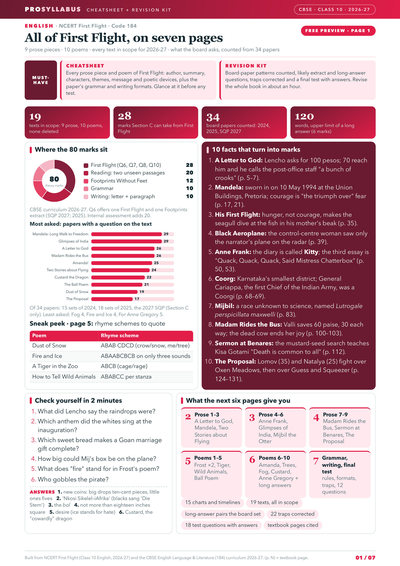
CBSE Class 10 · English
First Flight: what 34 board papers asked- Marks booster + cheatsheet: key concepts in 2 lines each, common traps
- 9 prose pieces, each summarised
- 10 poems with their poetic devices
- Common traps to avoid
- Long-answer pairs the board has set
- 10 marks each: grammar and writing formats
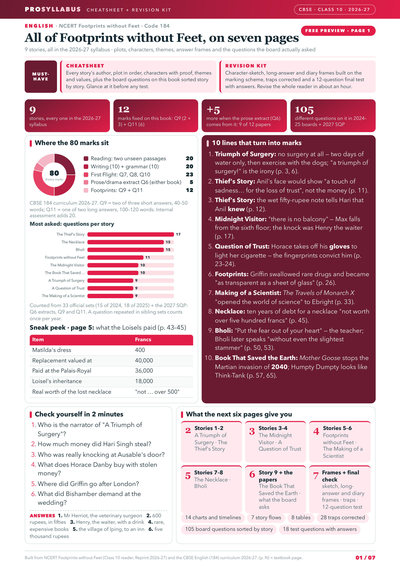
CBSE Class 10 · English
105 board questions, counted story by story- Marks booster + cheatsheet: key concepts in 2 lines each, common traps
- 9 stories: plot, characters, themes
- Character-sketch frames
- Common traps to avoid
- Diary-entry and long-answer frames
- Values in all 9 stories
The story in short
John Berryman’s poem describes a small boy who loses his ball when it bounces away into the water, and through this simple incident explores the deeper meaning of loss. The boy is shaken and stands trembling, staring at the spot where his ball has gone, gripped by grief. The poet deliberately does not offer him money to buy a new ball, because he wants the boy to learn an important truth on his own — that in life things are lost and cannot always be replaced, and that one must learn to stand up after loss and move on. The ball becomes a symbol of all the things people lose as they grow up. The poem teaches the lesson of accepting loss, taking responsibility and gaining maturity, showing that learning to cope with loss is an essential part of growing up.
The story in 6 beats
- 1A boy loses his ball in the harbour, and the poet sees his deep sadness.
- 2The boy stands rigid and trembles, staring at the water where his ball has gone.
- 3The poet thinks no other balls or money can truly remove the boy’s sense of loss.
- 4He says the boy is learning the first real meaning of losing something he owned.
- 5The poet explains that everyone must learn to accept losses and keep living.
- 6He decides not to interrupt, because the boy must learn this lesson himself.