Fire and Ice
Class 10 English · First Flight – Poems · Chapter 2
Visual story
Watch as storyTap a card to open it full-screen — swipe through like a story.
158 members in the CBSE community
View all












CBSE Class 10 · English
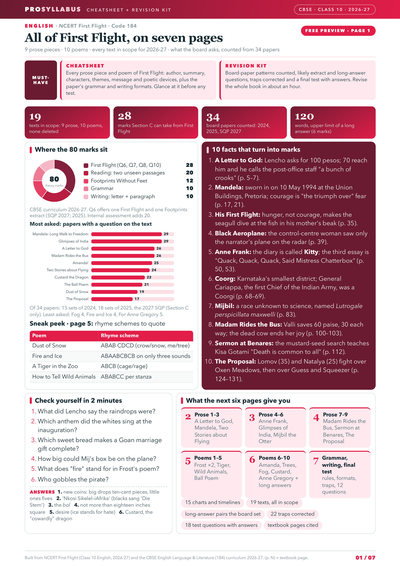
First Flight: what 34 board papers asked- Marks booster + cheatsheet: key concepts in 2 lines each, common traps
- 9 prose pieces, each summarised
- 10 poems with their poetic devices
- Common traps to avoid
- Long-answer pairs the board has set
- 10 marks each: grammar and writing formats
CBSE Class 10 · English
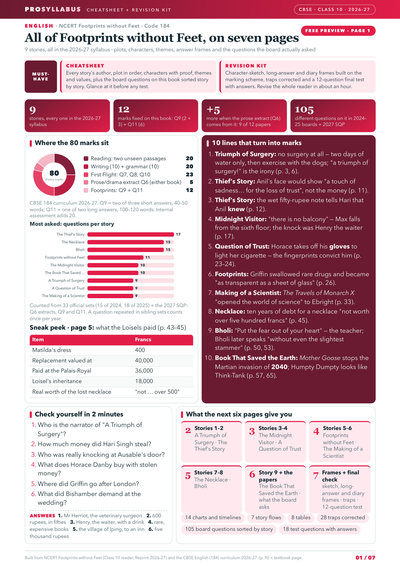
105 board questions, counted story by story- Marks booster + cheatsheet: key concepts in 2 lines each, common traps
- 9 stories: plot, characters, themes
- Character-sketch frames
- Common traps to avoid
- Diary-entry and long-answer frames
- Values in all 9 stories
CBSE Class 10 · English
Both English readers: what the board asked- 34 board papers counted for First Flight
- 105 board questions on Footprints, by story
- 9 prose pieces and 10 poems summarised
- 9 Footprints stories: plot, characters, themes
- 10 + 10 marks: Section B grammar and writing
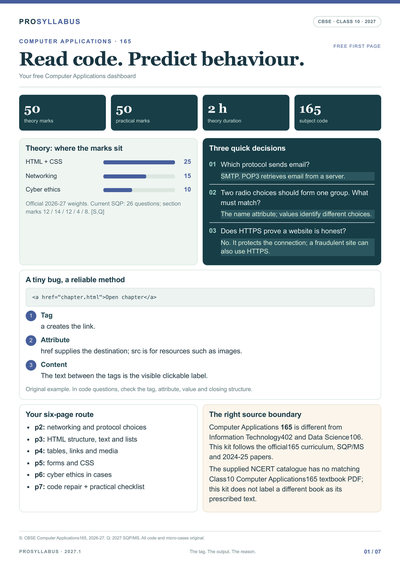
- Traps + 12-question test in both kits
CBSE Class 10 · All available subjectsTrending
All 12 Class 10 kits: where board marks sit- Maths: 20 marks in Algebra, the biggest unit
- Science: 25 marks each in Units I and II
- English: what 34 board papers asked
- Geography: all 79 CBSE map items, by location
- Economics: all 20 marks, with 18 traps
- 12 kits, one per subject or book
The story in short
In this short, thought-provoking poem, Robert Frost reflects on how the world might come to an end — whether by fire or by ice. Fire stands for desire, greed and passion, while ice stands for hatred, coldness and indifference. The poet says that from what he has experienced of desire, he sides with those who think the world will end in fire; but if it had to perish twice, he knows enough of hatred to say that ice would also be powerful enough to destroy it. Through this simple comparison, Frost warns that uncontrolled human emotions — burning desire and freezing hatred — are both destructive forces capable of bringing about ruin. The poem is a compact meditation on human nature, suggesting that greed and hatred can each destroy the world and that both must be kept in check.
The story in 5 beats
- 1The poet says some people think the world will end in fire.
- 2He says others believe the world will end in ice.
- 3From his experience of desire, he agrees that fire could destroy the world.
- 4He imagines a second end and turns to the power of hate.
- 5He says ice also suits destruction and would be enough to end the world.