Thinkers, Beliefs and Buildings — Cultural Developments (c. 600 BCE-600 CE)
Class 12 History · Themes in Indian History Part I · Chapter 4
163 members in the CBSE community
View all










CBSE Class 12 · History
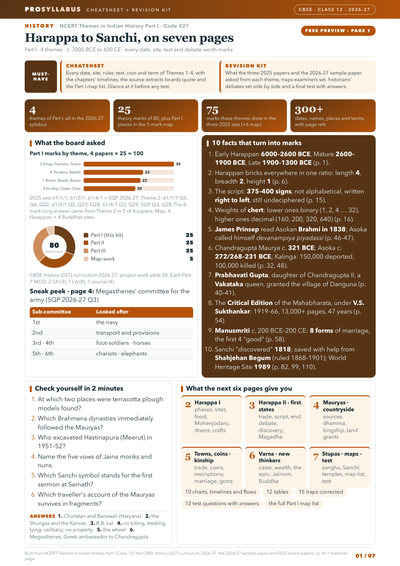
Kings, Farmers and Towns: 35 of 100 marks- Marks booster + cheatsheet: key concepts in 2 lines each, common traps
- 23 of 100 marks: Thinkers, Beliefs, Buildings
- 22 of 100 board marks: Harappa
- 20 of 100 marks: Kinship, Caste and Class
- 8-mark answer: Theme 2 in 3 of 4 papers
- 5 marks: the Part I map list
CBSE Class 12 · History
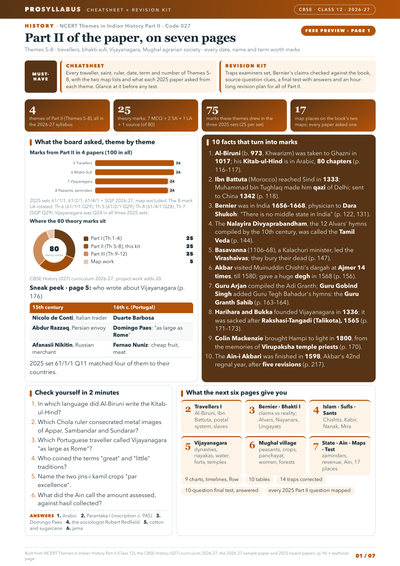
Travellers, Bhakti-Sufi: 26 of 100 each- Marks booster + cheatsheet: key concepts in 2 lines each
- 24 of 100 board marks: Vijayanagara
- 24 of 100 marks: Mughal village, Theme 8
- Q24 from Vijayanagara in every 2025 set
- 3 of 4 papers: source question on travellers
- 5 marks: the two map lists
CBSE Class 12 · History
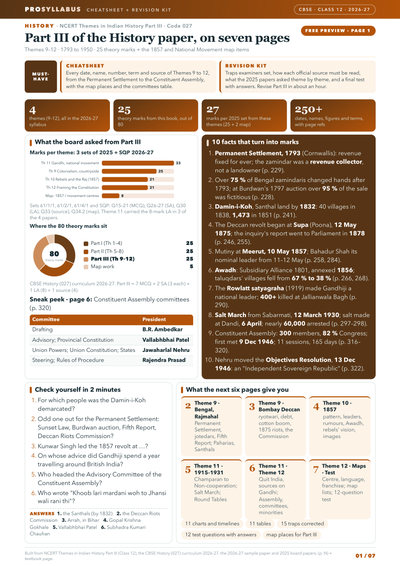
Themes 9–12: 25 theory marks, 1793 to 1950- Marks booster + cheatsheet: key concepts in 2 lines each
- 1857 and National Movement map items
- Constituent Assembly committees table
- Gandhiji 1915–1931: Champaran to Salt March
- Permanent Settlement and the Fifth Report
- Bombay Deccan: ryotwari and the 1875 riots
Summary
This chapter follows a long journey through the world of ideas and beliefs, focusing on Buddhism but set against many contemporary traditions. From the sixth century BCE thinkers across the subcontinent debated the meaning of life, the soul and sacrifice. Against elaborate Vedic sacrifices, new ideas arose in the Upanishads and in movements led by teachers such as Mahavira, founder of Jainism, and the Buddha. The Buddha taught that the world is transient and sorrowful, that suffering arises from desire, and that following the middle path and right conduct leads to nibbana. His teachings, preserved orally and later written in texts like the Tipitaka, spread widely and split into different schools, including the later Mahayana with its worship of the Buddha and bodhisattvas. Beliefs were also expressed in art and architecture: stupas such as the great one at Sanchi, with its carved gateways or toranas, railings and dome, preserved sacred relics and narrated stories of the Buddha and earlier Jataka tales. The chapter shows how historians read sculpture, identifying symbols such as the empty seat, the wheel and the tree that once stood for the Buddha. It also traces the growth of Puranic Hinduism, the worship of Vishnu, Shiva and the goddess, and the role of patrons — including the rulers of Bhopal who preserved Sanchi — in saving such monuments.