Kinship, Caste and Class — Early Societies (c. 600 BCE-600 CE)
Class 12 History · Themes in Indian History Part I · Chapter 3
163 members in the CBSE community
View all










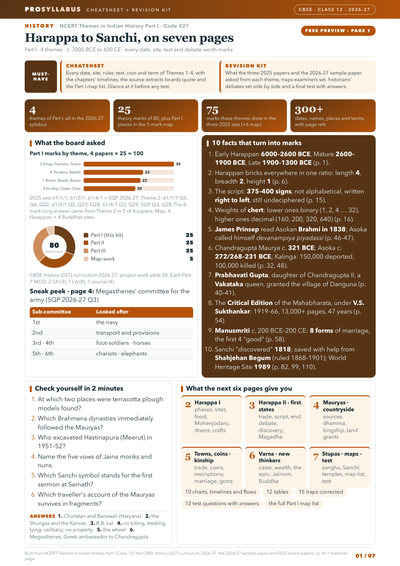
CBSE Class 12 · History
Kings, Farmers and Towns: 35 of 100 marks- Marks booster + cheatsheet: key concepts in 2 lines each, common traps
- 23 of 100 marks: Thinkers, Beliefs, Buildings
- 22 of 100 board marks: Harappa
- 20 of 100 marks: Kinship, Caste and Class
- 8-mark answer: Theme 2 in 3 of 4 papers
- 5 marks: the Part I map list
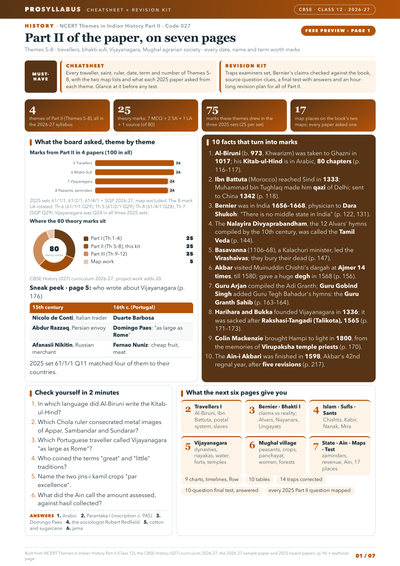
CBSE Class 12 · History
Travellers, Bhakti-Sufi: 26 of 100 each- Marks booster + cheatsheet: key concepts in 2 lines each
- 24 of 100 board marks: Vijayanagara
- 24 of 100 marks: Mughal village, Theme 8
- Q24 from Vijayanagara in every 2025 set
- 3 of 4 papers: source question on travellers
- 5 marks: the two map lists
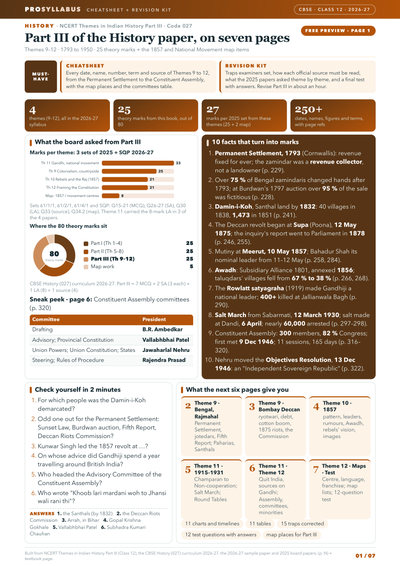
CBSE Class 12 · History
Themes 9–12: 25 theory marks, 1793 to 1950- Marks booster + cheatsheet: key concepts in 2 lines each
- 1857 and National Movement map items
- Constituent Assembly committees table
- Gandhiji 1915–1931: Champaran to Salt March
- Permanent Settlement and the Fifth Report
- Bombay Deccan: ryotwari and the 1875 riots
Summary
Using textual traditions, especially the great epic Mahabharata, this chapter explores how families, kinship, caste and class shaped early Indian society. The Mahabharata, a colossal epic of over 100,000 verses composed across about a thousand years from c. 500 BCE, depicts a wide range of social situations and lays down norms of behaviour for different groups. Its central story of warring cousins — the Kauravas and Pandavas — raises questions about patriliny, succession and the rules of marriage. Sanskrit texts such as the Dharmasutras and Dharmashastras, especially the Manusmriti, prescribed ideal rules: endogamy, exogamy, polygyny and the duties of the four varnas. In practice, the Brahmanical claim that varna was fixed by birth was challenged by other categories — jatis, occupational groups, forest dwellers and people seen as outside the varna order. The chapter examines gender — the unusual figure of Draupadi married to five brothers, the practice of niyoga, women's access to property (stridhana) and the importance of gotra. It also considers how historians critically use the epic: its layered authorship traditionally attributed to Vyasa, the work of the scholars who prepared a critical edition at the Bhandarkar Institute, and the gap between prescriptive norms and actual social practice. Caste, class and kinship thus emerge as flexible, contested categories rather than rigid ones.