Indian Sociologists
Class 11 Sociology · Understanding Society · Chapter 5
 2
2- Sociology
 7
7- Mathematics
- Physics
- + 3 more
- Physics
- Chemistry
- + 3 more


 7
7- Accountancy
- Business Studies
- + 3 more
- Space weighted by unit marks
- Charts from the book's own data
- Traps corrected
- Space weighted by unit marks
- Charts from the book's own data
- Traps corrected
- Accountancy
 2
2- हिंदी
 2
2- हिंदी
 2
2- Chemistry
 2
2- Political Science
 2
2- اردو
- Urdu Elective
 2
2- हिंदुस्तानी संगीत
 2
2- Home Science
 2
2- Hornbill
- Snapshots
 3
3- Geography
 2
2- Economics
- Physics
- Space weighted by unit marks
- Charts from the book's own data
- Traps corrected
- Space weighted by unit marks
- Charts from the book's own data
- Traps corrected
- Space weighted by unit marks
- Charts from the book's own data
- Traps corrected
- Space weighted by unit marks
- Charts from the book's own data
- Traps corrected
- Space weighted by unit marks
- Charts from the book's own data
- Traps corrected
- Space weighted by unit marks
- Charts from the book's own data
- Traps corrected
- Space weighted by unit marks
- Charts from the book's own data
- Traps corrected
- Space weighted by unit marks
- Charts from the book's own data
- Traps corrected
- Space weighted by unit marks
- Charts from the book's own data
- Traps corrected
- Space weighted by unit marks
- Charts from the book's own data
- Traps corrected
- Space weighted by unit marks
- Charts from the book's own data
- Traps corrected
- Space weighted by unit marks
- Charts from the book's own data
- Traps corrected
- Space weighted by unit marks
- Charts from the book's own data
- Traps corrected
- Space weighted by unit marks
- Charts from the book's own data
- Traps corrected
- Space weighted by unit marks
- Charts from the book's own data
- Traps corrected
- Space weighted by unit marks
- Charts from the book's own data
- Traps corrected
- Space weighted by unit marks
- Charts from the book's own data
- Traps corrected
- Space weighted by unit marks
- Charts from the book's own data
- Traps corrected
- Space weighted by unit marks
- Charts from the book's own data
- Traps corrected
- Space weighted by unit marks
- Charts from the book's own data
- Traps corrected
- Space weighted by unit marks
- Charts from the book's own data
- Traps corrected
- Space weighted by unit marks
- Charts from the book's own data
- Traps corrected
- Space weighted by unit marks
- Charts from the book's own data
- Traps corrected
- Space weighted by unit marks
- Charts from the book's own data
- Traps corrected
- Space weighted by unit marks
- Charts from the book's own data
- Traps corrected
- Space weighted by unit marks
- Charts from the book's own data
- Traps corrected
- Space weighted by unit marks
- Charts from the book's own data
- Traps corrected
- Space weighted by unit marks
- Charts from the book's own data
- Traps corrected
- Space weighted by unit marks
- Charts from the book's own data
- Traps corrected
- Space weighted by unit marks
- Charts from the book's own data
- Traps corrected
- Space weighted by unit marks
- Charts from the book's own data
- Traps corrected
- Space weighted by unit marks
- Charts from the book's own data
- Traps corrected
- Space weighted by unit marks
- Charts from the book's own data
- Traps corrected
- Space weighted by unit marks
- Charts from the book's own data
- Traps corrected
- Space weighted by unit marks
- Charts from the book's own data
- Traps corrected
- Space weighted by unit marks
- Charts from the book's own data
- Traps corrected
- Space weighted by unit marks
- Charts from the book's own data
- Traps corrected
- Space weighted by unit marks
- Charts from the book's own data
- Traps corrected
- Space weighted by unit marks
- Charts from the book's own data
- Traps corrected
- Space weighted by unit marks
- Charts from the book's own data
- Traps corrected
- Space weighted by unit marks
- Charts from the book's own data
- Traps corrected
- Space weighted by unit marks
- Charts from the book's own data
- Traps corrected
Summary
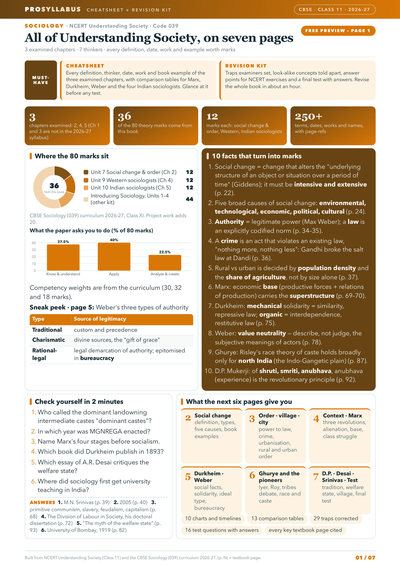
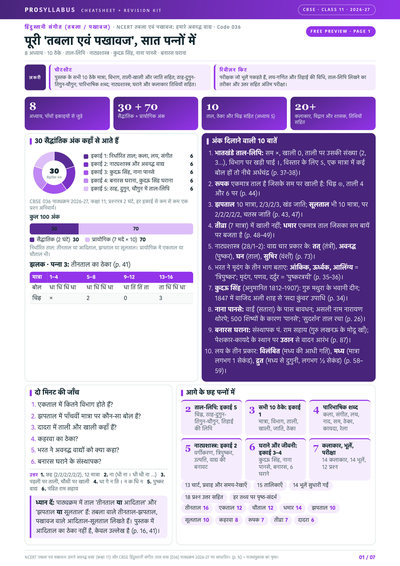
Formal university teaching of sociology in India began only in 1919 at Bombay, followed in the 1920s by Calcutta and Lucknow; since Western sociology had emerged to make sense of modernity, Indian scholars had to decide what role and shape a specifically Indian sociology should take in a colonial, diverse society. The chapter profiles founding figures. L.K. Ananthakrishna Iyer and Sarat Chandra Roy were "accidental anthropologists" and self-taught pioneers who practised the discipline before it had institutions, studying the communities of Cochin and of Chotanagpur. G.S. Ghurye, who founded India's first postgraduate sociology department at Bombay and headed it for thirty-five years, built his reputation on Caste and Race in India and wrote on tribes, kinship, civilisation and Hindu identity, debating Verrier Elwin on tribal policy. D.P. Mukerji insisted that the distinctive feature of Indian society was its living traditions; tradition (parampara, aitihya) was rooted in shruti, smriti and anubhava, with personal experience (anubhava) the revolutionary principle, as in the bhakti movement, so that change occurs as rebellion contained within an overarching tradition. A.R. Desai, a lifelong Marxist active in politics, wrote The Social Background of Indian Nationalism, applying a Marxist framework to nationalism and offering a sharp critique of the welfare state from a socialist point of view. M.N. Srinivas, trained at Bombay and Oxford, made the Indian village a lifelong focus and gave sociology its influential concepts of Sanskritisation and the dominant caste, combining fieldwork ethnography with a sensitivity to social change.