The Ailing Planet: the Green Movement's Role
Class 11 English · Hornbill · Chapter 4
Visual story
Watch as storyTap a card to open it full-screen — swipe through like a story.
163 members in the CBSE community
View all











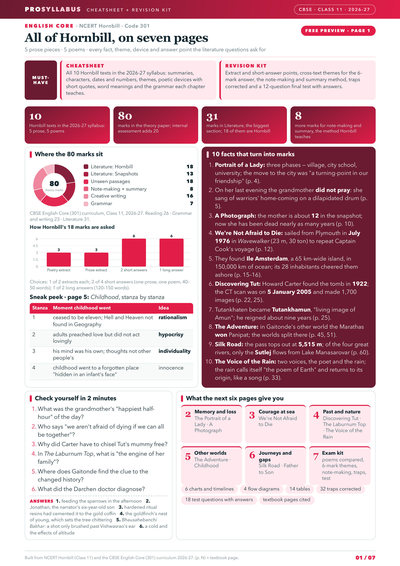
CBSE Class 11 · English Core
All 10 Hornbill texts: 5 prose, 5 poems- Marks booster + cheatsheet: key concepts in 2 lines each, common traps
- 8 marks: note-making and summary
- 5 poems compared, cross-text themes
- Common traps, corrected
- Poetic devices with short quotes
- Grammar each chapter teaches
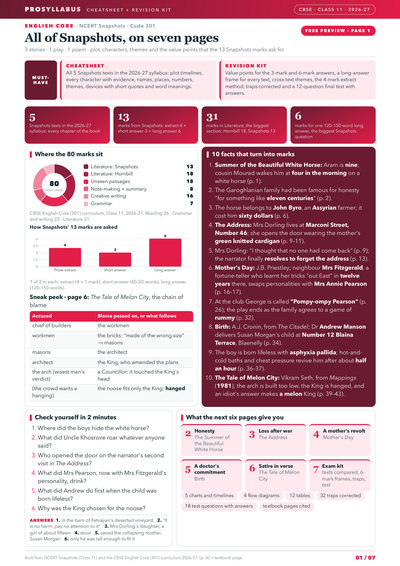
CBSE Class 11 · English Core
All 5 Snapshots texts for the 13 marks- Marks booster + cheatsheet: key concepts in 2 lines each, common traps
- 4-, 3- and 6-mark answers: how to write them
- Plot timeline for every text
- Common traps, corrected
- Every character, with evidence
- Cross-text themes, side by side
The story in short
Nani Palkhivala's article, first published in 1994, argues that the earth is like a patient in declining health and that humanity must shift from exploiting nature to caring for it. He traces the rapid spread of the Green Movement since the founding of the world's first Green party in New Zealand in 1972, and welcomes the change from a mechanistic to a holistic, ecological view of the world — a shift he calls as revolutionary as Copernicus's. He explains the concept of sustainable development, defined by the World Commission as meeting present needs without compromising future generations. Using the striking image of a Lusaka zoo cage that contains only a mirror labelled "the world's most dangerous animal," he stresses human responsibility. He details how the earth's four principal biological systems — fisheries, forests, grasslands and croplands — are being over-used and depleted, and laments how forests are vanishing at alarming rates while laws like Article 48A of the Indian Constitution go unenforced. He warns that runaway population growth, especially in poor countries, distorts humanity's future, and that development is "the best contraceptive." Closing on hope, he speaks of an "Era of Responsibility," urging industry and individuals to act, and quotes that we have borrowed the earth from our children rather than inherited it from our forefathers.