Father to Son
Class 11 English · Hornbill – Poems · Chapter 5
Visual story
Watch as storyTap a card to open it full-screen — swipe through like a story.
163 members in the CBSE community
View all







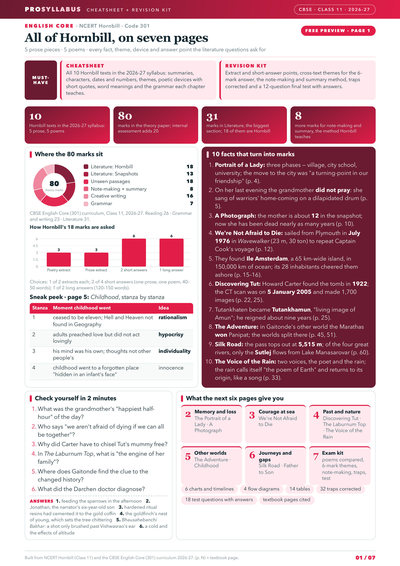
CBSE Class 11 · English Core
All 10 Hornbill texts: 5 prose, 5 poems- Marks booster + cheatsheet: key concepts in 2 lines each, common traps
- 8 marks: note-making and summary
- 5 poems compared, cross-text themes
- Common traps, corrected
- Poetic devices with short quotes
- Grammar each chapter teaches
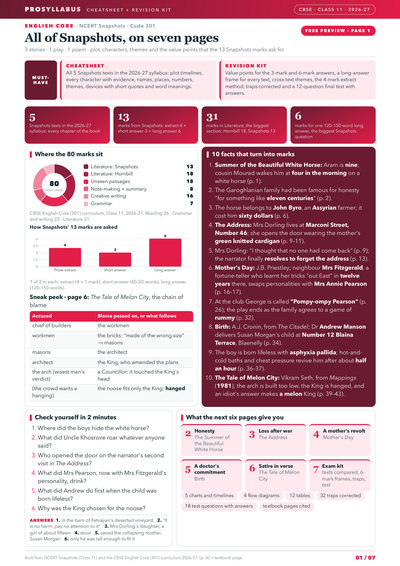
CBSE Class 11 · English Core
All 5 Snapshots texts for the 13 marks- Marks booster + cheatsheet: key concepts in 2 lines each, common traps
- 4-, 3- and 6-mark answers: how to write them
- Plot timeline for every text
- Common traps, corrected
- Every character, with evidence
- Cross-text themes, side by side
The story in short
Elizabeth Jennings's poem voices the pain of a father who cannot understand or communicate with his grown son despite having lived together for years. The father confesses that, though they have shared the same house, he knows nothing of his son and can only try to build a relationship by remembering how the boy was when small. He questions whether he has "killed the seed" he spent or merely sown it in land that is the son's and none of his — they now speak "like strangers," with no sign of understanding between them. The father admits that, although the child was built to his own design, he cannot share what his son loves. Silence surrounds the two of them. The father wishes the son were like the prodigal who returns to his father's house and the home he knew, rather than going off to make his own separate world, and he would willingly forgive him and shape a new love out of sorrow. In the final stanza, both father and son live on the same earth yet remain unable to understand each other, and the father cannot grasp why anger grows out of his grief. The poem ends with father and son each putting out "an empty hand," longing for something to forgive — a moving image of the universal gulf and yearning between generations.