Mother's Day
Class 11 English · Snapshots · Chapter 3
Visual story
Watch as storyTap a card to open it full-screen — swipe through like a story.
163 members in the CBSE community
View all









CBSE Class 11 · English Core
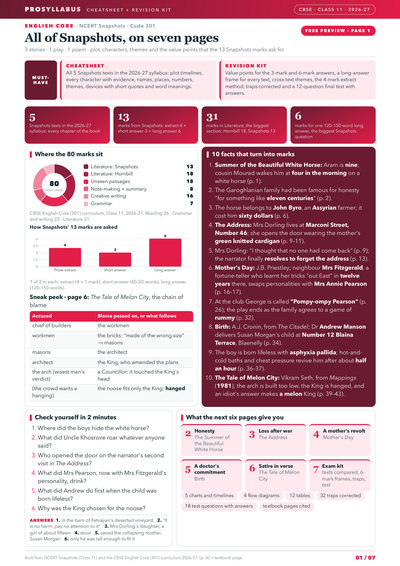
All 5 Snapshots texts for the 13 marks- Marks booster + cheatsheet: key concepts in 2 lines each, common traps
- 4-, 3- and 6-mark answers: how to write them
- Plot timeline for every text
- Common traps, corrected
- Every character, with evidence
- Cross-text themes, side by side
CBSE Class 11 · English Core
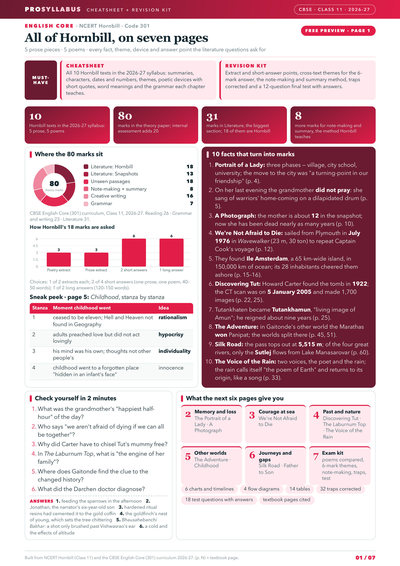
All 10 Hornbill texts: 5 prose, 5 poems- Marks booster + cheatsheet: key concepts in 2 lines each, common traps
- 8 marks: note-making and summary
- 5 poems compared, cross-text themes
- Common traps, corrected
- Poetic devices with short quotes
- Grammar each chapter teaches
The story in short
J.B. Priestley's humorous and satirical one-act play exposes how a mother is taken for granted by her family and how she reclaims her self-respect. Mrs Annie Pearson is a pleasant but over-indulgent housewife whose husband George and grown children Doris and Cyril order her about, ignore her feelings and treat her like a servant. Her neighbour Mrs Fitzgerald, a strong-willed fortune-teller, urges her to put her foot down, but Mrs Pearson cannot bring herself to confront her family. Mrs Fitzgerald therefore proposes a magical solution: through a spell learnt "out East," the two women exchange personalities (and bodies). Now bold and sharp-tongued in Mrs Pearson's body, Mrs Fitzgerald deals firmly with the family — refusing to do chores on demand, smoking, drinking stout, threatening a forty-hour week with weekends off, and bluntly telling George that the club members mock him as "Pompy-ompy Pearson." The shocked and chastened family begin to treat "mother" with new respect. The women then change back, and Mrs Fitzgerald warns Mrs Pearson not to apologise or go soft, but to keep a firm hand. The play ends with the family, now eager to please, agreeing to a family game of rummy and to help with supper. Written in the 1950s, the comedy makes a serious point about respecting the mother and asserting one's rightful place in the family.