ProSyllabus Journal

Understanding the Marking Scheme and Tie-Breaking Criteria in JEE (Main) 2025

A detailed guide to the marking scheme and tie-breaking criteria for JEE (Main) 2025, ensuring you know how every answer impacts your score and what happens in case of a tie.

JEE Main · Exam Preparation · Marking Scheme
#JEE Main 2025#Marking Scheme#Tie-Breaking#Exam Strategy#NTA
Understanding the Marking Scheme and Tie-Breaking Criteria in JEE (Main) 2025

Introduction to JEE (Main) 2025 Marking Scheme

The marking scheme for JEE (Main) 2025 plays a crucial role in determining your final score. Understanding how marks are awarded or deducted for each question type—whether multiple-choice or numerical value questions—can significantly influence your preparation strategy. This blog provides a comprehensive overview of the marking scheme, including negative marking, and the criteria used to resolve ties.

Marking Scheme for Multiple-Choice Questions (MCQs)

For multiple-choice questions, each correct answer earns you four marks, while each incorrect answer results in a deduction of one mark. If you leave a question unanswered or mark it for review, no marks are awarded or deducted. This structure is consistent across all sections of the exam, including Physics, Chemistry, and Mathematics in Paper 1, as well as Aptitude and Planning-based questions in Papers 2A and 2B.

Marking Scheme for Numerical Value Questions

Numerical value questions follow a similar marking scheme: four marks for each correct answer and a deduction of one mark for each incorrect answer. For these questions, you must enter the correct integer value, rounded to the nearest integer, using the on-screen virtual numeric keypad.

Special Cases in Marking

There are specific cases where marks are awarded differently. For instance, if more than one option is correct for an MCQ, all candidates who mark any of the correct options receive full marks. Similarly, if a question is found to be incorrect or is dropped, full marks are awarded to all candidates who attempted the question.

Tie-Breaking Criteria in JEE (Main) 2025

In case of a tie—where two or more candidates obtain the same total NTA score—the tie is resolved using several criteria in descending order: 1. NTA score in Mathematics. 2. NTA score in Physics. 3. NTA score in Chemistry. 4. Lesser proportion of incorrect answers to correct answers in all subjects. 5. Age of the candidate, with older candidates given preference. 6. Application number in ascending order.

Impact of the Marking Scheme on Your Exam Strategy

Understanding the marking scheme is essential for formulating an effective exam strategy. Knowing the implications of negative marking, especially in high-stakes exams like JEE (Main), can help you decide when to attempt a question and when to leave it unanswered.

Conclusion: Maximizing Your Score in JEE (Main) 2025

To maximize your score in JEE (Main) 2025, it’s crucial to fully understand the marking scheme and tie-breaking criteria. By aligning your preparation and exam strategy with these guidelines, you can enhance your chances of securing a higher rank and moving closer to your engineering career goals.
This chapter is part of the JEE Main Board ExaminationExplore every chapter — summary, notes, extra questions & MCQ quizzes
Practice Quiz

Test your JEE Main prep

Dual AI-verified questions Real exam pattern 1 free quiz every month, then ₹9 per quiz — or a monthly plan

#1

Kinematics & Projectile Motion Fundamentals | JEE Main

Start here
10 Qs · ~10 min

Instant score, answer review and weak-topic diagnosis

3.4/10avg score
7/10best
#2

Differential Equations Advanced Challenge | JEE Main

10 Qs · ~10 min

Instant score, answer review and weak-topic diagnosis

0.5/10avg score
1/10best
#3

Work, Energy & Power Fundamentals | JEE Main

10 Qs · ~10 min

Instant score, answer review and weak-topic diagnosis

3/10avg score
4/10best
#4

Organic Reactions: Named Reactions Advanced Challenge | JEE Main

10 Qs · ~10 min

Instant score, answer review and weak-topic diagnosis

#5

Mole Concept & Stoichiometry Fundamentals | JEE Main

10 Qs · ~10 min

Instant score, answer review and weak-topic diagnosis

1/10avg score
1/10best
#6

JEE Main — Complex Numbers

10 Qs · ~10 min

Instant score, answer review and weak-topic diagnosis

#7

JEE Main — Chemical Equilibrium

10 Qs · ~10 min

Instant score, answer review and weak-topic diagnosis

#8

JEE Main — Rotational Motion

10 Qs · ~10 min

Instant score, answer review and weak-topic diagnosis

#9

JEE Main Mathematics — Limits, Continuity & Differentiation

10 Qs · ~10 min

Instant score, answer review and weak-topic diagnosis

#10

JEE Main Physics — Kinematics & Laws of Motion

10 Qs · ~10 min

Instant score, answer review and weak-topic diagnosis

More on JEE Main20 guides

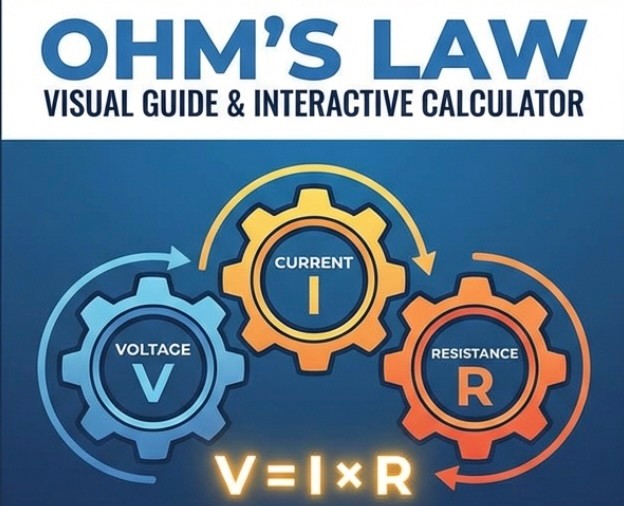
Alerts and Updates for JEE MainStay up-to-date with the latest news and updates for the JEE Main examJEE Main Rank Predictor – Estimate Your All India Rank from Percentile (with Marks vs Rank Tables)Free JEE Main rank predictor with year-wise percentile-to-rank tables, category-wise ranks, college closing ranks and a practice quiz. Estimate your expected All India Rank instantly.Ohm's Law Visual Guide with Interactive CalculatorLearn voltage, current & resistance with visuals and instant calculationsJEE Mains Exam Day Tips 2026: Strategy, Checklist, and Time Management GuideMaster the JEE Mains with expert tips on subject-wise time allocation, CBT navigation, and the ultimate night-before checklist.Ultimate JEE Main 2026 Session 2 Guide: Registration, Dates & Mobile-Ready ChecklistA comprehensive roadmap for the April attempt, optimized for all devices.d- and f-Block Elements – Interactive Quiz & CheatsheetUnderstand the transition and inner transition metals with this educational quizPrinciples Related to Practical Chemistry – Interactive Quiz & CheatsheetLearn essential laboratory principles, titration techniques, and safety rules with this interactive resourceCoordination Compounds – Interactive Quiz & CheatsheetExplore the bonding, nomenclature, and properties of coordination compounds interactivelyP-Block Elements – Interactive Quiz & CheatsheetLearn the properties, reactions, and compounds of P-block elements in a fun wayClassification of Elements and Periodicity – Interactive Quiz & CheatsheetMaster the periodic table, trends, and classifications with this engaging quizBiomolecules – Interactive Quiz & CheatsheetMaster carbohydrates, proteins, nucleic acids, and enzymes with this fun and educational quizOrganic Compounds Containing Nitrogen – Interactive Quiz & CheatsheetUnderstand the chemistry of amines, cyanides, and nitro compounds with this fun learning resourceOrganic Compounds Containing Oxygen – Interactive Quiz & CheatsheetExplore alcohols, phenols, ethers, aldehydes, and ketones through an engaging quiz and notesSome Basic Principles of Organic Chemistry – Interactive Quiz & CheatsheetUnderstand hybridisation, resonance, and inductive effects in organic chemistry with this learning gameHydrocarbons – Interactive Quiz & CheatsheetLearn the properties, preparation, and reactions of alkanes, alkenes, and alkynes with this interactive toolPurification and Characterisation of Organic Compounds – Interactive Quiz & CheatsheetMaster the techniques for purifying and identifying organic compounds with this engaging quiz and guideRedox Reactions and Electrochemistry – Interactive Quiz & CheatsheetUnderstand oxidation-reduction principles and electrochemical cells with this engaging quiz and reference guideChemical Kinetics – Interactive Quiz & CheatsheetLearn about reaction rates, order, and molecularity through this fun and informative quiz toolEquilibrium – Interactive Quiz & CheatsheetMaster chemical and ionic equilibrium concepts with this interactive quiz and reference guideSolutions – Interactive Quiz & CheatsheetExplore solution properties, concentration terms, and colligative properties through a quick, interactive quiz

Group Discussions

No forum posts available.

Share this article