
Checked 29 September 2026. From IBPS’s CSA-XV notices of 02.03.2026 (Annexure B), 17.07.2026 (Chandigarh), 15.06.2026 and 15.09.2026. These are last cycle’s results; CSA-XVI will produce its own.
Search for “IBPS Clerk cut-off” and you will find tables of Prelims marks by state. IBPS has not published any such table or notice for CSA-XV; the tables online are third-party compilations. What it does publish, in the allotment notices, is more useful: for every State/UT and category, the highest and lowest Mains score that received a bank, on a scale of 100, and then the minimum score reached in each later reserve-list round. This guide puts all of CSA-XV’s figures in one place, with a tool that places any score against them.
IBPS CSA-XV provisional allotment notice 02.03.2026, Annexure B.
Where other pages get this wrong
IBPS publishes Mains-based allotment scores out of 100. It has published no consolidated Prelims cut-off table.
Commonly published instead: State-wise “IBPS Clerk Prelims cut-off” tables presented as official, and “final cut-off” quoted in marks out of 200.
The CSA-XVI notification says Prelims candidates must clear a cut-off in each test “to be decided by IBPS”, but no public IBPS notice for CSA-XV prints those cut-offs State/UT by State/UT. Anything a candidate saw about the Prelims cut-off would be on their own login-only scorecard, which we could not check; state tables on coaching sites are their compilations, not an IBPS document. The allotment notice of 02.03.2026 prints State/UT and category-wise maximum and minimum scores, “Online Main Examination scores out of 100”. Only the Mains counts for merit.
What the numbers mean
The Mains is marked out of 200. For allotment IBPS converts it to a score out of 100, after normalising scores across sessions with the equi-percentile method and keeping two decimal places. So a main-round minimum of 42.25 means the lowest-placed candidate who got a bank in that cell had a normalised Mains score of 42.25 out of 100, roughly 84.5 out of 200 before conversion (our arithmetic; normalisation means the raw mark could differ).
Four kinds of figure appear below. The main-round maximum and minimum come from tables I and II of the allotment notice of 2 March 2026. The “lowest on the reserve list” is table III of the same notice: the lowest score kept on the reserve list for that cell. The phase 1 and phase 2 minimums are the lowest scores allotted in the reserve-list rounds of 15 June and 15 September 2026. Where IBPS printed “NA”, meaning no vacancy or no candidate, the table shows a dash.
Ties at the cut-off score were broken by age: the notices say the candidate senior in age is placed first. They also print, for each cell, the date of birth of the last candidate at the minimum. We do not reproduce those dates here.
Unreserved (UR): every state
| State/UT | Main round max | Main round min | Lowest on reserve list | Phase 1 min | Phase 2 min |
|---|---|---|---|---|---|
| Uttar Pradesh | 61.63 | 42.25 | 40.00 | 40.25 | 40.13 |
| Karnataka | 57.38 | 39.38 | 37.38 | 37.38 | 37.38 |
| Maharashtra | 62.13 | 41.13 | 39.00 | 39.25 | 39.00 |
| West Bengal | 62.00 | 44.75 | 42.50 | 43.25 | 43.00 |
| Gujarat | 55.63 | 38.25 | 36.00 | 36.00 | — |
| Tamil Nadu | 69.50 | 45.88 | 45.00 | 45.00 | — |
| Madhya Pradesh | 62.25 | 43.63 | 41.88 | 41.88 | — |
| Bihar | 63.38 | 42.88 | 40.75 | 40.75 | — |
| Punjab | 68.13 | 47.13 | 44.75 | 44.75 | — |
| Delhi | 61.25 | 47.88 | 46.13 | 46.13 | — |
| Rajasthan | 61.00 | 46.63 | 45.00 | 45.00 | — |
| Assam | 61.50 | 39.25 | 36.63 | 37.13 | 37.00 |
| Odisha | 59.00 | 44.38 | 42.75 | 42.75 | — |
| Chhattisgarh | 60.00 | 41.25 | 39.75 | 39.75 | 39.75 |
| Haryana | 58.13 | 44.38 | 42.13 | 42.25 | 42.13 |
| Telangana | 63.75 | 43.75 | 42.63 | 42.63 | 42.63 |
| Andhra Pradesh | 64.63 | 46.00 | 45.25 | 45.25 | — |
| Jharkhand | 62.63 | 42.13 | 40.50 | 40.50 | — |
| Uttarakhand | 60.00 | 47.38 | 46.00 | 46.00 | — |
| Kerala | 59.75 | 45.50 | 44.00 | 44.00 | — |
| Himachal Pradesh | 59.75 | 45.25 | 43.63 | 43.63 | — |
| Jammu & Kashmir | 59.25 | 44.88 | 43.50 | 43.50 | — |
| Tripura | 50.50 | 39.75 | 38.63 | 38.63 | — |
| Goa | 49.50 | 30.63 | 22.75 | 25.88 | 24.25 |
| Arunachal Pradesh | 43.63 | 33.00 | 30.25 | 31.50 | 31.38 |
| Manipur | 50.75 | 42.00 | 40.25 | 41.00 | 40.88 |
| Nagaland | 49.00 | 33.63 | 32.63 | 32.63 | — |
| Sikkim | 56.25 | 42.00 | 38.75 | 38.75 | — |
| Puducherry | 51.63 | 37.50 | 34.00 | 35.38 | — |
| DNH and Daman & Diu | 47.88 | 31.88 | 28.75 | 31.63 | 31.63 |
| Meghalaya | 45.63 | 34.38 | 33.38 | 33.38 | — |
| Chandigarh | 61.50 | 49.63 | 47.38 | — | — |
| Andaman & Nicobar | 47.25 | 35.38 | 31.88 | — | — |
| Mizoram | 49.00 | 28.88 | 25.88 | 26.50 | 26.38 |
| Lakshadweep | 33.63 | 25.75 | — | — | — |
| Ladakh | 40.50 | 24.63 | — | — | — |
IBPS CSA-XV allotment notice 02.03.2026, Annexure B table II. Chandigarh (49.63) was allotted separately on 17.07.2026.
The spread is wide. Among the large states, the UR minimum ran from 38.25 in Gujarat to 47.88 in Delhi, a gap of 9.63 marks out of 100 (our arithmetic), which is about 19 marks on the 200-mark paper. Chandigarh, allotted separately after a court order, closed higher still at 49.63. At the top end, Tamil Nadu’s highest UR score was 69.50 and Punjab’s 68.13.
Where would your Mains score have landed in CSA-XV?
Pick a State/UT and category and enter a Mains score out of 100 (your total out of 200, halved). The tool compares it with IBPS’s own CSA-XV minimums for that cell.
IBPS CSA-XV notices: provisional allotment 02.03.2026 (Annexure B; Chandigarh 17.07.2026), reserve list phase 1 (15.06.2026) and phase 2 (15.09.2026). “NA” means IBPS printed no figure: no vacancy, no candidate, or no allotment in that round. Scores are normalised Mains scores out of 100. At exactly the minimum, the older candidate was placed first. CSA-XVI will have different vacancies, a changed Quant test and a new candidate pool, so this is last year’s outcome, not a prediction.
OBC (NCL): every state
| State/UT | Main round min | Lowest on reserve list | Phase 1 min (15.06.26) | Phase 2 min (15.09.26) |
|---|---|---|---|---|
| Uttar Pradesh | 38.25 | 36.38 | 37.00 | 36.75 |
| Karnataka | 39.38 | 37.13 | 37.50 | 37.13 |
| Maharashtra | 40.25 | 38.63 | 39.25 | 38.88 |
| West Bengal | 36.25 | 34.63 | 35.25 | 35.13 |
| Gujarat | 37.00 | 35.38 | 35.75 | 35.38 |
| Tamil Nadu | 45.88 | 44.75 | 44.75 | — |
| Madhya Pradesh | 42.63 | 41.25 | 41.50 | 41.50 |
| Bihar | 41.00 | 39.88 | 40.13 | 40.13 |
| Punjab | 41.00 | 39.50 | 39.50 | — |
| Delhi | 43.13 | 41.38 | 41.38 | — |
| Rajasthan | 46.00 | 44.75 | 44.75 | — |
| Assam | 34.75 | 33.25 | 33.25 | — |
| Odisha | 43.75 | 42.50 | 42.63 | 42.50 |
| Chhattisgarh | 44.25 | 43.63 | — | — |
| Haryana | 41.13 | 39.50 | 39.50 | — |
| Telangana | 43.63 | 42.38 | 42.75 | 42.38 |
| Andhra Pradesh | 46.00 | 45.00 | 45.00 | — |
| Jharkhand | 41.50 | 40.25 | 40.50 | 40.25 |
| Uttarakhand | 44.75 | 42.75 | 42.75 | — |
| Kerala | 44.50 | 43.38 | 43.38 | — |
| Himachal Pradesh | 40.13 | 39.25 | 39.25 | — |
| Jammu & Kashmir | 35.38 | 32.50 | 33.00 | 32.75 |
| Tripura | — | — | — | — |
| Goa | 34.38 | 32.63 | 34.25 | 33.38 |
| Arunachal Pradesh | — | — | — | — |
| Manipur | 49.13 | 44.88 | 48.88 | — |
| Nagaland | — | — | — | — |
| Sikkim | 40.75 | 37.88 | — | — |
| Puducherry | 40.00 | 38.25 | — | — |
| DNH and Daman & Diu | 41.00 | 33.00 | — | — |
| Meghalaya | — | — | — | — |
| Chandigarh | 43.63 | 37.88 | — | — |
| Andaman & Nicobar | 35.63 | 34.88 | 35.38 | — |
| Mizoram | — | — | — | — |
| Lakshadweep | — | — | — | — |
| Ladakh | — | — | — | — |
EWS: every state
| State/UT | Main round min | Lowest on reserve list | Phase 1 min (15.06.26) | Phase 2 min (15.09.26) |
|---|---|---|---|---|
| Uttar Pradesh | 40.25 | 38.75 | 39.13 | 38.88 |
| Karnataka | 33.50 | 31.25 | 31.25 | — |
| Maharashtra | 38.13 | 36.38 | 36.75 | 36.38 |
| West Bengal | 31.75 | 27.75 | 29.00 | 28.63 |
| Gujarat | 34.38 | 32.25 | 32.38 | 32.25 |
| Tamil Nadu | 18.38 | — | — | — |
| Madhya Pradesh | 39.88 | 38.63 | 38.63 | — |
| Bihar | 41.88 | 39.88 | 40.38 | 40.38 |
| Punjab | 43.13 | 41.88 | 41.88 | — |
| Delhi | 45.25 | 44.00 | 44.00 | — |
| Rajasthan | 45.13 | 42.88 | 42.88 | — |
| Assam | 30.00 | 24.63 | 24.63 | — |
| Odisha | 38.13 | 36.75 | 36.75 | — |
| Chhattisgarh | 35.88 | 34.63 | 34.63 | — |
| Haryana | 40.50 | 39.00 | 39.00 | — |
| Telangana | 40.88 | 39.25 | 39.25 | — |
| Andhra Pradesh | 43.13 | 41.75 | 41.75 | 41.75 |
| Jharkhand | 38.00 | 36.50 | 37.00 | 36.88 |
| Uttarakhand | 45.00 | 44.25 | 44.25 | — |
| Kerala | 30.50 | 22.00 | 22.00 | — |
| Himachal Pradesh | 41.75 | 39.88 | 39.88 | — |
| Jammu & Kashmir | 41.63 | 40.88 | 41.13 | 40.88 |
| Tripura | — | — | — | — |
| Goa | 28.38 | — | — | — |
| Arunachal Pradesh | 28.88 | — | — | — |
| Manipur | 29.00 | — | — | — |
| Nagaland | — | — | — | — |
| Sikkim | — | — | — | — |
| Puducherry | — | — | — | — |
| DNH and Daman & Diu | 22.88 | — | — | — |
| Meghalaya | — | — | — | — |
| Chandigarh | — | — | — | — |
| Andaman & Nicobar | 31.88 | — | — | — |
| Mizoram | — | — | — | — |
| Lakshadweep | — | — | — | — |
| Ladakh | — | — | — | — |
SC: every state
| State/UT | Main round min | Lowest on reserve list | Phase 1 min (15.06.26) | Phase 2 min (15.09.26) |
|---|---|---|---|---|
| Uttar Pradesh | 29.50 | 27.50 | 28.13 | 27.75 |
| Karnataka | 32.38 | 31.13 | 31.25 | 31.13 |
| Maharashtra | 38.88 | 37.63 | 37.63 | 37.63 |
| West Bengal | 34.38 | 32.75 | 32.88 | 32.75 |
| Gujarat | 34.75 | 33.38 | 33.38 | — |
| Tamil Nadu | 35.63 | 34.50 | 34.50 | — |
| Madhya Pradesh | 31.25 | 29.50 | 29.75 | 29.50 |
| Bihar | 26.00 | 23.38 | 24.13 | 23.88 |
| Punjab | 32.88 | 30.38 | 30.38 | — |
| Delhi | 37.38 | 35.38 | 35.38 | — |
| Rajasthan | 33.50 | 31.75 | 31.75 | — |
| Assam | 34.13 | 32.75 | 32.75 | — |
| Odisha | 28.88 | 27.38 | 27.38 | 27.38 |
| Chhattisgarh | 33.25 | 31.50 | 31.50 | — |
| Haryana | 33.50 | 30.13 | 30.13 | — |
| Telangana | 37.13 | 36.25 | 36.25 | 36.25 |
| Andhra Pradesh | 40.25 | 39.38 | 39.38 | — |
| Jharkhand | 29.38 | 27.25 | 27.25 | — |
| Uttarakhand | 36.13 | 34.63 | 34.63 | — |
| Kerala | 32.00 | 30.25 | 30.25 | — |
| Himachal Pradesh | 38.00 | 35.25 | 35.25 | — |
| Jammu & Kashmir | 41.63 | 37.38 | 38.13 | — |
| Tripura | 41.00 | 37.75 | 40.63 | — |
| Goa | — | — | — | — |
| Arunachal Pradesh | — | — | — | — |
| Manipur | — | — | — | — |
| Nagaland | — | — | — | — |
| Sikkim | — | — | — | — |
| Puducherry | 37.38 | 31.38 | — | — |
| DNH and Daman & Diu | — | — | — | — |
| Meghalaya | — | — | — | — |
| Chandigarh | 52.00 | 43.75 | — | — |
| Andaman & Nicobar | — | — | — | — |
| Mizoram | — | — | — | — |
| Lakshadweep | — | — | — | — |
| Ladakh | — | — | — | — |
ST: every state
| State/UT | Main round min | Lowest on reserve list | Phase 1 min (15.06.26) | Phase 2 min (15.09.26) |
|---|---|---|---|---|
| Uttar Pradesh | 25.50 | 22.75 | 22.75 | 22.75 |
| Karnataka | 28.75 | 27.25 | 27.25 | — |
| Maharashtra | 27.88 | 25.50 | 25.50 | — |
| West Bengal | 29.38 | 27.75 | 27.75 | — |
| Gujarat | 23.25 | 20.63 | 21.75 | 20.75 |
| Tamil Nadu | 30.50 | 29.25 | 29.25 | — |
| Madhya Pradesh | 26.13 | 22.63 | 22.75 | 22.63 |
| Bihar | 24.50 | 23.00 | — | — |
| Punjab | — | — | — | — |
| Delhi | 29.88 | 29.00 | 29.00 | — |
| Rajasthan | 28.25 | 25.13 | 25.13 | — |
| Assam | 29.25 | 27.63 | 27.63 | — |
| Odisha | 22.38 | 19.13 | 20.38 | 19.63 |
| Chhattisgarh | 28.00 | 26.63 | 26.75 | 26.63 |
| Haryana | — | — | — | — |
| Telangana | 39.38 | 38.13 | 38.13 | — |
| Andhra Pradesh | 34.88 | 33.25 | 33.25 | — |
| Jharkhand | 30.13 | 27.75 | 28.13 | 27.75 |
| Uttarakhand | — | — | — | — |
| Kerala | 29.25 | 25.63 | 26.25 | — |
| Himachal Pradesh | 42.25 | 40.63 | 40.63 | — |
| Jammu & Kashmir | 37.25 | 35.50 | 35.50 | — |
| Tripura | 25.00 | 23.00 | 23.13 | 23.00 |
| Goa | 21.88 | 17.50 | 20.63 | — |
| Arunachal Pradesh | 26.75 | 24.00 | 25.63 | 24.75 |
| Manipur | 34.50 | 34.13 | 34.38 | 34.38 |
| Nagaland | 33.50 | 32.50 | 32.75 | 32.50 |
| Sikkim | 29.13 | 26.38 | 26.63 | — |
| Puducherry | — | — | — | — |
| DNH and Daman & Diu | 20.00 | — | — | — |
| Meghalaya | 35.75 | 32.75 | 32.75 | — |
| Chandigarh | — | — | — | — |
| Andaman & Nicobar | — | — | — | — |
| Mizoram | 34.00 | 33.00 | 33.00 | — |
| Lakshadweep | 24.25 | 17.25 | — | — |
| Ladakh | 36.13 | 31.50 | — | — |
Why the same score wins a seat in one state and not another
Allotment is state-wise, with reservation applied category by category. A candidate competes for the seats of the one State/UT they applied for. The notification adds one rule that crosses categories: a reserved-category candidate “selected on the basis of norms as applicable to General Category” is treated at par with a General candidate and is not adjusted against a reserved post. How many seats a cell has, and how the scores of its candidates are spread, together set its minimum; the published tables show the outcome, not the reasons. Delhi, with 279 seats after the second CSA-XV corrigendum (IBPS calls notified vacancies indicative), closed at 47.88 in UR. Gujarat, with 1,109 on the same basis, closed at 38.25.
Category minimums do not always sit below UR. In Delhi, the EWS main-round minimum was 45.25 and the OBC minimum 43.13, both close to UR. In Jammu & Kashmir the SC minimum was 41.63, while in Bihar it was 26.00. Small cells behave oddly: Tamil Nadu’s EWS main-round minimum was 18.38, well below every other category there. The score table does not say why; fewer qualified EWS candidates than seats is one possible explanation, but it cannot be read from the published figures. Reserved-category candidates selected on General norms are counted as own-merit UR candidates and are not adjusted against reserved seats; the notification states that rule, but not a simple “above the UR minimum” test, because merit-cum-preference and bank choices also decide who lands where.
Reserve-list minimums tell a second story. Where the phase 1 minimum equals the lowest score on the reserve list, phase 1 reached the bottom score shown for that cell’s list (our reading of the two notices). The score tables alone do not prove that every candidate tied on that score was allotted: ties are broken by date of birth, so some may remain. That happened in UR in Delhi, Punjab, Rajasthan, Tamil Nadu, Andhra Pradesh, Kerala, Himachal Pradesh, Uttarakhand and Bihar, among others, and in all of those IBPS printed NA for UR in phase 2. Karnataka is different: its UR phase 1 and phase 2 minimums are both 37.38, the same as the lowest reserve-list score, so phase 2 again reached that bottom score, presumably among candidates tied on it; the tables cannot say how many remain.
Using CSA-XV figures for CSA-XVI
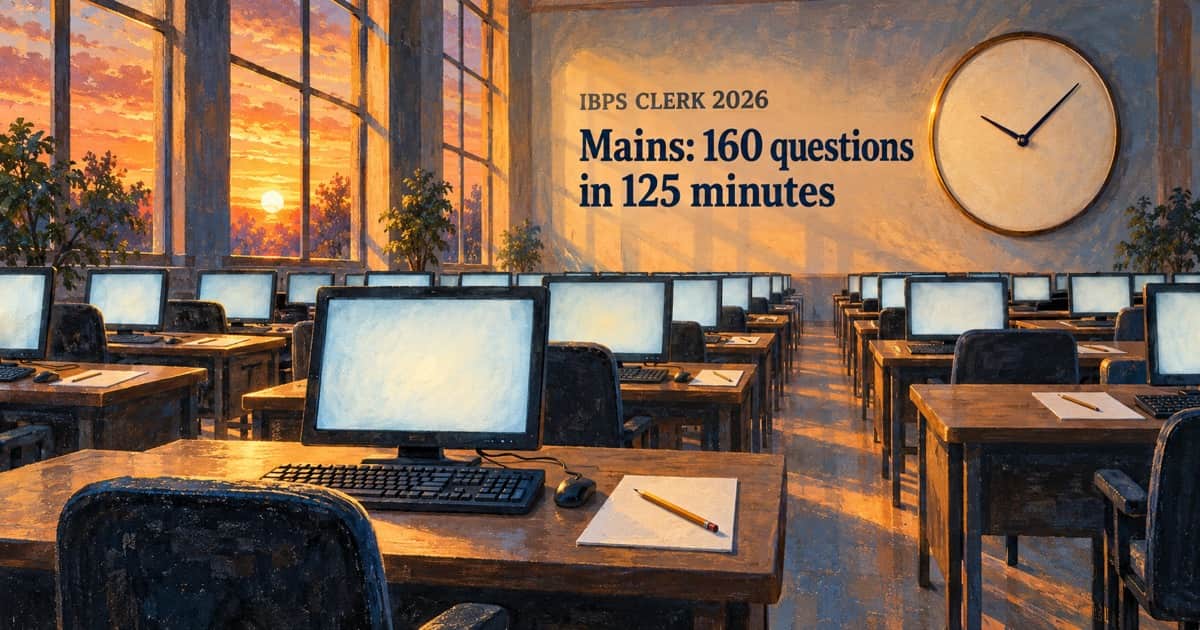
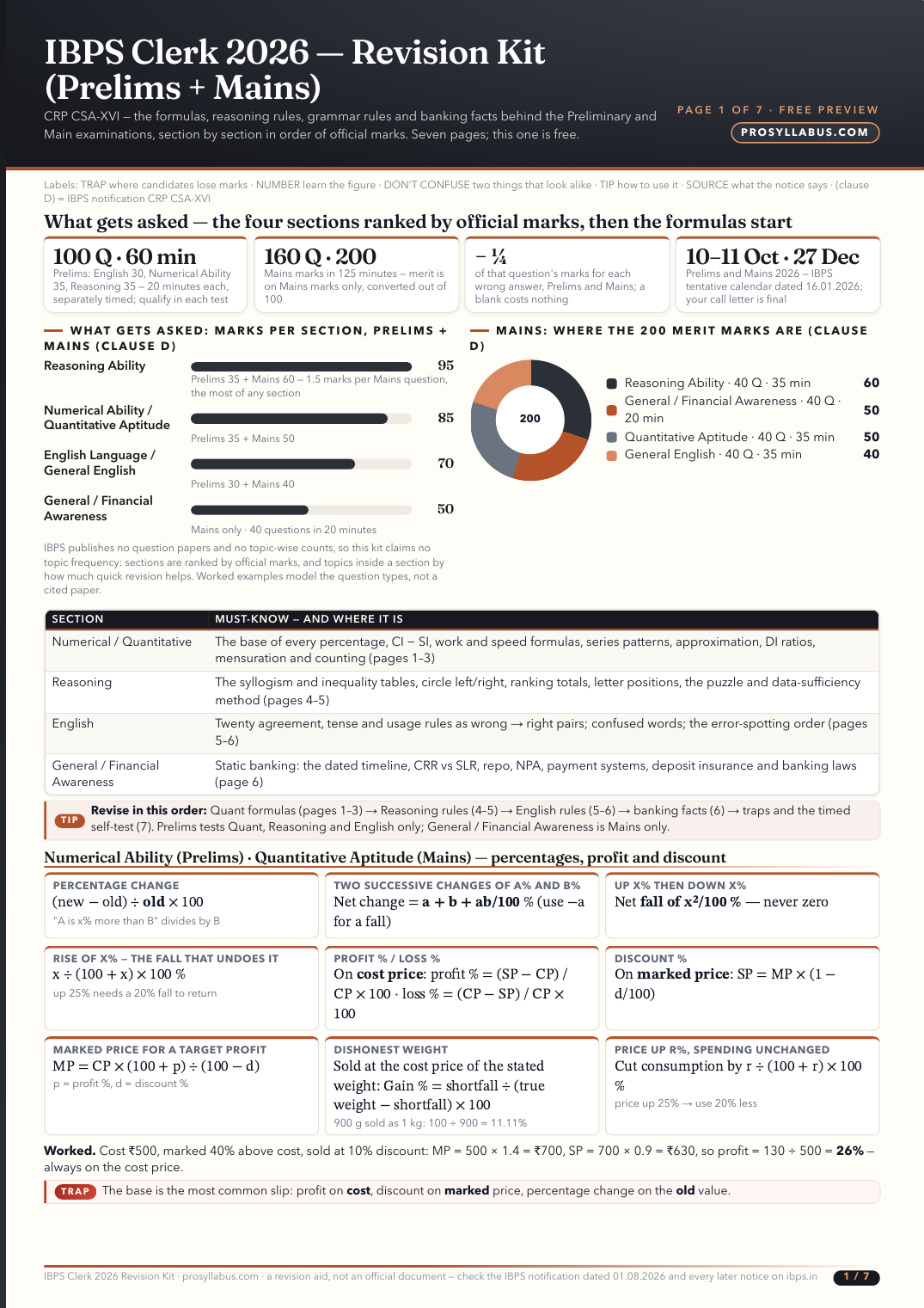
Treat these numbers as a map of last year, not a forecast. Three things are different this time. The seat counts are different: several states have more CSA-XVI seats than last year’s notified figure and some have fewer. The Mains changed: Quantitative Aptitude now has 40 questions in 35 minutes instead of 35 in 30, with the same 50 marks, so the paper as a whole is 160 questions in 125 minutes. And the candidate pool is new. Normalisation adjusts for differences between sessions within a cycle, not between cycles.
A sensible way to use them: find your state and category, note the main-round minimum and the phase 1 minimum, and set a Mains target a few marks above the higher one. Then check how your mock scores convert. The Mains pattern guide in this series has a calculator for raw marks under the CSA-XVI pattern; halving the total gives the scale used here, before normalisation.
| If your target is | Compare with | CSA-XV example (UP, UR) |
|---|---|---|
| A bank in the main round | Main round min for your cell | 42.25 |
| Any allotment in CSA-XV terms | Lowest phase 1 or phase 2 min | 40.13 (phase 2) |
| A place on the reserve list | Lowest on reserve list | 40.00 |
| The top of your state | Main round max | 61.63 |
Practise it, don't just read it
A few marks out of 100 separated a bank from the reserve list in most states. Reading comprehension carries marks in both the Prelims and the Mains English test.
The ProSyllabus IBPS Clerk library is small so far: one live quiz, Reading Comprehension Passages Fundamentals (English, 10 questions), which is free to try.
What was the IBPS Clerk final cut-off in Uttar Pradesh for UR?
In CSA-XV the UR main-round minimum was 42.25 out of 100 (maximum 61.63). Reserve-list phase 1 reached 40.25 and phase 2 reached 40.13.
Does IBPS publish Prelims cut-offs for Clerk?
IBPS has published no consolidated state-wise Prelims cut-off table or notice for CSA-XV. A candidate’s own scorecard is the only IBPS place one could appear, and we could not check those. The allotment notices print Mains scores out of 100.
Is the IBPS Clerk cut-off out of 200 or 100?
The Mains is marked out of 200; IBPS converts it to a score out of 100 for provisional allotment, and the published minimums are on that scale.
Which state had the highest IBPS Clerk cut-off in CSA-XV?
Chandigarh, allotted separately on 17.07.2026, had the highest UR main-round minimum at 49.63. In the 02.03.2026 round the highest were Delhi 47.88, Uttarakhand 47.38 and Punjab 47.13.
Which state had the lowest?
Among states with a sizeable intake, Goa’s UR main-round minimum was 30.63 and Gujarat’s 38.25. Small UTs such as Ladakh (24.63) and Lakshadweep (25.75) were lower.
How are ties at the cut-off decided?
By date of birth: the older candidate is placed first. The notices print the date of birth of the last candidate at each minimum.
Are the published scores normalised?
Yes. IBPS normalises Mains scores across sessions using the equi-percentile method and uses two decimal places.
Can a reserved-category candidate get a UR seat?
Yes. The notification says a reserved-category candidate selected on the norms applicable to the General category is treated at par with a General candidate and is not adjusted against a reserved post.
Will CSA-XVI cut-offs be the same?
Unlikely. Seats per state have changed, the Quant test is longer, and the candidate pool is new. Use CSA-XV figures as a guide only.
What does “lowest on reserve list” mean?
It is table III of the allotment notice: the lowest score IBPS kept on the reserve list for that state and category.
Why does IBPS show NA for some cells?
NA means no vacancy or no candidate available in that cell, or no allotment in that round.
More in this series
- IBPS Clerk 2026 vacancies: 11,663 and will they grow?
- IBPS Clerk Mains 2026: 160 questions, 125 minutes
- IBPS Clerk reserve list: how it works, state by state
- IBPS Clerk: choosing your state and the language rule
- IBPS Clerk vs SBI Clerk 2026
- IBPS Clerk notice board — official updates
- SBI Clerk 2026-27: two notifications
Sources
- official — IBPS — CSA-XV provisional allotment notice (02.03.2026), Annexure B maximum and minimum scores
- official — IBPS — CSA-XV Chandigarh provisional allotment notice (17.07.2026)
- official — IBPS — CSA-XV reserve list phase 1 notice (15.06.2026), minimum scores
- official — IBPS — CSA-XV reserve list phase 2 notice (15.09.2026), minimum scores
- official — IBPS — CSA-XV state-wise provisional allotment lists (e.g. Uttar Pradesh; counted, no names used)
- official — IBPS — CRP-CSA-XV page (state lists, reserve-list lists)
- official — IBPS — CRP CSA-XVI detailed notification (vacancies of 2027-28)
- official — IBPS — CRP CSA-XV detailed notification (re-issued 12.9.2025)
- official — IBPS — CSA-XV vacancy corrigendum 2 (14.11.2025)
- official — IBPS — Normated standards for flagged cases of non-genuine scores (17.11.2025)
official = a document published by the conducting body. reported = a news or coaching site we could not check against an original. Where sources disagree this page says so rather than picking one.