CBSE Class 10 Pre-Board Marks: Do They Count, and What to Do If Low
Pre-boards are school exams and are not added to the CBSE result. How they can touch the 20 internal marks, how to read a low score, and a plan for the weeks before February 2027.
Updated just nowCBSE Class 10 · Pre-Board · Board Exam Preparation
#does pre board marks matter#low marks in pre board exam class 10#cbse class 10 pre board 2026-27#do pre board marks count in cbse#what to do after failing pre board#cbse class 10 board exam 2027 date sheet#pre board marks internal assessment
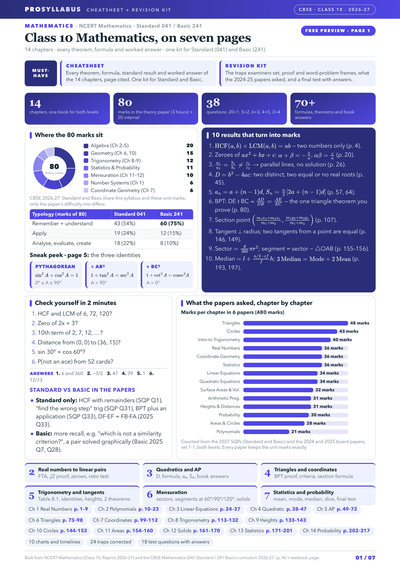
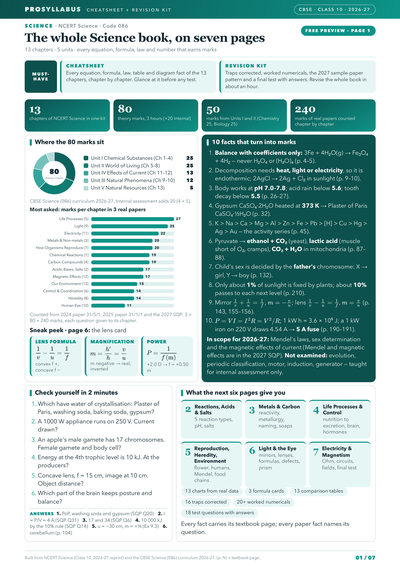
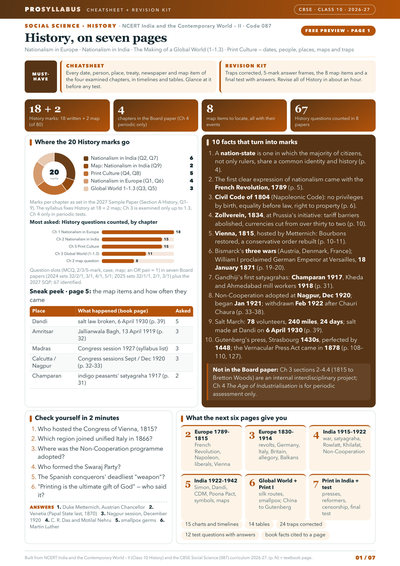
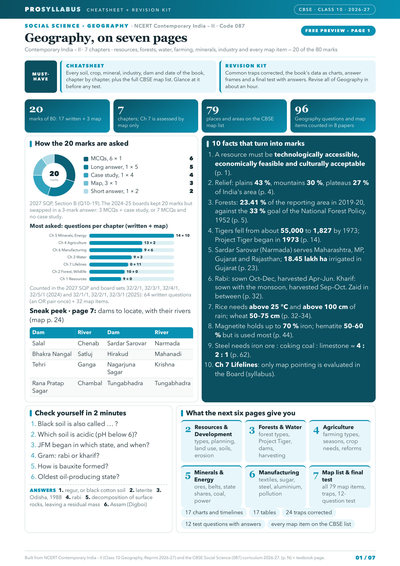
Revision kit70+ formulas and theorems, all 14 chapters
Checked 11 November 2026. Board dates from CBSE’s 2027 date sheet (06.11.2026); the practical and internal assessment window from CBSE’s circular of 05.11.2026; internal assessment rules from the Secondary Curriculum 2026-27. Pre-board dates and how a school uses them are set by each school.
Short answer: pre-board marks do not go into your CBSE board result. Pre-boards are set and marked by your school. The board result in Mathematics, Science, Social Science and the languages is 80 marks from the CBSE paper (from 16 February 2027) plus 20 internal marks given by the school. CBSE’s own FAQ says pre-board marks “are not added or included in the Board examination marks”. Ask the school whether its pre-board also forms part of its documented periodic assessment for the 20 internal marks. A marked pre-board paper is most useful as a map of where marks were lost, and there are still weeks left to fix them.
16 Feb 2027
Class 10 board exams begin
17 Feb
Mathematics, the first main paper
80 + 20
board paper + school’s internal marks
1 Jan–13 Feb
practicals and internal assessment held (regular schools)
CBSE date sheet 06.11.2026; CBSE circular 05.11.2026; Secondary Curriculum 2026-27.
Do pre-board marks count in the CBSE result?
No. In the languages, Mathematics, Science and Social Science, CBSE builds the result from two parts: the board’s 80-mark theory paper and the school’s 20 internal marks. Some other subjects combine theory, practical, project and internal marks differently. The pre-board is none of these. It is a school-level mock exam meant to help students practise; its format and difficulty vary from school to school.
Part
Marks (main subjects)
Who sets and marks it
When (2027)
Does the pre-board feed it?
Board theory paper
80
CBSE
16 Feb to 9 Mar 2027 (Class 10)
No
Internal assessment
20
Your school
Through the year; CBSE schedules practicals and internal assessment for 1 Jan to 13 Feb 2027 (regular schools)
Not as a pre-board; ask whether the school also uses it as a periodic test
Practicals (only some subjects)
Computer Applications and skill subjects 50 + 50; Home Science 70 + 30; Painting and music 30 + 50 practical + 20 internal
School (CBSE’s circular lists no external examiner for these Class 10 subjects)
1 Jan to 13 Feb 2027 (regular schools)
No
Pre-board exam
Set by the school, often modelled on the 80-mark paper
Your school
Set by each school
—
Winter-bound schools follow an earlier window for practicals and internal assessment, 9 November to 19 December 2026. The 80 + 20 split holds for the languages, Mathematics, Science and Social Science; CBSE’s circular of 05.11.2026 lists the marks for every subject.
Where a pre-board can still matter
Three ways a pre-board reaches you
Internal marks. The 20 internal marks have four parts of 5 each: periodic assessment, multiple assessment, portfolio and subject enrichment. For periodic assessment CBSE asks for three tests in the year and averages the best two. Ask the school whether the pre-board is also one of its documented periodic tests. If it is, one weak paper can still be outweighed by the better two.
School rules. Some schools use pre-board results for extra classes, remedial sessions or parent meetings. These are school policies, not CBSE rules. Ask the class teacher what yours does.
A mirror. CBSE’s FAQ says pre-boards help students know how well prepared they are. The marks matter less than where they were lost. Compare the paper with CBSE’s 2026-27 sample paper to see how close it was to the board design.
Sit with the marked answer sheet and put every lost mark into one of these five rows. The row with the most marks suggests what kind of work comes next. Looking beyond the total helps you choose more useful revision. Where it is unclear why marks were cut, ask the teacher.
Where the marks went
How it shows on the sheet
What fixes it before February
Never learnt the chapter
Blank or guessed answers clustered in one or two chapters
Learn those chapters first, giving priority to units with more marks in CBSE’s weightage
Knew it but could not recall
Half answers, a formula or date missing, 1-mark questions wrong
Short daily recall from a one-page summary, then self-testing
Careless errors and missing steps
Right method, wrong sign or unit; marks cut for steps not shown
Redo the paper’s long answers against the marking scheme, step by step
Ran out of time
Last section blank or rushed
One full paper a week against the clock; plan the order of sections
Answered in the wrong place
Science or Social Science answers outside their section
CBSE does not evaluate answers written in the wrong section; practise the section layout
Step marks are shown in CBSE’s marking schemes for the 2026-27 sample papers. Comparing your long answers with the marking scheme shows which steps you skipped; ask a teacher where the split is unclear.
Which subject first? A planner
Pre-board result planner: which subject first?
Type the pre-board marks for the subjects you sat. Leave a subject blank to skip it. Most pre-board papers are out of 80, like the board theory paper; change “out of” if your school marked differently. The planner ranks the subjects by percentage, shows how many days are left before each board paper, and points to the one to start with: the lowest score, or, when two are within 5 percentage points, the one whose paper comes first. It asks for no name and saves nothing.
Mathematics (Standard or Basic) Board paper Wed 17 Feb 2027out of
Science Board paper Mon 22 Feb 2027out of
Computer Applications Board paper Wed 24 Feb 2027out of
English (Language and Literature) Board paper Fri 26 Feb 2027out of
Sanskrit Board paper Mon 1 Mar 2027out of
Hindi (Course A or B) Board paper Wed 3 Mar 2027out of
Social Science Board paper Mon 8 Mar 2027out of
Your plan appears here.
Board dates: CBSE date sheet of 06.11.2026. The bands are ours: 33% is the pass line in each subject (theory and internal marks together), and the other cut-offs are only a guide to how much work a subject needs.
If the planner cannot run (some readers and saved pages remove it), use the table. Days are counted from 1 January 2027, when the internal assessment window opens for regular schools.
Subject
Board paper (2027)
Days after 1 Jan 2027
Marks Booster Kit
Mathematics (Standard or Basic)
Wed 17 Feb 2027
47
Mathematics
Science
Mon 22 Feb 2027
52
Science
Computer Applications
Wed 24 Feb 2027
54
Computer Applications
English (Language and Literature)
Fri 26 Feb 2027
56
First Flight, Footprints without Feet
Sanskrit
Mon 1 Mar 2027
59
Sanskrit
Hindi (Course A or B)
Wed 3 Mar 2027
61
Hindi A, Hindi B
Social Science
Mon 8 Mar 2027
66
History, Geography, Political Science, Economics
If you are a parent: what to do this week
When pre-board results come home, many families feel the board exam is suddenly close. CBSE’s Parenting Calendar for 2026-27 says the parent’s job around exams is to lower the noise, not add to it, and that a child who has done badly first needs to know the relationship is intact. Then the work starts.
Talk about the paper, not the child. “Let’s see where the marks went” works better than “Why so low?”. Keep the first talk short.
Sit together with the answer sheets for 20 minutes. Ask your child to explain each lost mark and sort it into the five rows above. You can organise the review without knowing the subject; the teacher can help where it is unclear.
Pick one priority subject, and keep the others ticking over. Use the planner: the lowest percentage, and if two are close, the one whose board paper comes first. Mathematics is on 17 February, the first main paper. The priority subject gets the daily slot; the rest keep their normal revision.
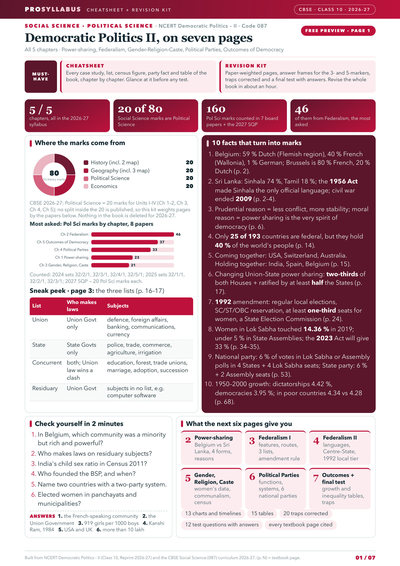
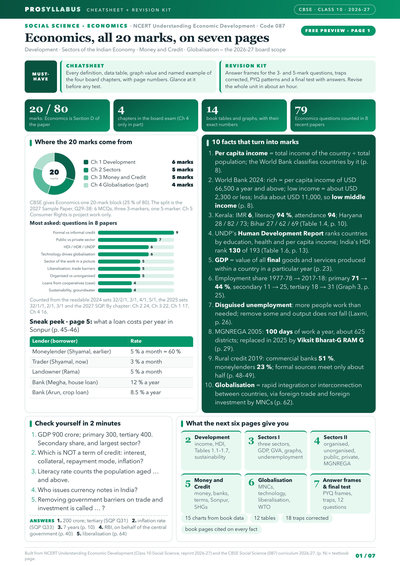
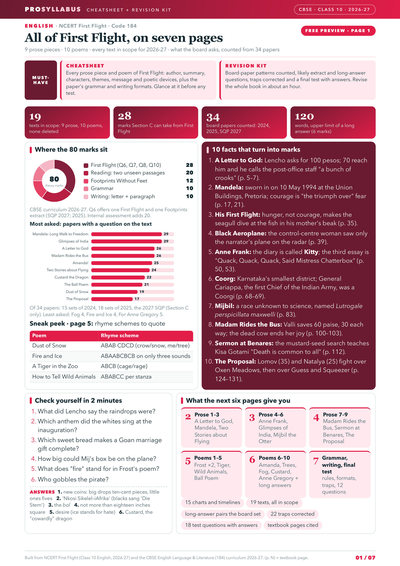
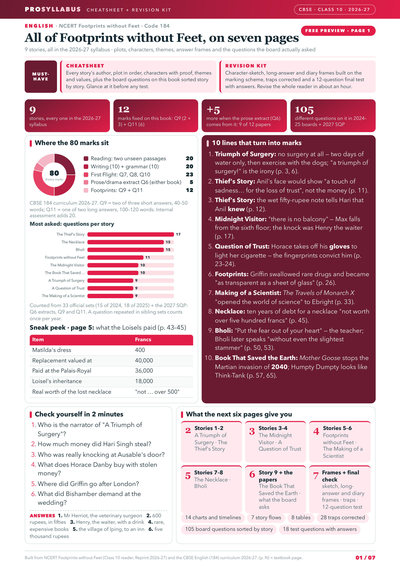
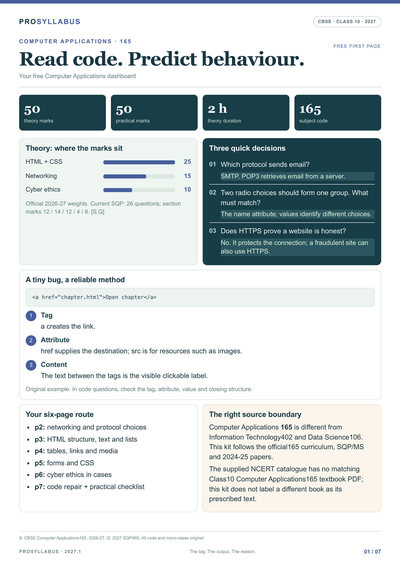
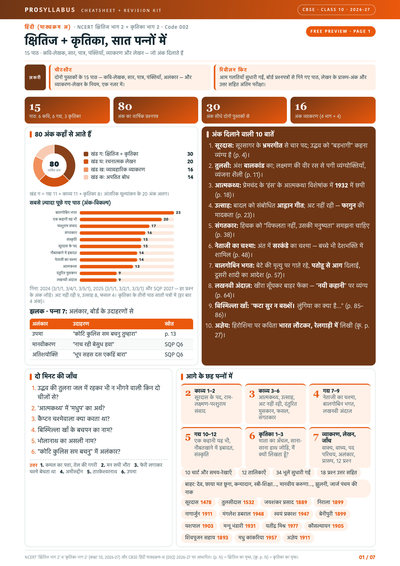
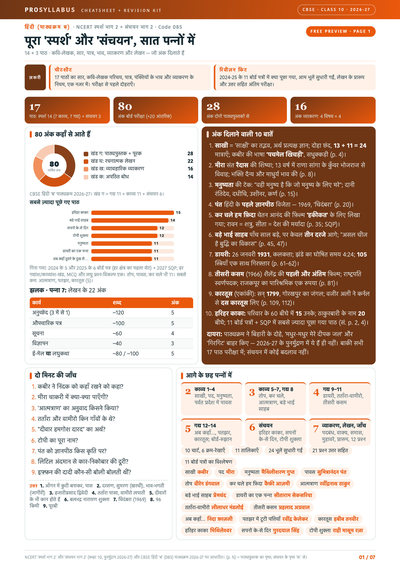
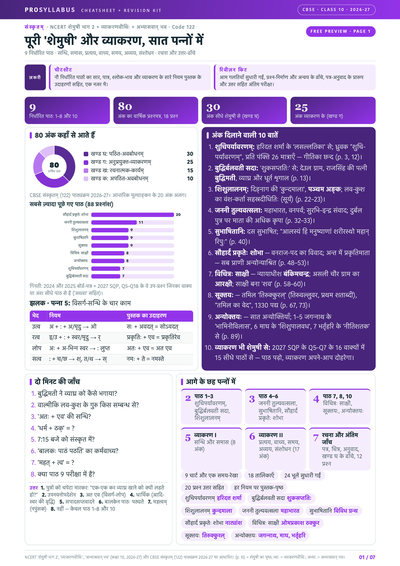
Do a two-minute check together. Page 1 of each Marks Booster Kit is free and ends with a two-minute self-check. Sit beside your child for it and see how many they get. A poor score means those topics need revising, from the textbook, the teacher’s feedback and practice questions; the rest of the kit is there if you want a ready revision sheet for it.
Fix one daily slot. 45 to 60 minutes, same time each day, phone in another room. A short slot kept every day beats a long one that keeps slipping.
Meet the subject teacher once. Ask two things: does the school count the pre-board in internal assessment, and which chapters cost the most marks.
When it is more than marks
Watch for withdrawal, changes in sleep, falling grades and a loss of interest in things your child used to enjoy. CBSE’s Parenting Calendar lists these as warning signs for early adolescence and asks parents of Class 9 and 10 students to watch for warning signs too.
Talk to the school counsellor. If your child talks about not wanting to go on, take it seriously, stay with them, ask calmly whether they are safe, and get professional help the same day. Tele-MANAS (14416) is the Government of India’s free 24x7 mental health line. If there is immediate danger or an injury, call 112, India’s emergency number, or get emergency medical help at once.
CBSE Parenting Calendar 2026-27; Ministry of Health and Family Welfare (Tele-MANAS).
Revision kit70+ formulas and theorems, all 14 chapters
This is our plan for the first week after a low pre-board, for the priority subject, built around its Marks Booster Kit. Keep the other subjects on their normal revision while you do it, then give the next subject the daily slot.
Day
What to do
Time
1
Sort the pre-board paper into the five rows. Do the kit’s free page 1: marks map, what the board asked, ten must-know facts, two-minute self-check.
45 min
2
Kit: chapter-by-chapter marks, beside CBSE’s unit weightage. Mark your weak chapters, and put first those in units with more marks in CBSE’s unit weightage. Weightage guides the order; it does not predict which chapters a paper will stress, and it is not a reason to skip any chapter.
60 min
3
First of those chapters: the kit’s summary, then the textbook’s exercises for it.
60 min
4
Second chapter, same way. Ten minutes of recall on day 3’s chapter first.
60 min
5
Kit: the exam traps list. Check each one against your own pre-board mistakes.
45 min
6
One section of the CBSE 2026-27 sample paper under time, then mark it with the marking scheme.
60 min
7
Kit: final test with answers. Redo every question you missed this week.
60 min
Which Marks Booster Kit to open first
Each Marks Booster Kit is a 7-page PDF for one subject, written for the 2027 board paper and meant to be used beside the NCERT textbook, not instead of it. It is a revision sheet, not a full course or a question bank. Page 1 is free to read on the kit page. If you decide to buy, start with the subject the planner put first.
After revising, practise. Our Class 10 chapter quizzes are ten questions each: a quick check on the topics they cover. Written practice and the teacher’s feedback show broader progress.
The ProSyllabus CBSE Class 10 library has chapter quizzes for Mathematics, Science, Social Science (History, Geography, Political Science and Economics), English (First Flight and Footprints without Feet), Hindi and Health and Physical Education. You can start free, and a ProSyllabus school plan opens more of them each month.
Do pre-board marks count in the CBSE Class 10 result?
No. CBSE says pre-board marks are not added to or included in the board examination marks. Ask the school whether it also uses the pre-board as one of its periodic tests for internal assessment.
Can a school stop a student from sitting the board exam because of low pre-board marks?
No. CBSE’s FAQ says a student cannot be detained from appearing in the board examination if otherwise eligible. Failing or scoring low in a pre-board is not a CBSE eligibility rule.
I failed my pre-boards. Can I still pass the board exam?
Yes. Failing a pre-board does not stop you from passing the board exam. The main board exam starts on 16 February 2027. Find where the marks went, give the weakest subject a daily slot, keep the others going, and practise full papers under time.
When are the CBSE Class 10 board exams in 2027?
The first (main) board exam runs from 16 February to 9 March 2027; the second exam comes later, under CBSE’s two-exam scheme. Mathematics is on 17 February, Science on 22 February, English on 26 February, Hindi on 3 March and Social Science on 8 March. All papers start at 10:30 am.
Are pre-board papers harder than the board paper?
Each school sets its own pre-board, so difficulty varies. Compare your pre-board with CBSE’s 2026-27 sample paper for the subject; the sample paper shows the board’s design.
How many marks do I need to pass a subject?
33 out of 100 in each subject, with the theory paper and internal marks counted together. The passing-marks guide in this series explains the rule and the compartment options.
Is the Marks Booster Kit enough on its own?
No. It is a 7-page revision sheet for one subject, used with the NCERT textbook and practice papers. Its job is to show what to revise first and to check recall.
official = a document published by the conducting body. reported = a news or coaching site we could not check against an original. Where sources disagree this page says so rather than picking one.