CBSE Class 8 — Notes, Chapters & Practice Quizzes
Every Class 8 chapter, made friendly — notes with pictures, key words, and a quiz for each chapter.
10 questions · instant score · weak-chapter diagnosis
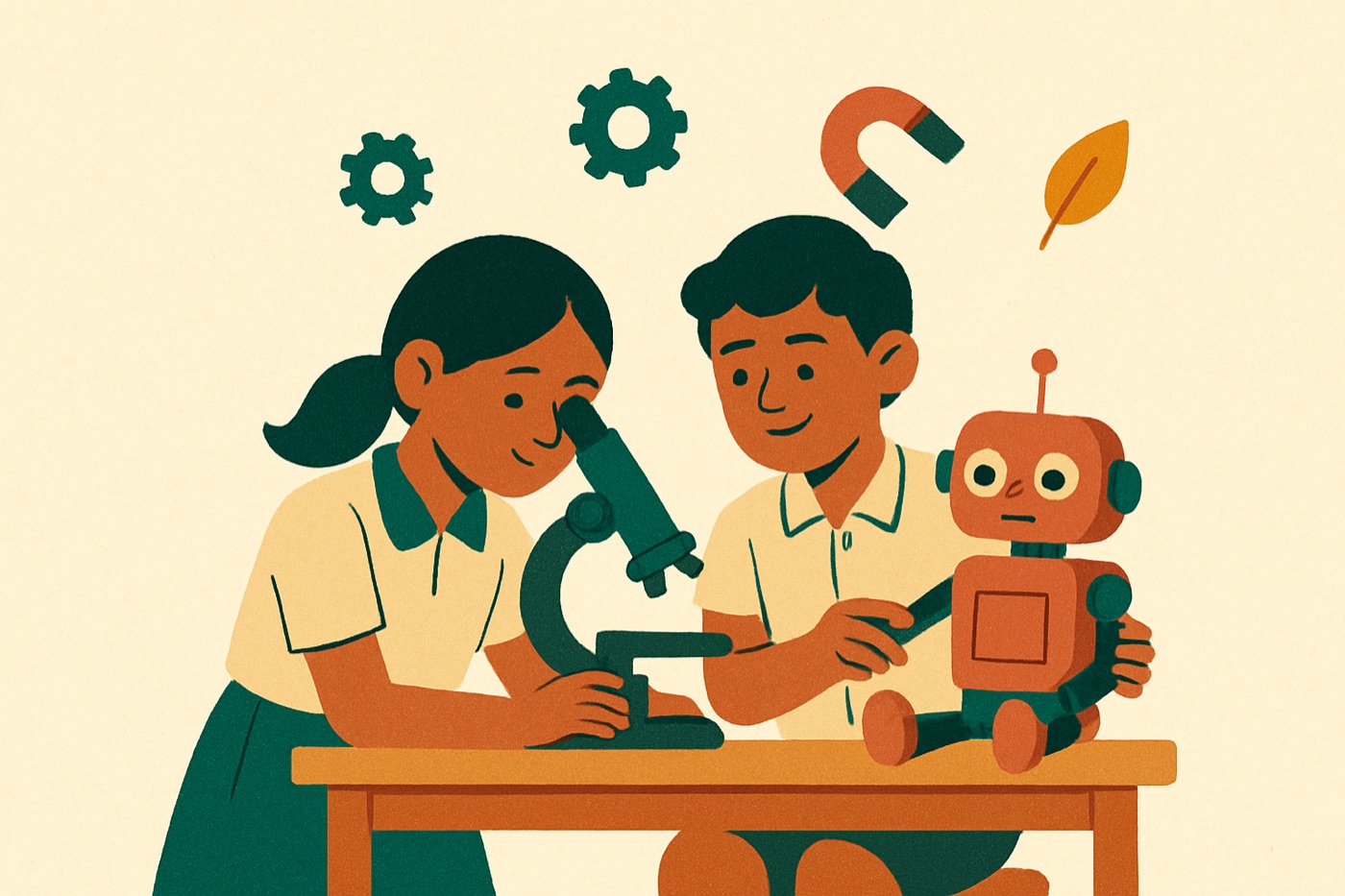
Students preparing for CBSE Class 8 Annual Assessment
View all




Chapter 8: Nature of Matter: Elements, Compounds, and MixturesClass 8 Science — summary, notes, extra questions & NCERT solutions
Summary
This chapter classifies matter into mixtures and pure substances. A mixture forms when two or more substances are combined without any chemical reaction, so each component keeps its own properties; the components are called the components of the mixture. Mixtures may be uniform, like salt in water, where components cannot be seen separately, or non-uniform, like a sprout salad, where they are easily visible. Air is shown to be a uniform mixture of gases, and a lime water activity confirms the presence of carbon dioxide. Pure substances contain only one kind of particle and cannot be separated by physical means. They are of two types: elements and compounds. Elements, such as hydrogen, oxygen, gold, and carbon, are the simplest substances and cannot be broken down further. Passing electricity through water splits it into hydrogen and oxygen, showing water is a compound. Compounds form when different elements combine chemically in a fixed ratio and have properties different from their constituent elements; their components cannot be separated physically. Heating sugar and heating an iron and sulfur mixture illustrate how compounds form and behave differently from mixtures, such as iron sulfide not being attracted to a magnet. The chapter ends by linking these ideas to minerals, which are mostly compounds but sometimes pure native elements, and to everyday uses of elements, compounds, and mixtures.
Key terms
Extra questions & answers
Probe and ponder
Table 8.1: Different types of mixtures
Keep the curiosity alive
Explore interactively
Keyboard: ← → to move · Space to flip
Practice quiz · Nature of Matter: Elements, Compounds, and Mixtures
Score on this chapter, climb the leaderboard, and get an AI diagnosis of your mistakes.
Dual AI-verified questions Real exam pattern 1 free quiz every month, then ₹9 per quiz — or a monthly plan
Nature of Matter: Elements, Compounds, and Mixtures
Start hereInstant score, answer review and weak-topic diagnosis