Visual Arts
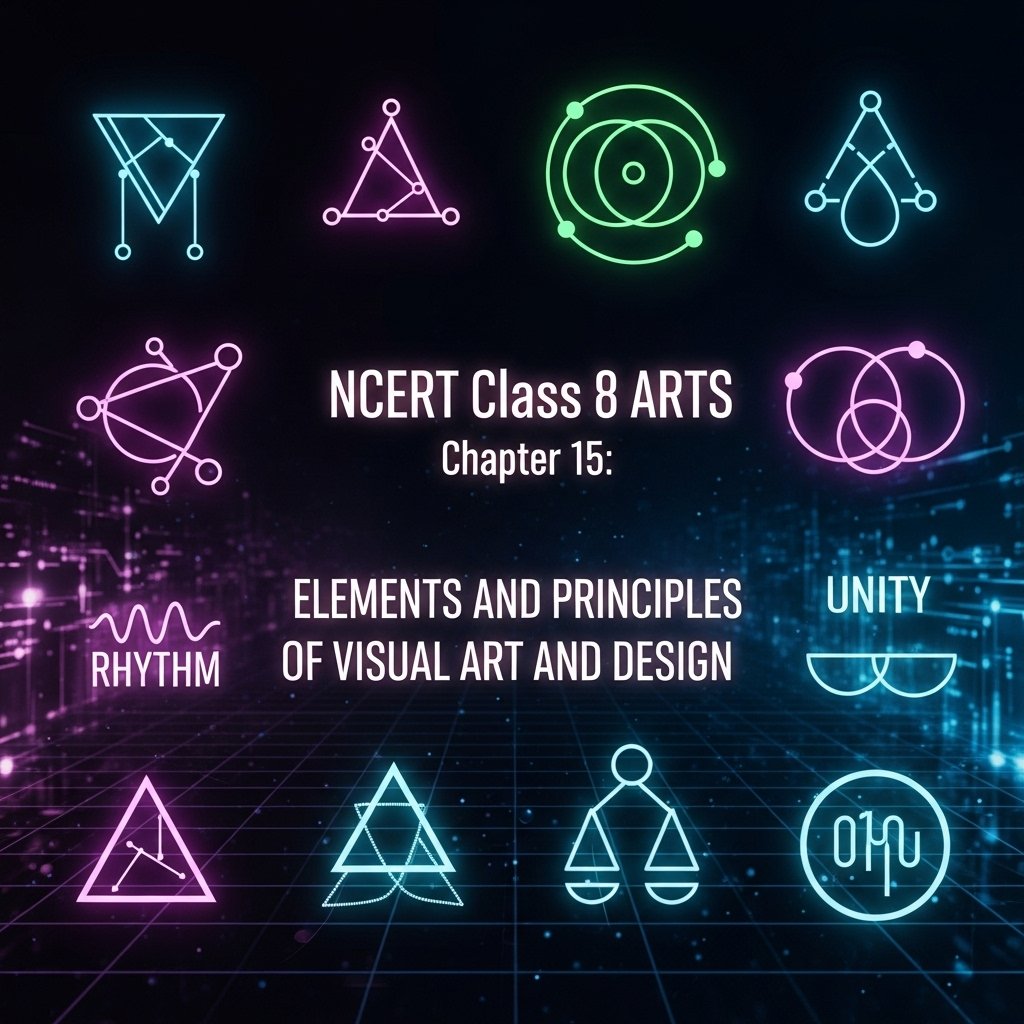
Chapter 15: Visual Arts
Complete Study Guide with Interactive Learning
Chapter Overview
What You'll Learn
Basic Colors
Understanding five primary colors and creating more through imagination.
Classroom Setup
Requirements for space, light, storage, and exhibition in visual arts class.
Pedagogy
Teaching methods using storytelling, original ideas, exploration, and community involvement.
Assessment
Competencies and outcomes for middle stage visual arts education.
Historical Context
The chapter draws from Chitrasutra of Vishnudharmottara Purana, emphasizing color creation. It provides guidance for teachers to enhance visual arts education in middle school, focusing on creativity, cultural awareness, and inclusive practices.
Key Highlights
Encourages original artwork inspired by life experiences; promotes collaboration, exploration, and care for materials; includes field trips and artist interactions; assesses through exhibitions, discussions, and self-evaluation.
Comprehensive Chapter Summary
1. Chitrasutra Shloka
From Adhyaya 40, Chitrasutra of Vishnudharmottara Purana: Five basic colors (white, yellow, red, blue, black); hundreds/thousands more by combining with imagination/discretion.
2. Note to Teachers
Classroom Requirements
Adequate space, light/ventilation, organized storage/access to materials/tools/stationery/audio-visual, exhibition space.
Visual Arts Pedagogy
Use storytelling/examples; encourage original ideas/emotions; motivate original artwork from observations; allow exploration/experiment/collaboration/dialogues; include outdoor/trips; organize museum/heritage/mela visits; invite artists/craftspersons; inculcate cleaning habits; encourage participation in displays/exhibitions.
Learning Outcomes
Table with CG C outcomes: Exhibit artworks/share ideas (1.1); cooperate in decisions (1.2); address stereotypes (2.1); use/clean/store materials (3.1); discuss art/experiences (4.1); use terminology (4.2); overall participation.
3. Middle Stage Competencies
C-1.1 to C-4.2
Express experiences through forms; collaborate flexibly; create artwork challenging stereotypes; connect imagery with experiences; use materials carefully; refine ideas/techniques; familiarity with local arts; describe local artists.
Star Activities
Facilitated by any teacher, even limited resources.
Key Concepts and Definitions
Primary Colors
White, yellow, red, blue, black; base for hundreds more.
Classroom Space
Adequate for work, light/ventilation, storage, exhibition.
Pedagogy
Storytelling, original expression, exploration, community engagement.
Learning Outcomes
Exhibiting, cooperating, stereotyping, material care, discussing art.
Competencies
Middle stage: Expression, collaboration, stereotypes, connections, care, refinement, familiarity, description.
Assessment
Teacher/self on outcomes like participation, artwork sharing.
Important Facts and Figures
Questions and Answers from Chapter
Short Questions
Q1. What are the five basic colors?
Q2. From which text is the shloka?
Q3. What chapter is the shloka from?
Q4. What is the first classroom requirement?
Q5. What is the second requirement?
Q6. What for storage?
Q7. What space for exhibiting?
Q8. First pedagogy point?
Q9. Second pedagogy?
Q10. Third pedagogy?
Q11. Fourth pedagogy?
Q12. Fifth pedagogy?
Q13. Sixth pedagogy?
Q14. Seventh pedagogy?
Q15. Eighth pedagogy?
Medium Questions
Q1. Explain creating colors from basics.
Q2. Describe classroom space need.
Q3. What for storytelling in pedagogy?
Q4. Explain encouraging original ideas.
Q5. Motivate original artwork how?
Q6. Allow what in classroom?
Q7. Include what activities?
Q8. Organize what visits?
Q9. Invite whom for sessions?
Q10. Inculcate what habits?
Q11. Encourage participation in what?
Q12. What is C-1.1?
Q13. What is C-2.1?
Q14. What is C-3.1?
Q15. What is C-4.1?
Long Questions
Q1. Discuss combining colors from Chitrasutra.
Q2. Explain visual arts classroom requirements.
Q3. Describe visual arts pedagogy points.
Q4. Analyze learning outcomes table.
Q5. Discuss middle stage competencies.
Q6. Explain star symbol activities.
Q7. How modify activities?
Q8. What for every student experience?
Q9. Discuss assessment based on competencies.
Q10. Explain C-1.1 and C-1.2.
Q11. Describe C-2.1 and C-2.2.
Q12. Explain C-3.1 and C-3.2.
Q13. Describe C-4.1 and C-4.2.
Q14. How strengthen knowledge?
Q15. What for audio-visual facilities?
Interactive Knowledge Quiz
Test your understanding of Visual Arts
Quick Revision Notes
Colors
- 5 Basics: White/Yellow/Red/Blue/Black
- Combine for more
- Imagination/discretion
Classroom
- Space/light/storage
- Exhibition area
- Audio-visual
Pedagogy
- Storytelling/original
- Exploration/trips
- Artists/clean habits
Outcomes
- Exhibit/cooperate
- Stereotypes/materials
- Discuss/terminology
Exam Strategy Tips
- Recall shloka/colors
- List requirements
- Explain pedagogy
- Describe outcomes
- Analyze competencies