A Presentation of Dance and Choreography
Chapter 14: A Presentation of Dance and Choreography
Complete Study Guide with Interactive Learning
Chapter Overview
What You'll Learn
Origin of Dance
Understanding mythological origins from Nāṭyaśhāstra and Abhinaya Darpaṇam, including creation of Nāṭya Veda.
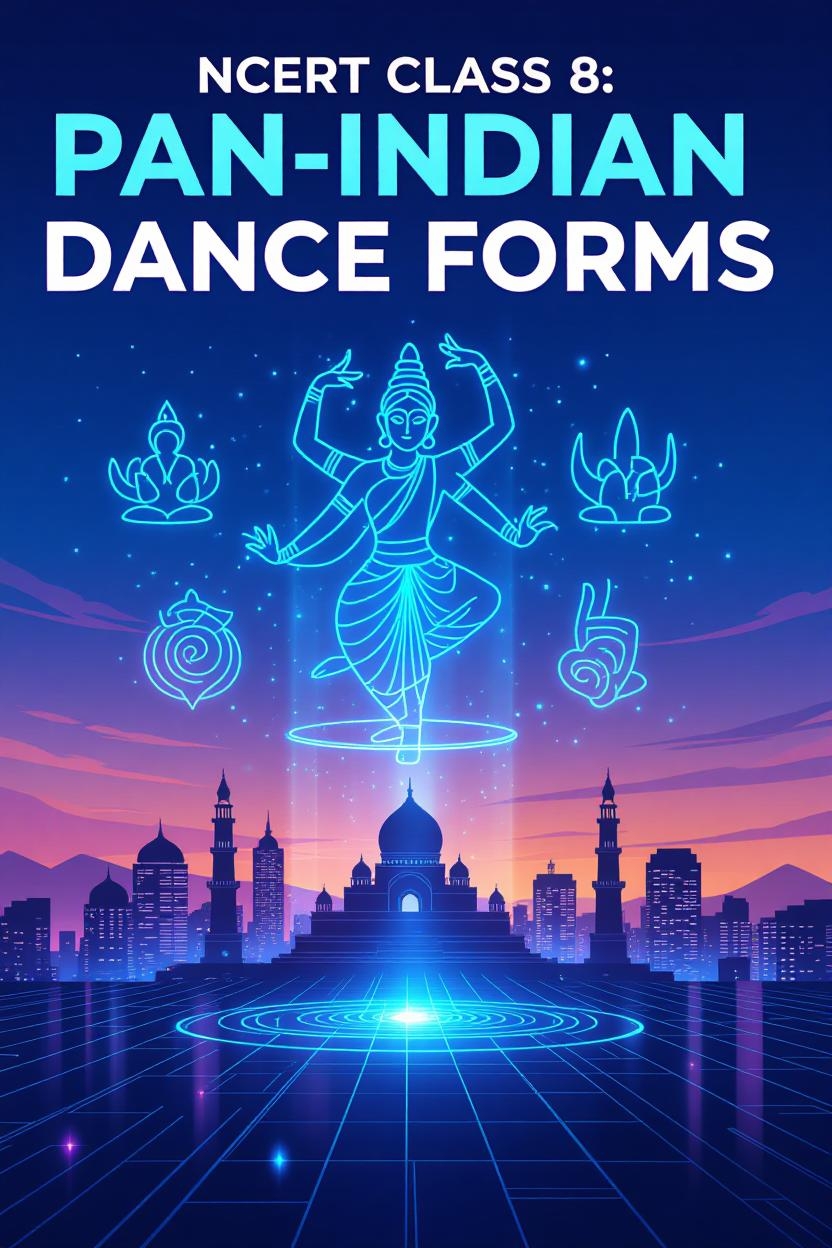
Tandava and Lasya
Learning about rigorous tandava taught by Mahadeva and graceful lasya by Parvati.
Legends and Storytelling
Exploring stories from Puranas, Jataka Tales, Panchatantra for moral messages in dance.
Dance Production
Planning, choreographing, and performing a dance production integrating other subjects.
Historical and Mythological Context
The chapter explores dance origins from Abhinaya Darpaṇam: Brahma creates Nāṭya Veda from Vedas, gives to Bharata Muni. Bharata performs; Mahadeva teaches tandava via Tandu; Parvati teaches lasya to Usha, spreading to earth. Legends like Ganga's descent offer moral values for contemporary interpretations.
Key Highlights
Dance as nṛtta, nṛitya, nāṭya; creating productions with phases: planning, rehearsals, performance; integrating subjects like theatre, visual arts; examples of innovative choreography with Kathak, Santhali, Dollu Kunitha; assessment on collaboration and creativity.
Comprehensive Chapter Summary
1. Introduction to Dance Terms
Dance called nṛtta, nṛitya or nartana; dance-drama as nāṭya in ancient texts like Nāṭyaśhāstra and Abhinaya Darpaṇam.
2. Origin of Dance
Nāṭya Veda Creation
Brahma derives from four Vedas, creates fifth Veda (Nāṭya Veda); gives to Bharata Muni who masters nṛtta, nṛitya, nāṭya.
First Performance
Bharata with Gandharvas, Apsarās performs; Mahadeva in audience, pleased, offers tandava lessons via gana Tandu.
Tandava and Lasya
Tandu teaches tandava to sages, then humans; Parvati teaches lasya to Usha, who teaches gopis of Dwarka, then women of Saurashtra.
3. Legends as Sources
Storytelling
Legends from Puranas, Jataka Tales, Panchatantra offer narratives for visual spectacles with moral messages, relevant today.
Ganga Descent Example
Showcases woman's strength (Ganga), nature's collaboration (Mahadeva controls force), perseverance (Bhagirath), river respect/pollution issues.
4. Creating Dance Production: Once Upon A Dance…
Phase 1: Planning and Pre-Production
Brainstorm theme/storyline (myth to contemporary); style/groups/props; music; roles (choreographer, performers, etc.); integrate subjects; venue/dates.
5. Phase 2: Choreography and Rehearsals
Choreographic Stages
Break story into scenes; explore movements/emotions; use sthānas, chāris, hastas; breath/rhythm/silence; rehearsals with formations, review.
Production Design
Finalize props/costumes/lights; dress/technical rehearsals.
6. Phase 3: Performance
Grand rehearsal with feedback; final performance; post-show reflections.
7. Innovative Choreography Examples
Images of Kathak with Santhali (Jharkhand), Dollu Kunitha (Karnataka) showing fusion.
8. Assessment
Learning outcomes: Collaborate enthusiastically; participate in all stages; understand origins; apply creativity in performance elements.
9. Summative Assessment
Individual: Demonstrate sequences, express bhavas, project. Group: Choreograph social issue, story performance; criteria for clarity, creativity, collaboration.
Key Concepts and Definitions
Nṛtta
Pure dance without expression.
Nṛitya
Expressive dance with storytelling.
Nāṭya
Dance-drama combining dance and acting.
Tandava
Rigorous, masculine dance form taught by Mahadeva.
Lasya
Graceful, feminine dance form taught by Parvati.
Nāṭya Veda
Fifth Veda created by Brahma from four Vedas.
Important Facts and Figures
Questions and Answers from Chapter
Short Questions
Q1. What is dance called in ancient times?
Q2. What is dance-drama called?
Q3. Who created Nāṭya Veda?
Q4. Who received Nāṭya Veda?
Q5. Who taught tandava?
Q6. Who taught lasya?
Q7. Who taught lasya to gopis?
Q8. What sources for storytelling?
Q9. What showcases woman's strength?
Q10. Who helped control Ganga's force?
Q11. Who exemplifies perseverance?
Q12. What is Phase 1?
Q13. What is Phase 3?
Q14. What for grand rehearsal?
Q15. What for summative assessment?
Medium Questions
Q1. Explain Nāṭya Veda creation.
Q2. Describe first performance.
Q3. How tandava spread?
Q4. How lasya reached earth?
Q5. What are legends' roles?
Q6. Describe Ganga story values.
Q7. What for dance production?
Q8. List Phase 1 elements.
Q9. What in choreography stages?
Q10. Describe rehearsals.
Q11. What for production design?
Q12. Explain Phase 3.
Q13. What innovative examples?
Q14. List learning outcomes.
Q15. Describe summative assessment.
Long Questions
Q1. Discuss the origin of dance from Abhinaya Darpaṇam.
Q2. Explain tandava and lasya forms.
Q3. How legends provide storytelling sources?
Q4. Analyze Ganga descent story meanings.
Q5. Describe creating dance production process.
Q6. Explain Phase 2: Choreography and Rehearsals.
Q7. Discuss Phase 3: Performance.
Q8. How integrate other subjects in production?
Q9. Describe roles in production.
Q10. Explain learning outcomes in assessment.
Q11. Discuss individual summative assessment.
Q12. Describe group summative assessment.
Q13. How Ganga story for dance production?
Q14. Explain innovative choreography examples.
Q15. Discuss reference to Grade 6 Theatre.
Interactive Knowledge Quiz
Test your understanding of A Presentation of Dance and Choreography
Quick Revision Notes
Origins
- Nāṭya Veda by Brahma
- To Bharata Muni
- Tandava by Mahadeva
Forms
- Lasya by Parvati
- Spread via Usha
- To gopis/Saurashtra
Legends
- Puranas/Jataka
- Ganga descent
- Moral values
Production
- Phase 1: Planning
- Phase 2: Rehearsals
- Phase 3: Performance
Exam Strategy Tips
- Recall origins story
- Understand phases
- Analyze Ganga values
- Integrate subjects
- Assessment criteria