Chapter summary
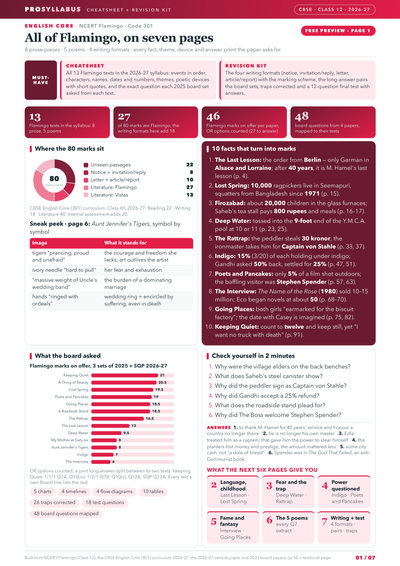
Written by Kalki, this story is a satire on the conceit and arbitrary power of those who rule, using the literary device of dramatic irony. The Maharaja of Pratibandapuram, known as the Tiger King, is told by astrologers at his birth that he will one day die, and that his death will come from a tiger — since he was born in the hour of the Bull, the Tiger's enemy. As a baby he challenges the prophecy with the words 'Let tigers beware!' To defy fate, he resolves to kill a hundred tigers, believing that once the hundredth is dead he will have nothing to fear. He bans tiger-hunting by anyone else and devotes himself entirely to the hunt, even risking his throne by refusing a British officer permission to hunt, then pacifying the officer's wife with fifty expensive diamond rings worth three lakh rupees. When tigers grow extinct in his own state, he marries into a royal family with many tigers to keep up his tally. Reaching ninety-nine, he struggles to find the hundredth tiger; the dewan secretly procures an old, weak tiger and places it in the king's path. The Maharaja fires and, believing he has killed his hundredth tiger, celebrates — but in fact his bullet missed, and the tiger merely fainted; the hunters secretly kill it to save their jobs. Ironically, the king is finally killed not by a real tiger but by a cheap wooden toy tiger: a sliver of wood pierces his hand, the wound festers, and he dies after an operation. Thus the hundredth tiger takes its revenge, and the prophecy is fulfilled in an unexpected way.
Extra questions & answers
Why is the Maharaja called the Tiger King?
Because, to defy a prophecy that a tiger would cause his death, he vowed to kill a hundred tigers and devoted his life to hunting them.
What prophecy was made at the Tiger King's birth?
Astrologers foretold that he would one day die and that, being born in the hour of the Bull, his death would come from a tiger.
How did the king react to the prophecy as a child?
Even as a ten-day-old infant he is said to have spoken, and on hearing of the tiger he growled 'Let tigers beware!', determined to defy fate.
How did the king risk his throne over a British officer?
He refused the officer permission to hunt tigers in his state; to avoid losing his kingdom, he then pacified the officer's wife with fifty costly diamond rings.
What did the king do when tigers became extinct in his state?
He married into a royal family that had a large tiger population so that he could continue killing tigers during visits to his father-in-law's kingdom.
How was the hundredth tiger actually killed?
The king's bullet missed and the old, weak tiger only fainted; to save their jobs, the hunters secretly shot and killed it, hiding the truth from the king.
How did the Tiger King finally die?
A sliver of wood from a cheap wooden toy tiger pierced his hand; the wound became infected, and he died after an operation.
How does the story use dramatic irony?
The king who killed a hundred real tigers to escape death is killed instead by a lifeless wooden tiger, mocking his confidence and pride.
What does the behaviour of the king's officers reveal?
They obey him out of fear, flatter him and hide his failures to protect their jobs, satirising sycophancy in the political order.
What is the central theme of the story?
It satirises the conceit and willful power of rulers and comments on human cruelty towards innocent animals, showing that fate cannot be cheated.