Chapter summary
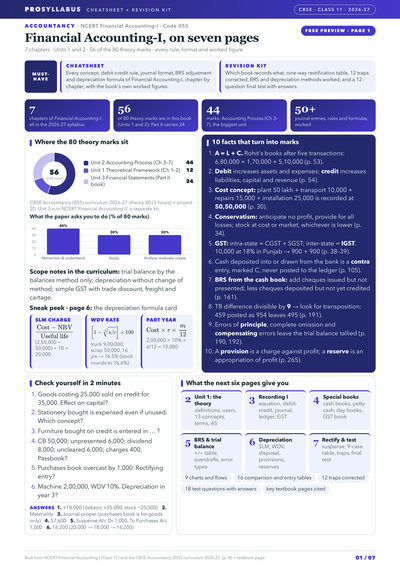
A bank reconciliation statement is prepared to reconcile the bank balance shown by the firm's cash book with the balance shown by the bank passbook or bank statement. The passbook is a copy of the customer's account as maintained by the bank, and in practice the two balances rarely tally on a given date. The differences arise mainly from timing differences in recording transactions and from errors. Timing differences include cheques issued but not yet presented for payment, cheques paid into the bank but not yet collected, direct debits made by the bank such as bank charges, amounts directly deposited by customers into the account, interest and dividends collected by the bank, direct payments made by the bank under standing instructions, and dishonour of cheques or bills. Errors may be committed either by the firm in its cash book or by the bank in the passbook. A favourable balance is a debit balance in the cash book (credit balance in the passbook), while an overdraft is a credit balance in the cash book (debit balance in the passbook). The statement can be prepared starting from either the cash book balance or the passbook balance, and may be drawn with or without first adjusting the cash book; in practice the cash book is usually adjusted before reconciliation.
Key ideas & terms
- Bank Reconciliation Statement
- A statement prepared to reconcile the bank balance as per the cash book with the balance as per the passbook by listing the items of difference.
- Passbook
- A copy of the customer's account as maintained in the books of the bank, showing deposits, withdrawals and the balance.
- Timing Difference
- A difference caused by a time gap between the recording of a transaction in the cash book and in the passbook.
- Overdraft
- A negative bank balance where withdrawals exceed deposits, shown as a credit balance in the cash book and a debit balance in the passbook.
- Favourable Balance
- A debit balance in the bank column of the cash book, equal to a credit balance in the passbook.
- Standing Instruction
- An instruction to the bank to make regular payments such as insurance premium or rent on the customer's behalf.
Extra questions & answers
What is a bank reconciliation statement?
It is a statement that reconciles the bank balance shown by the firm's cash book with the balance shown by the bank passbook by identifying the items of difference.
Why is a bank reconciliation statement prepared?
Because the cash book and passbook balances usually differ, and the statement explains the causes so the two can be reconciled.
What is a passbook?
It is a copy of the customer's account as recorded by the bank, showing deposits, withdrawals and the running balance.
Give two examples of timing differences.
Cheques issued but not yet presented for payment, and cheques deposited but not yet collected by the bank.
How does a cheque issued but not presented affect the balances?
It reduces the cash book balance but not yet the passbook balance, so the passbook balance is higher than the cash book balance.
What is a bank overdraft?
It is a situation where the bank account is negative because withdrawals exceed deposits, shown as a credit balance in the cash book.
What does a favourable balance as per the cash book mean?
It means a debit balance in the bank column of the cash book, indicating deposits exceed withdrawals.
How are direct deposits by customers treated in reconciliation?
They increase the passbook balance before the cash book, so the passbook balance is higher until the firm records them.
Name two causes of difference due to errors.
Errors in recording transactions by the firm in the cash book and errors in recording transactions by the bank in the passbook.
What are the two ways of preparing the statement?
It may be prepared without adjusting the cash book balance, or after adjusting the cash book balance, which is the method generally used in practice.