CBSE Class 7 Annual Assessment
Annual assessment for Class 7 students under CBSE, building on core subjects to enhance critical thinking and conceptual understanding.
Related Blogs

Alerts and Updates for CBSE Class 7 Annual Assessment
Stay up-to-date with the latest news and updates for the CBSE Class 7 Annual Assessment exam
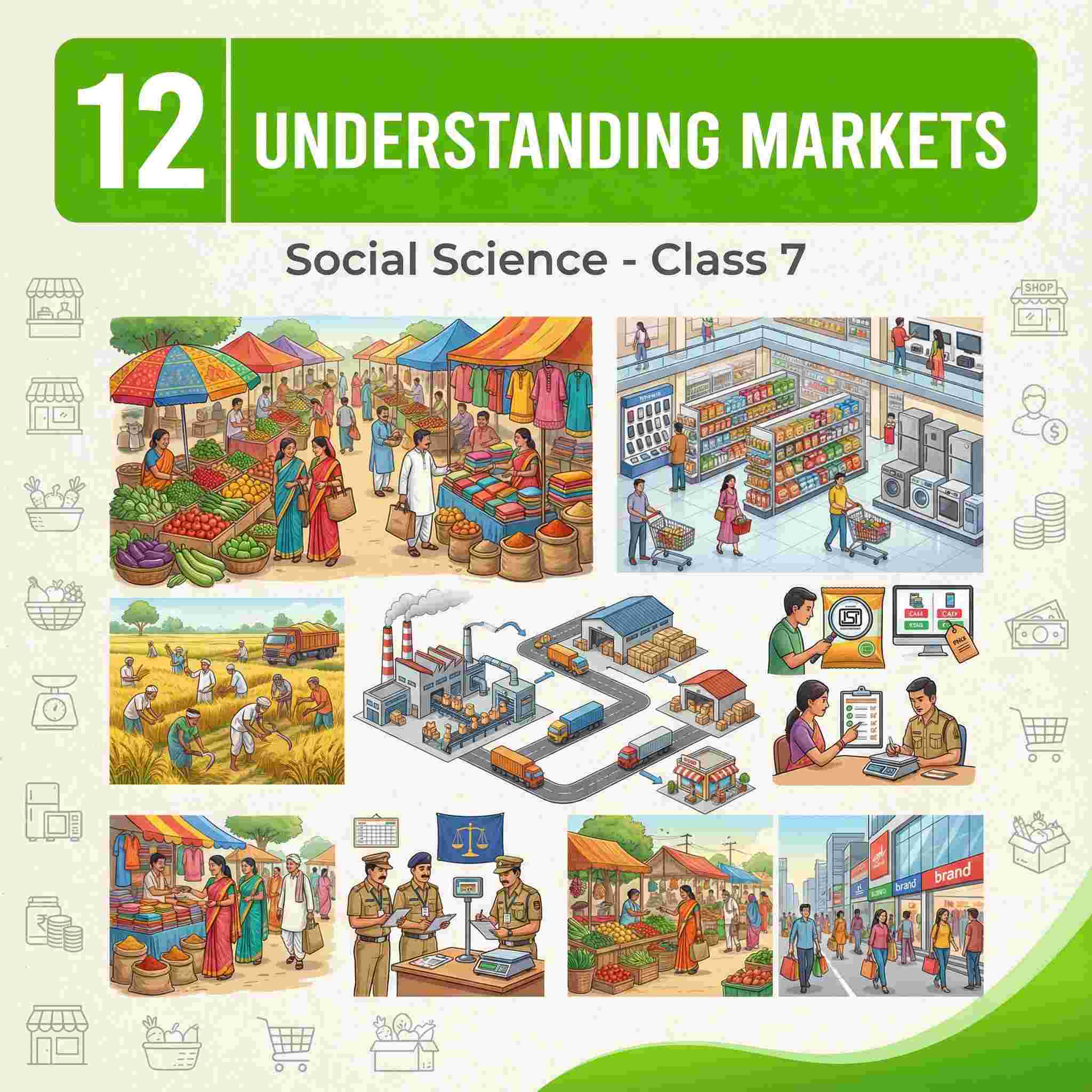
Class 7 Social Science Chapter 12: Understanding Markets | What Markets Are, How Prices Are Set, Types of Markets (Weekly, Malls, Online) & Role of Government
Complete Chapter 12 guide: meaning of markets and why people need them, Hampi Bazaar as a historic market example, key features of any market (buyers, sellers, negotiation and price), how demand and supply interact to fix a “just right” price, different kinds of markets around us (weekly haats, local shops, malls, online/e‑commerce), how goods move from producers to consumers, and the role of government rules and consumer awareness in keeping markets fair, with summary, Q&A, extra questions and quiz for CBSE Exam
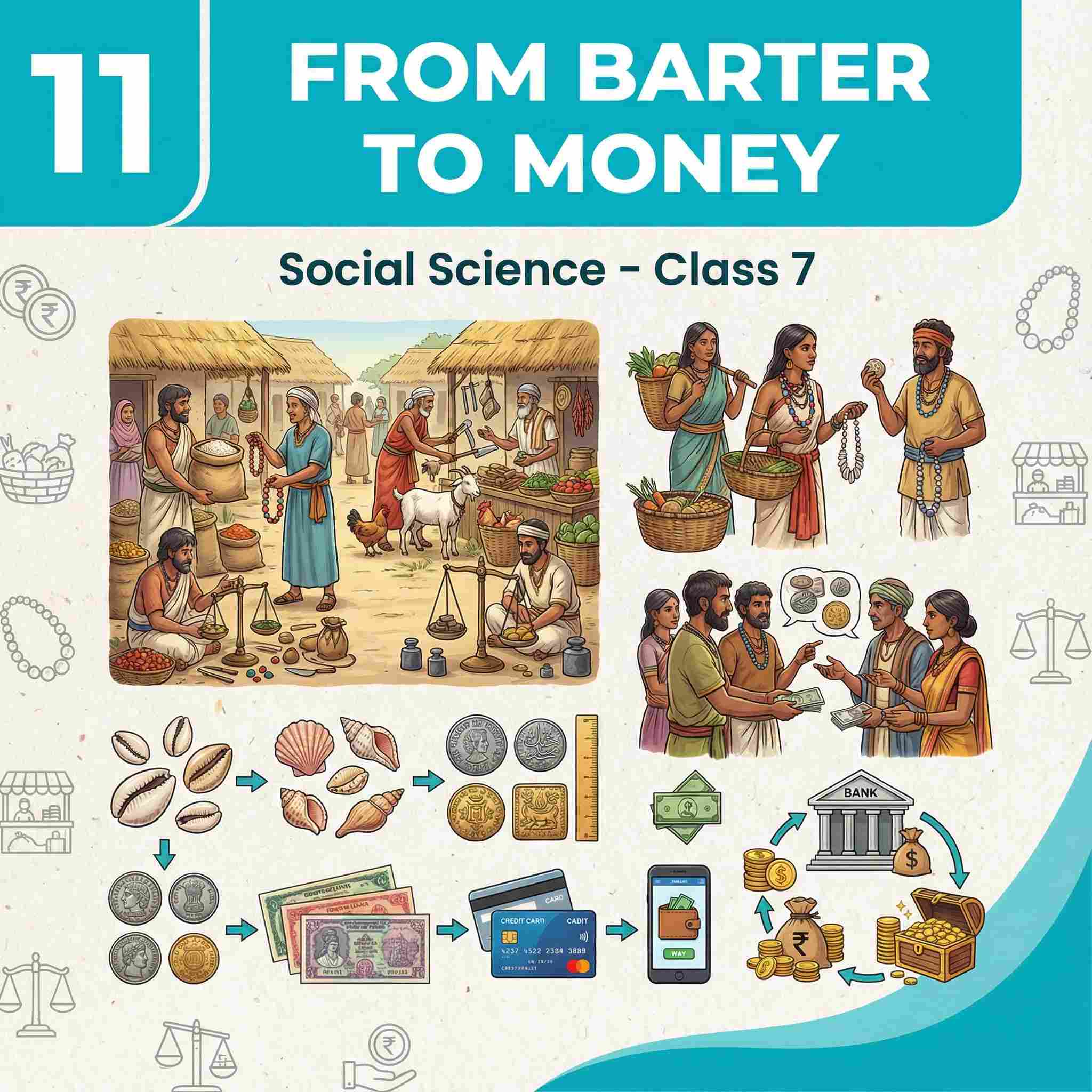
Class 7 Social Science Chapter 11: From Barter to Money | Barter System Problems, Need for Money, Double Coincidence of Wants, Properties & Forms of Money
Complete Chapter 11 guide: how people exchanged goods in the barter system, real problems like double coincidence of wants, lack of standard value, divisibility, portability and durability, why money was invented as a common medium of exchange, early “money” objects (cowries, salt, cattle, metal objects, Rai stones, feather coils), and how modern money includes coins, notes and digital payments, with story-based examples (farmer, Junbeel Mela) plus summary, Q&A, extra questions and quiz for CBSE Exam
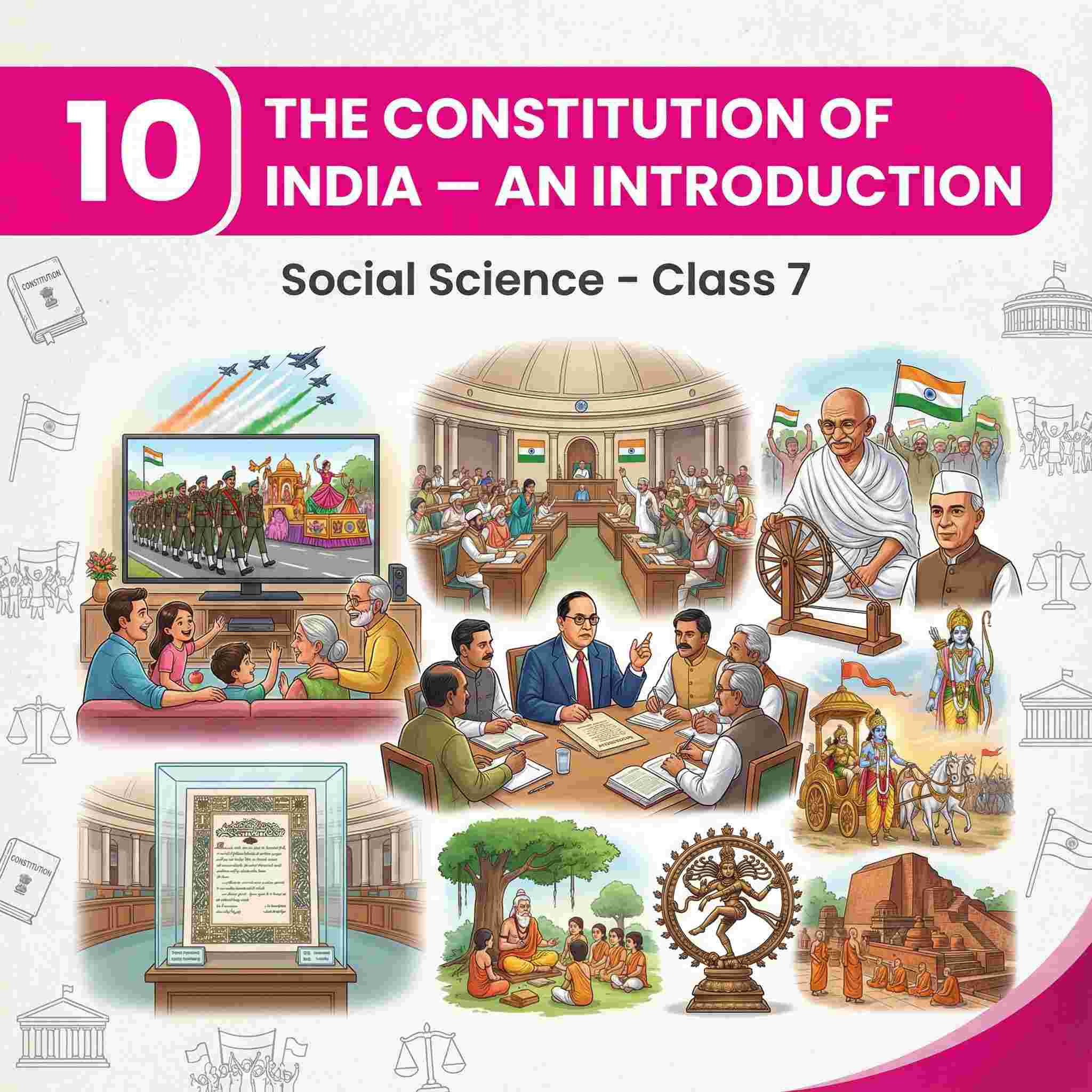
Class 7 Social Science Chapter 10: The Constitution of India – An Introduction | Need for a Constitution, Making of the Indian Constitution, Key Features, Values & Organs of Government
Complete Chapter 10 guide: what a constitution is and why every country needs one, Constitution as the “rulebook” for the nation (kabaddi example), structure of the Indian Constitution (largest written constitution, parts and schedules), key contents—values and ideals, rights and duties, political system, organs of government and their powers, making of the Constitution by the Constituent Assembly (1946–49) with Dr Rajendra Prasad and Drafting Committee under Dr B.R. Ambedkar, and how freedom struggle and civilisational heritage shaped its core principles, with summary, Q&A, extra questions and quiz for CBSE Exam
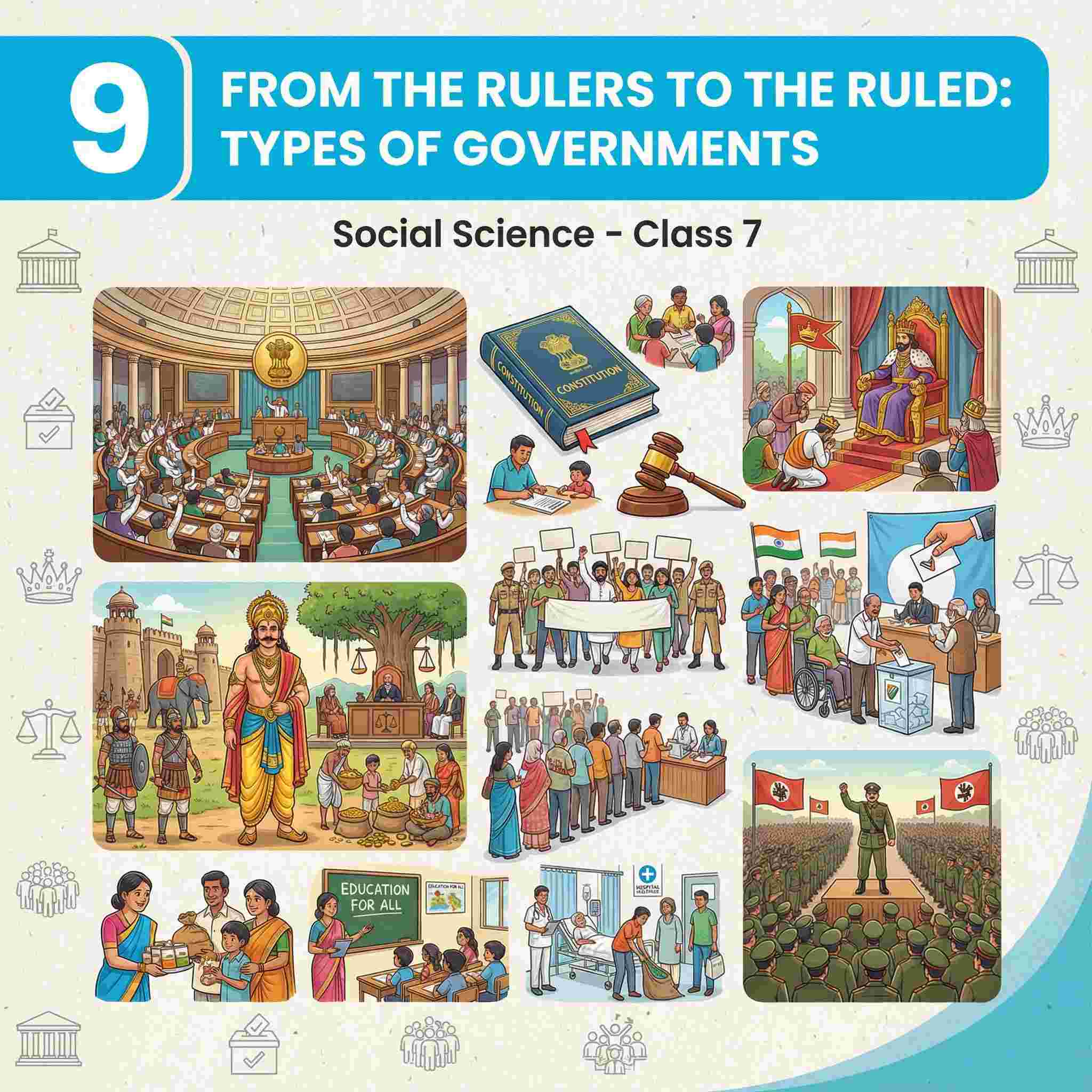
Class 7 Social Science Chapter 9: From the Rulers to the Ruled – Types of Governments | Democracy, Monarchy, Theocracy, Dictatorship, Fundamental Rights & Participation
Complete Chapter 9 guide: what government is and what it does, detailed meaning of democracy as “rule of the people” with school committee example, three functions of government (legislative, executive, judiciary), key differences between systems (who gives power, how govt is formed, parts of govt, aims), core democratic principles (equality, freedoms, representation, universal adult franchise, independent judiciary, rights), and overview of forms like direct democracy, representative democracy, monarchy and theocracy, with exam-focused summary, Q&A, extra questions and quiz for CBSE Exam

Class 7 Social Science Chapter 8: How the Land Becomes Sacred | Sacred Places, Pilgrimages, Tirtha Networks & Cultural Integration of India
Complete Chapter 8 guide: idea of sacredness and tirtha, sacred sites of different religions (mosques, churches, synagogues, fire temples, stupas, takhts, temples), Buddhist, Jain, Sikh and Hindu pilgrimage traditions, tīrthayātrā as inner and outer journey, long‑distance routes like Rameswaram–Haridwar, Sabarimala trek and Pandharpur wārī, and how centuries of pilgrimages turned India’s geography into a shared sacred space and strengthened “one country, one culture”, with summary, Q&A, extra questions and quiz for CBSE Exam
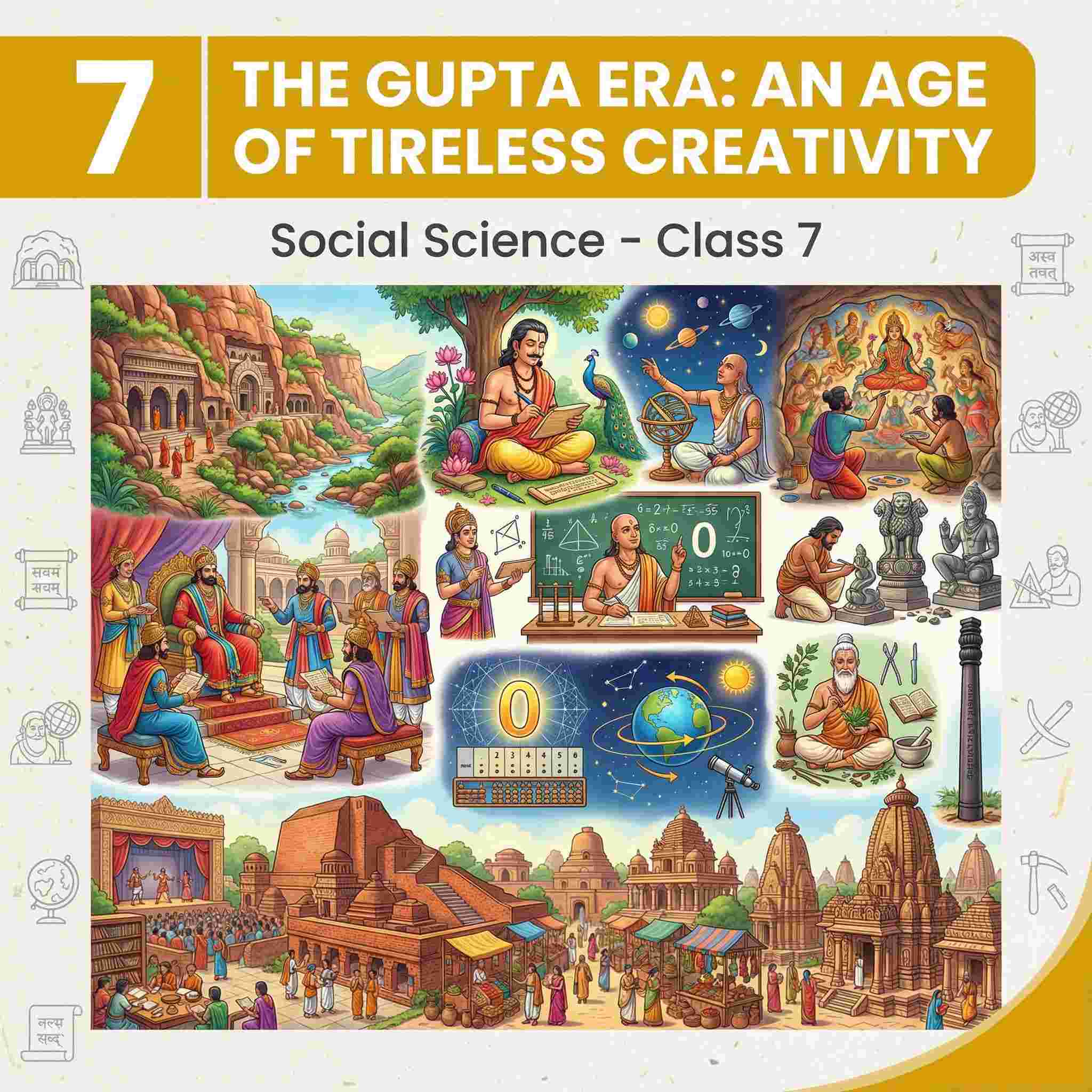
Class 7 Social Science Chapter 7: The Gupta Era – An Age of Tireless Creativity | Gupta Empire, Chandragupta I & II, Samudragupta, Iron Pillar, Golden Age in Art, Science & Literature
Complete Chapter 7 guide: rise of the Gupta dynasty after the Kushanas, expansion under Chandragupta I and the warrior‑king Samudragupta (Prayaga prashasti, veena coin, aśvamedha), Chandragupta II Vikramaditya and the Iron Pillar inscription, contemporary kingdoms Vakataka, Pallava and Kamarupa, flourishing of art, architecture, metallurgy, astronomy, mathematics and classical Sanskrit literature (Kalidasa), with timeline, maps, summary, NCERT-style Q&A, extra questions and quiz for CBSE Exam
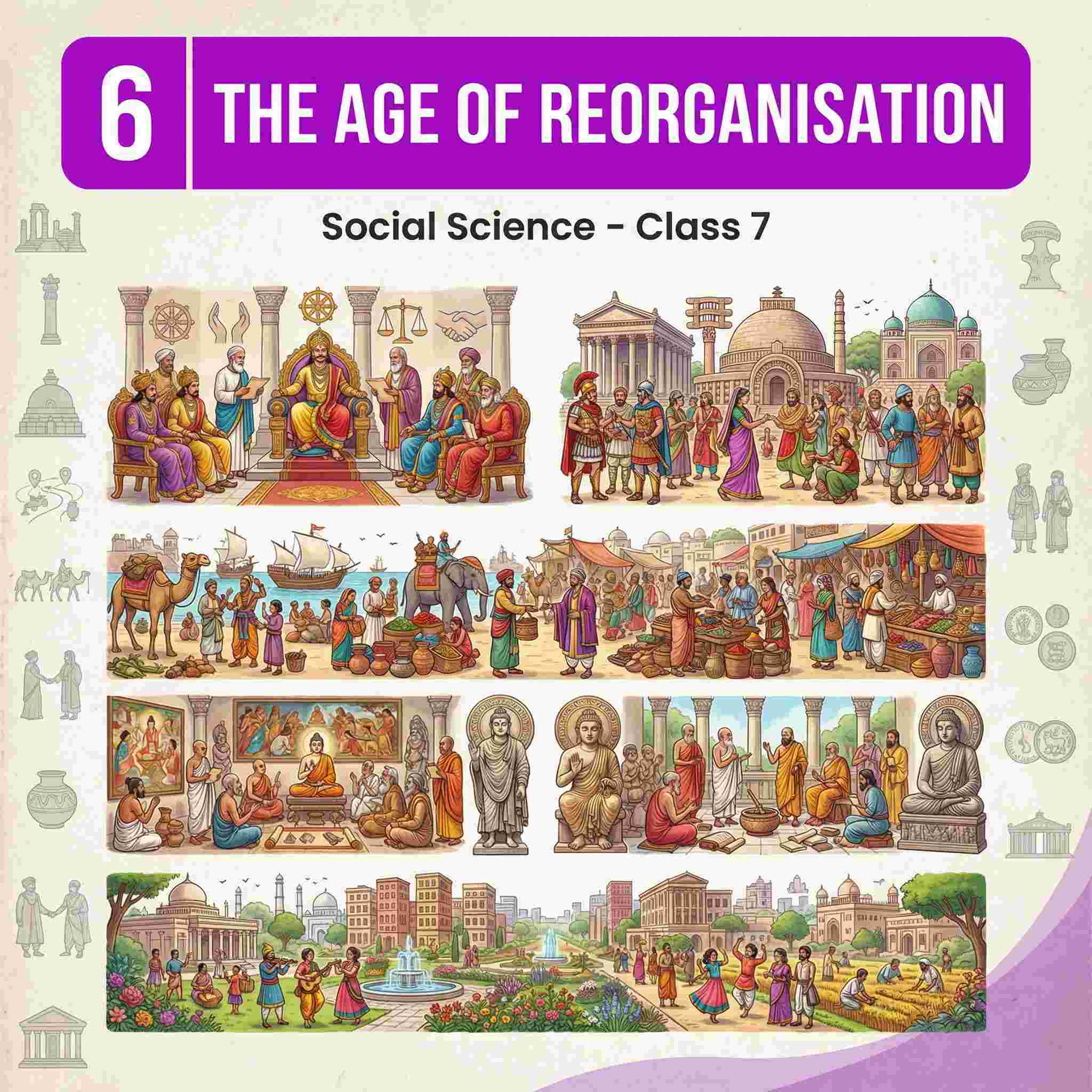
Class 7 Social Science Chapter 6: The Age of Reorganisation | Post‑Mauryan Kingdoms, Shungas & Satavahanas, Indo‑Greeks–Shakas–Kushanas, Sangam Age Chera–Chola–Pandya
Complete Chapter 6 guide: breakup of the Mauryan empire and rise of many new kingdoms, why this period is called the “Age of Reorganisation”, Shunga rule and aśvamedha yajña, Bharhut Stupa and early Buddhist art, Indo‑Greeks, Shakas and Kushanas entering and assimilating into Indian culture, Hathigumpha inscription of Kharavela, southern kingdoms Cheras–Cholas–Pandyas, Sangam Age literature, Karikala’s Kallanai (Grand Anicut) and trade with Romans, plus exam-focused summary, maps, Q&A, extra questions and quiz for CBSE Exam
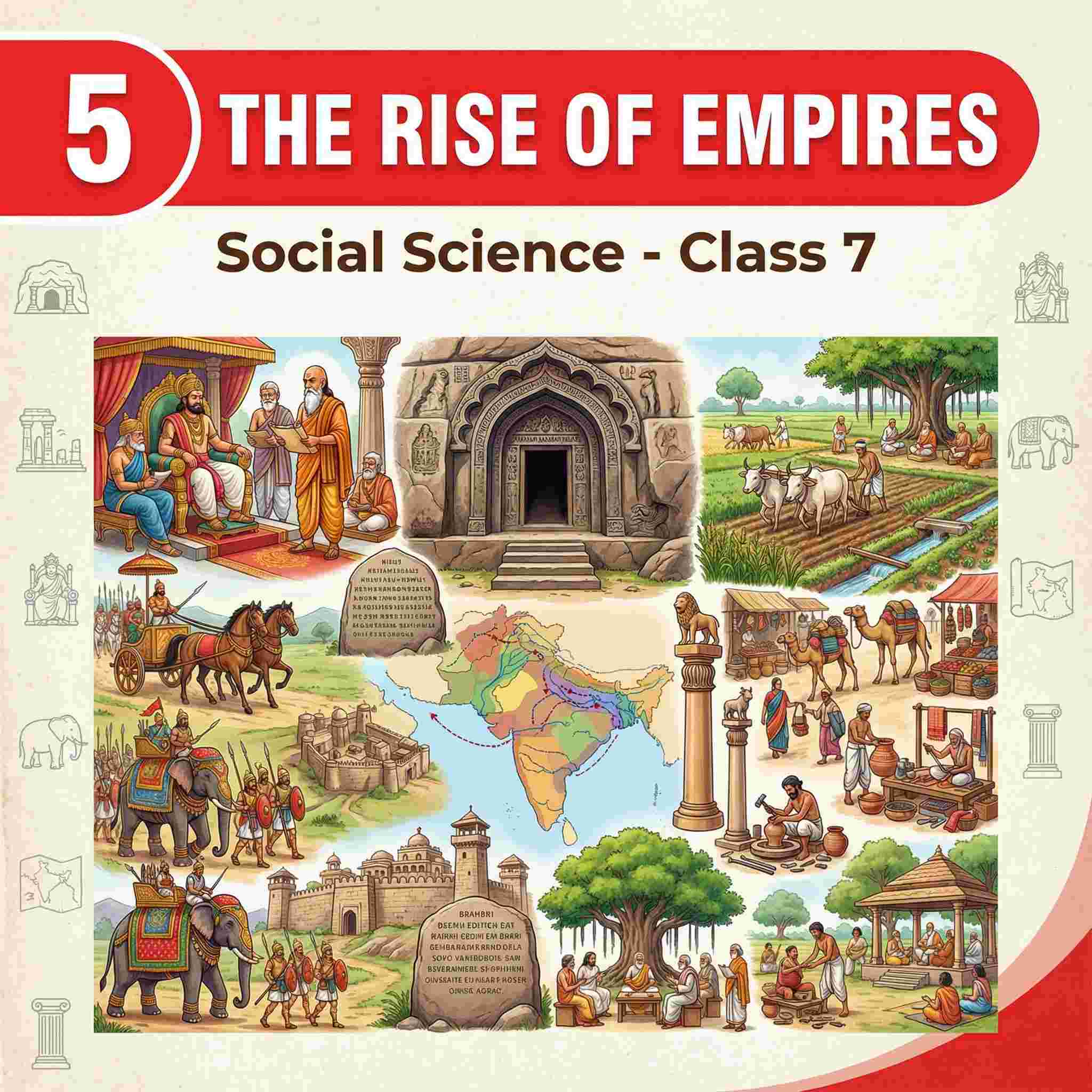
Class 7 Social Science Chapter 5: The Rise of Empires | Meaning of Empire, Features, Pataliputra Story, Tribute, Army, Administration, Trade & Culture
Complete Chapter 5 guide: definition of an empire (imperium, samrāj, rājādhirāja), time‑travel story tour of Pataliputra with forts, moats, caves and markets, how large empires grew from smaller kingdoms using war, resources and trade routes, key features of an empire (central authority, tributary kings, army, administration, taxes, roads and navigation, promotion of art and learning), and how empires reshaped political, economic, social and cultural life, with exam-focused summary, Q&A, extra questions and quiz for CBSE Exam
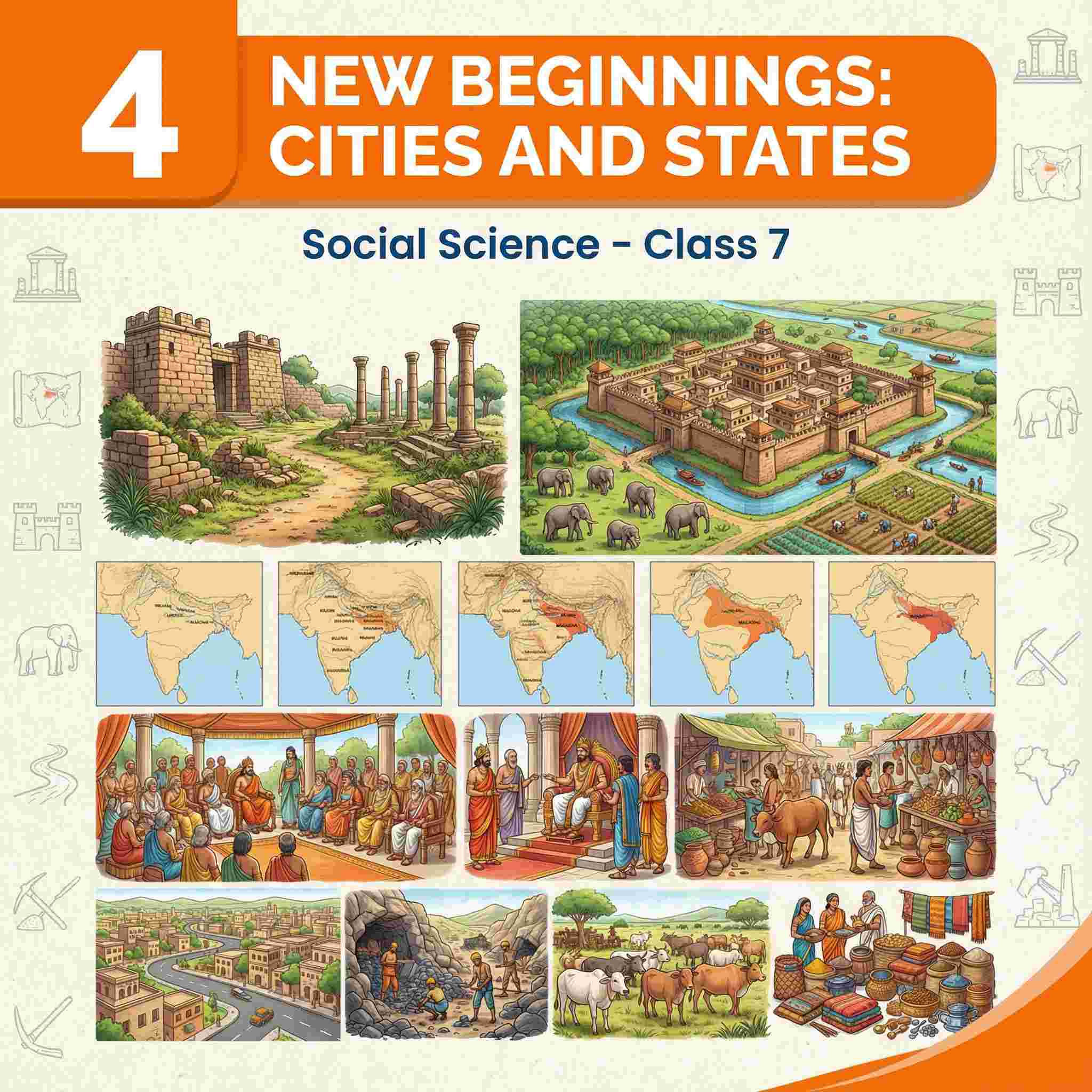
Class 7 Social Science Chapter 4: New Beginnings – Cities and States | Second Urbanisation, Janapadas & 16 Mahajanapadas, Early Republics & Fortified Capitals
Complete Chapter 4 guide: India’s Second Urbanisation after the Harappan cities, rise of janapadas and 16 mahajanapadas in the Ganga plains, reasons for their growth (fertile land, iron, trade networks), fortified capitals with moats and narrow gateways, Kautilya’s ideal kingdom features, early democratic traditions in sabhā and samiti, gana‑sangha states like Vajji and Malla as early republics, plus exam-focused summary, maps, Q&A and quiz for CBSE Exam