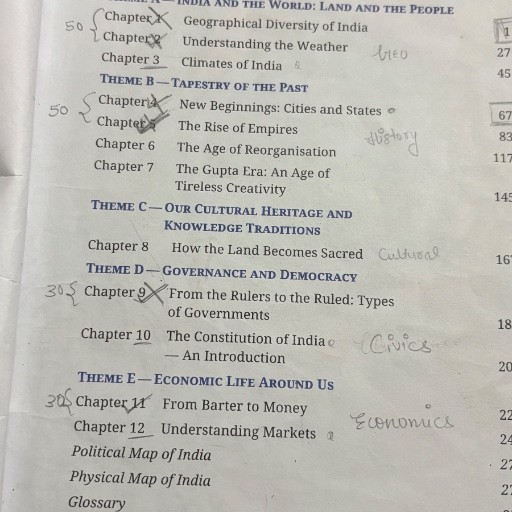
Class 7 Social Science Chapter 8: How the Land Becomes Sacred | Sacred Places, Pilgrimages, Tirtha Networks & Cultural Integration of India
Complete Chapter 8 guide: idea of sacredness and tirtha, sacred sites of different religions (mosques, churches, synagogues, fire temples, stupas, takhts, temples), Buddhist, Jain, Sikh and Hindu pilgrimage traditions, tīrthayātrā as inner and outer journey, long‑distance routes like Rameswaram–Haridwar, Sabarimala trek and Pandharpur wārī, and how centuries of pilgrimages turned India’s geography into a shared sacred space and strengthened “one country, one culture”, with summary, Q&A, extra questions and quiz for CBSE Exam
Updated: just now

How the Land Becomes Sacred
Class 7 Social Science Chapter 8 | Complete NCERT Guide | Sacred Geography, Pilgrimages
Full Chapter Summary & Detailed Notes – How the Land Becomes Sacred
Opening Idea – What is “Sacredness”?
Sacredness means something is holy, pure and worthy of deep respect and reverence. It is not limited to temples or idols — it includes places, journeys (tirthayatra), routes, rivers, mountains, trees, groves and even the entire land.
In India, over the last 3000+ years, millions of pilgrims travelling in all directions made the entire subcontinent a huge sacred geography.
The Three Big Questions of the Chapter (Most Important for Exams)
- What makes a place, journey or natural object sacred?
- How did sacred sites and pilgrimage routes connect the whole subcontinent?
- How did this sacred geography help in cultural integration and protection of nature?
How the Land Becomes Sacred – 4 Main Ways
| Way | Description | Examples |
|---|---|---|
| 1. Association with gods / divine events | Places where gods lived, appeared or performed miracles | 12 Jyotirlingas (Shiva), 51 Shakti Peethas, Bodh Gaya (Buddha’s enlightenment) |
| 2. Association with saints & gurus | Places visited or where saints attained samadhi | Amritsar (Guru Nanak), Sabarimala (Ayyappa), Vaishno Devi |
| 3. Ancient texts & myths | Mahabharata, Ramayana, Puranas declared certain places holy | Char Dham, Prayagraj (Triveni Sangam) |
| 4. Nature worship & ecology | Rivers, mountains, trees, groves seen as divine | Ganga, Kailash, Peepal tree, Sacred groves |
Major Sacred Places in Indian Religions (High-weightage Table)
| Religion | Major Sacred Places |
|---|---|
| Hinduism | Char Dham (Badrinath, Rameswaram, Dwarka, Puri) • 12 Jyotirlingas • 51 Shakti Peethas • 4 Kumbh Mela sites • 7 Sapta Puri |
| Buddhism | Bodh Gaya (enlightenment) • Sarnath (first sermon) • Kushinagar (Mahaparinirvana) • Lumbini (birthplace) • Sanchi Stupa |
| Jainism | Girnar, Palitana, Shravanabelagola, Mount Abu, Shatrunjaya hills |
| Sikhism | Five Takhts: Akal Takht (Amritsar), Takht Sri Patna Sahib, Takht Sri Damdama Sahib, Takht Sri Keshgarh Sahib, Takht Sri Hazur Sahib |
Pilgrimage (Tirthayatra) – The Heart of Sacred Geography
- Tirthayatra = crossing (tirtha) + journey (yatra) → both physical travel and inner spiritual journey
- For centuries pilgrims travelled on foot, sharing routes, languages, food, stories → created a shared sacred culture across India
Famous Pilgrimages & Their Significance
Char Dham Yatra
Badrinath (North) • Jagannath Puri (East) • Rameswaram (South) • Dwarka (West) → Symbolises unity of India
Kumbh Mela
Held every 12 years at 4 places: Haridwar, Prayagraj, Nashik, Ujjain → Largest peaceful gathering on Earth (UNESCO heritage)
Sabarimala Ayyappa
40–60 day vratham, trek through forest → Example of strict discipline and equality
Amarnath & Vaishno Devi
High-altitude mountain caves → Faith stronger than hardship
Sacred Ecology – When Nature Itself is Worshipped
- Rivers: Ganga, Yamuna, Godavari, Narmada, Kaveri, Brahmaputra (Rigveda’s Nadistuti Sukta praises rivers)
- Mountains: Kailash (Shiva’s abode), Kedarnath, Badrinath, Girnar, Amarnath ice lingam
- Trees: Peepal (Buddha’s enlightenment), Banyan, Tulsi, Bilva
- Sacred Groves: Small protected forests seen as homes of deities → Meghalaya (Mawphlang, Ryngkew), Maharashtra (over 3000 groves), Karnataka, Kerala → Natural biodiversity hotspots
Pilgrimage Routes = Trade Routes (Brilliant Integration)
- Uttarapatha (Northern route): Taxila → Pataliputra → Tamralipti
- Dakshinapatha (Southern route): Pataliputra → Kanchipuram → Madurai
- Pilgrims and traders used the same paths → exchange of goods, ideas, languages, art styles → cultural integration
How Sacred Geography Unified India
- A Tamil pilgrim going to Badrinath and a Punjabi pilgrim going to Rameswaram met on the way → shared food, stories, bhajans
- Sanskrit + local languages mixed → new pilgrimage literature
- People started seeing the entire land from Himalayas to Kanyakumari as one sacred space (Punyabhumi / Karmabhumi)
Global Parallels (Sometimes asked in 3–5 markers)
- Mecca & Medina (Islam)
- Jerusalem (Judaism, Christianity, Islam)
- Mount Fuji (Japan)
- Uluru (Australian Aboriginal)
- Taranaki mountain (Maori, New Zealand)
Key Takeaways & Golden Lines for Exams
One-Page Revision Map
Sacredness → Places + Journeys + Nature
Char Dham • Kumbh Mela • 12 Jyotirlingas • Rivers & Mountains • Sacred Groves
↓
Pilgrimage + Trade Routes → Cultural Integration + Biodiversity Protection
Result: Entire Indian subcontinent became one sacred geography
5-Mark Golden Answer Lines
- “Over 3000 years, millions of pilgrims travelling in every direction turned the entire Indian subcontinent into a sacred geography.”
- “Sacredness in India is not limited to temples — rivers, mountains, trees and groves are also worshipped, leading to environmental protection.”
- “Pilgrimage routes overlapped with trade routes (Uttarapatha & Dakshinapatha), spreading ideas, languages and culture across India.”
- “Sacred groves are the best example of faith-based conservation — many are biodiversity hotspots even today.”

Group Discussions
No forum posts available.