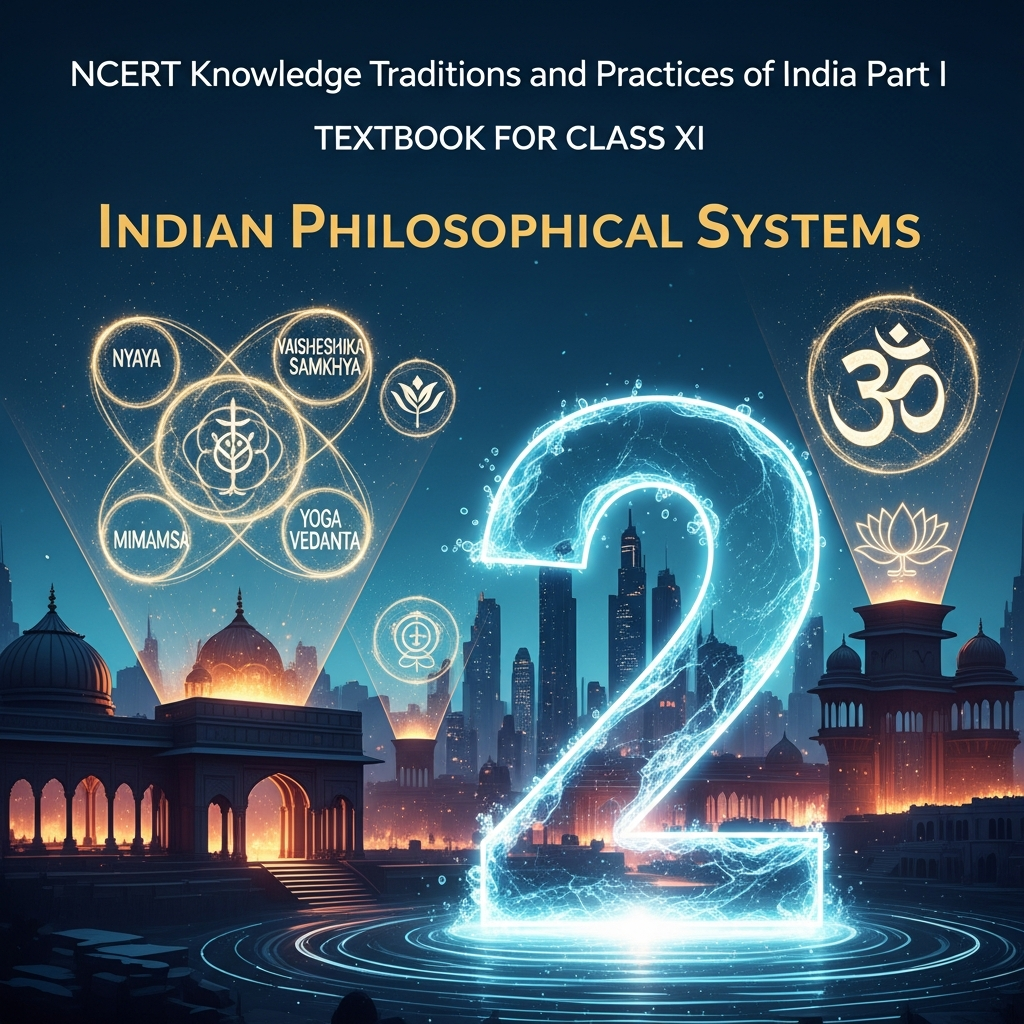
Indian Philosophical Systems
Chapter 2: Knowledge Traditions and Practices of India - Ultimate Study Guide | NCERT Class 11 Notes, Questions, Examples & Quiz 2025
Full Chapter Summary & Detailed Notes - Indian Philosophical Systems Class 11 NCERT
Overview & Key Concepts
- Chapter Goal: Introduce Darshana (Philosophy) as inquiry into creation, knowledge sources (Pramana), and liberation (Moksha). Exam Focus: Astika (6 orthodox: Sankhya-Yoga, Nyaya-Vaisheshika, Mimamsa-Vedanta) vs Nastika (3 heterodox: Carvaka, Jain, Buddha); Pramanas; Sufferings (Adhidaivika, etc.). 2025 Updates: Interfaith harmony, modern ethics links. Fun Fact: Rigveda hymns predate Greek philosophy. Core Idea: Ignorance causes suffering; knowledge leads to Moksha.
- Wider Scope: Vedic origins, schools' doctrines; sources: Tables (schools/founders), visuals (Mahavira/Buddha), activities (analyze sufferings), think/reflect (Vedas' validity).
- Expanded Content: Ethical applications today; point-wise for recall; add 2025 relevance like AI ethics via Nyaya logic.
Introduction to Darshana and Pramanas
- Definition: Darshana: Vision/knowledge of reality; Prameya (objects), Pramana (means).
- Pramanas: Pratyaksha (perception), Anumana (inference), Upamana (analogy), Sabda (testimony), Anupalabdhi (non-perception), Arthapatti (implication).
- Direct/Indirect: Senses vs reasoning; flawed Pramana leads to invalid knowledge.
- Example: Carvaka accepts only Pratyaksha; others vary.
- Expanded: Evidence: Upanishads debates; debates: Vedas eternal? Real: 6 Astika, 3 Nastika schools.
Conceptual Diagram: Astika vs Nastika (Page 21)
Flowchart: Vedic acceptance → Astika (Sankhya etc.) vs Rejection → Nastika (Carvaka etc.); visualizes division.
Why This Guide Stands Out
Comprehensive: All schools point-wise, doctrine integrations; 2025 with ethics (e.g., Ahimsa in policy), analyzed for harmony.
Nastika Schools: Carvaka, Jaina, Buddha
- Carvaka: Materialist; only Pratyaksha; 4 elements (no Akasha/soul/God); pleasure = heaven; death = Moksha. Founder: Brihaspati.
- Jaina: 24 Tirthankaras (Mahavira last); Anekantavada (multi-faceted truth), Syadvada (relative knowledge); Karma influx (Asrava-Bandha); Triratna (faith/knowledge/conduct); 5 Vows (Ahimsa etc.).
- Buddha: 4 Noble Truths (Dukkha/Samudaya/Nirodha/Magga); 12 Nidanas (ignorance root); 8-Fold Path; Anatmavada (no self); Triratna (Prajna/Sila/Samadhi); 5 Silas.
- Think & Reflect: Why Nastika reject Vedas? (Logic over faith); Jaina influence on Gandhi.
- Expanded: Evidence: Tipitaka (Pali), Tattvarthasutra; debates: Momentariness; real: Global spread (Theravada/Mahayana).
Astika Schools: 6 Orthodox Systems
- Sankhya-Yoga: Dualism (Prakriti/Purusha); 25 Tattvas; Gunas (Sattva/Rajas/Tamas); Yoga: Ashtanga (Yama-Niyama etc.); Patanjali founder.
- Nyaya-Vaisheshika: Logic/atomism; 16 Padarthas (Nyaya), 7 categories (Vaisheshika); 4 Pramanas; God as creator.
- Purva-Uttara Mimamsa (Vedanta): Karma/Jnana Kanda; No God needed (Purva); Illusion (Advaita-Shankara), Qualified monism (Vishishtadvaita-Ramanuja), Dualism (Dvaita-Madhav).
- Colors/Techniques: N/A; focus on debates (Vada/Jalpa).
- Activity: Compare Moksha paths (knowledge vs rituals).
- Expanded: Evidence: Sutras; debates: Ishvara existence; real: Influence on Ayurveda/logic.
Exam Activities
Analyze flaws (Q2); report on schools (Q4); modern relevance (Q5).
Summary Key Points
- Schools: Astika (Vedic: Sankhya etc.), Nastika (Non-Vedic: Carvaka etc.); Pramanas: 6 types; Moksha: End sufferings via knowledge.
- Impact: Harmony (Shiva Mahima Stotra); challenges: Debates sustain philosophy.
Project & Group Ideas
- Group: Debate Astika vs Nastika; individual: School report with quotes.
- Debate: Materialism (Carvaka) in modern world.
- Ethical role-play: Ahimsa application.