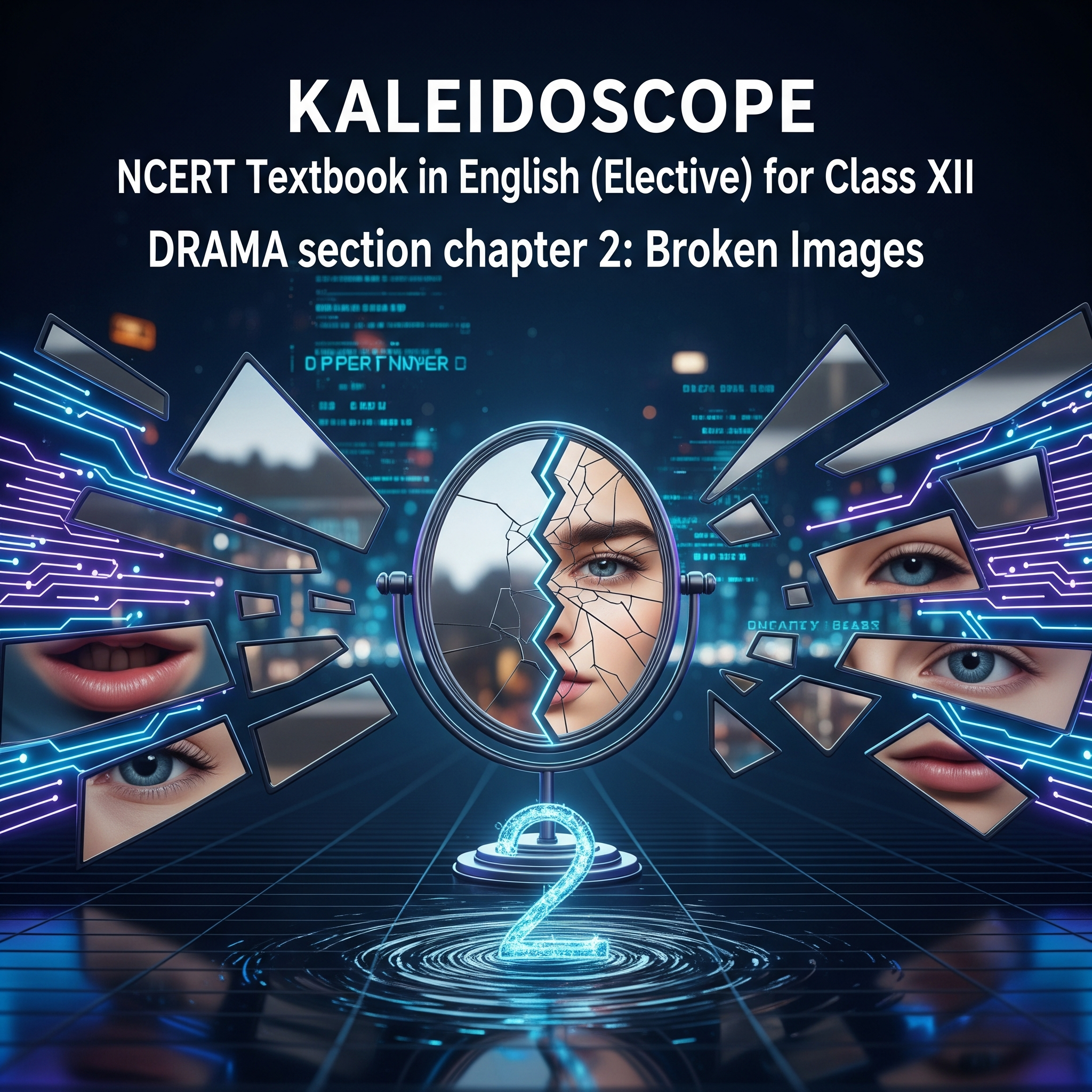
Broken Images
Girish Karnad | Kaleidoscope Drama - Ultimate Study Guide 2025
Introduction to Broken Images
"Broken Images" is a monologue by Girish Karnad, exploring themes of identity, betrayal, bilingualism, and the politics of language in Indian literature. It critiques the conflict between personal values and academic pursuits, using a TV studio setting where Manjula Nayak confronts her image, revealing inner turmoil.
The play uses history and mythology to address contemporary issues, focusing on a Kannada writer's switch to English for fame and money, sparking debates on cultural betrayal.
Key Elements
- Structure: Monologue turning dialogic with self-image.
- Themes: Bilingualism, jealousy, disability portrayal, literary politics.
- Relevance: Mirrors post-colonial language debates in India.
Expanded Context
From T.S. Eliot's epigraph to Karnad's multi-level narrative, the play satirizes celebrity culture and intellectual hypocrisy. Ideal for CBSE 2025 exams emphasizing critical analysis of identity and language.
- Curriculum Fit: Builds on themes from other Kaleidoscope pieces like freedom in expression.
Points to Ponder
- Does writing in English betray one's mother tongue?
- How does disability shape family dynamics and self-perception?
- Is literary success worth personal betrayal?
Reprint 2025-26
Author: Girish Karnad (1938-2019)
Girish Karnad: Playwright & Artist
Contemporary writer, playwright, actor, director. Recipient of Padma Shri (1974), Padma Bhushan (1992), Jnanpith Award (1998). Writes in Kannada and English. Plays use history/mythology for contemporary issues. Active in Indian cinema.
Legacy in Literature
Known for multilingual works, focusing on personal/academic values, bilingualism. "Broken Images" explores multiple levels, critiquing language politics.
Worldview
Karnad critiques cultural betrayal, identity crises through introspective drama—echoing Eliot's "heap of broken images."
Expanded Biography
Born 1938. Influenced by Kannada/English traditions. Famous works: Tughlaq, Hayavadana. Directed films like Utsav. Addressed social issues boldly.
- Connections: Anti-colonial themes; multilingual identity relevant to 2025's globalized India.
Reprint 2025-26
Full Script & Summary
Summary: Broken Images
Manjula Nayak, a Kannada writer turned English novelist, records a TV intro for her book's adaptation. Her image confronts her lies about her disabled sister Malini, revealing jealousy, plagiarism, betrayal. Explores language politics, sibling rivalry, self-deception.
विस्तृत हिंदी सारांश
मंजुला नायक, एक कन्नड़ लेखिका जो अंग्रेजी उपन्यासकार बनीं, अपनी किताब के अनुकूलन के लिए टीवी परिचय रिकॉर्ड करती हैं। उनकी छवि उनकी विकलांग बहन मालिनी के बारे में झूठ का सामना करती है, ईर्ष्या, साहित्यिक चोरी, विश्वासघात उजागर करती है। भाषा राजनीति, भाई-बहन प्रतिद्वंद्विता, आत्म-धोखे की खोज करती है।
Full Script (Excerpts by Page - Complete in PDF)
Key Scenes
Manjula's speech, image confrontation, revelations about Malini, Pramod.
- Epigraph: T.S. Eliot on broken images symbolizing fragmented self.
Reprint 2025-26
Themes & Critical Analysis
Central Themes
- Bilingualism & Betrayal: Switching languages for fame; English as dishonesty.
- Identity Crisis: Self vs. image; sibling jealousy, disability portrayal.
- Literary Politics: Money, glamour vs. creativity; Akademi critiques.
Interconnections
Explores fractured self through technology, language—broken images of truth.
Critical Appreciation
Karnad's meta-theatrical monologue critiques post-colonial linguistics, personal hypocrisy via dialogic twist—satirizes celebrity, family secrets.
Deeper Analysis
Context: Reflects Indian writers' English shift (e.g., Rushdie). Devices: Mirror image for conscience; irony in acknowledgments.
- Relevance: 2025's globalization, AI identities echo broken self.
Discussion Prompts
- How does technology amplify inner conflicts?
- Is Manjula's betrayal cultural or personal?
Thinking about the Play
1. How genuine is the love that Manjula expresses for her sister?
Not genuine; masked jealousy. She "used" Malini for novel, resented attention—revealed in confrontation.
2. The sister does not appear in the play but is central to it. What picture of her is built in your mind from references in the play?
Attractive, intelligent, vivacious despite disability; English-speaking, sensitive—radiated life from wheelchair.
3. When the image says—‘Her illness was unfortunate. But because of it, she got the best of everything’ (i) What is the nature of Manjula’s reply? (ii) How can it be related to what follows in the play?
(i) Defensive, justifying no demands. (ii) Reveals resentment; foreshadows plagiarism confession.
4. What are the issues that the playwright satirises through this TV monologue of a celebrity?
Hypocrisy, language betrayal, fame's cost, disability exploitation, intellectual jealousy.
Additional Insights
Questions probe depth: Love as possession; absent sister's presence haunts narrative.
Talking about the Play
1. ‘Broken Images’ takes up a debate that has grown steadily since 1947—the politics of language in Indian literary culture, specifically in relation to modern Indian languages and English. Discuss.
Post-independence, English seen as colonial; yet offers global reach. Play critiques "betrayal" for money, echoing Akademi views.
2. The play deals with a Kannada woman writer who unexpectedly produces an international bestseller in English. (i) Can a writer be a truly bilingual practitioner? (ii) Does writing in an ‘other tongue’ amount to betrayal of the mother tongue?
(i) Yes, like Ramanujan; but play questions honesty. (ii) Debatable—play portrays as market complicity, yet inevitable for reach.
Expanded Discussion
Links to Rushdie, Roy—English as global vs. regional roots.
Appreciation
1. Why do you think the playwright has used the technique of the image in the play?
To externalize inner conflict; image as conscience, revealing truths—meta-theatrical for self-confrontation.
2. The play is called a monologue. Why is it made to turn dialogic?
To dramatize duality; dialogue exposes hypocrisy, engages audience in psychological depth.
3. What is the posture the celebrity adopts when the camera is on and when it is off?
On: Confident, emotional. Off: Relieved, vindictive—reveals facade.
Further Appreciation
Technique echoes Pirandello; posture satirizes media personas.
Interactive Quiz - Test Your Understanding
10 MCQs on script, themes, and questions. Aim for 80%+ for mastery!
Suggested Reading
Karnad Works
- Two Monologues: Flowers, Broken Images by Girish Karnad
- The Dreams of Tipu Sultan by Girish Karnad
More Suggestions
- Tughlaq by Girish Karnad
- Hayavadana by Girish Karnad
Reprint 2025-26