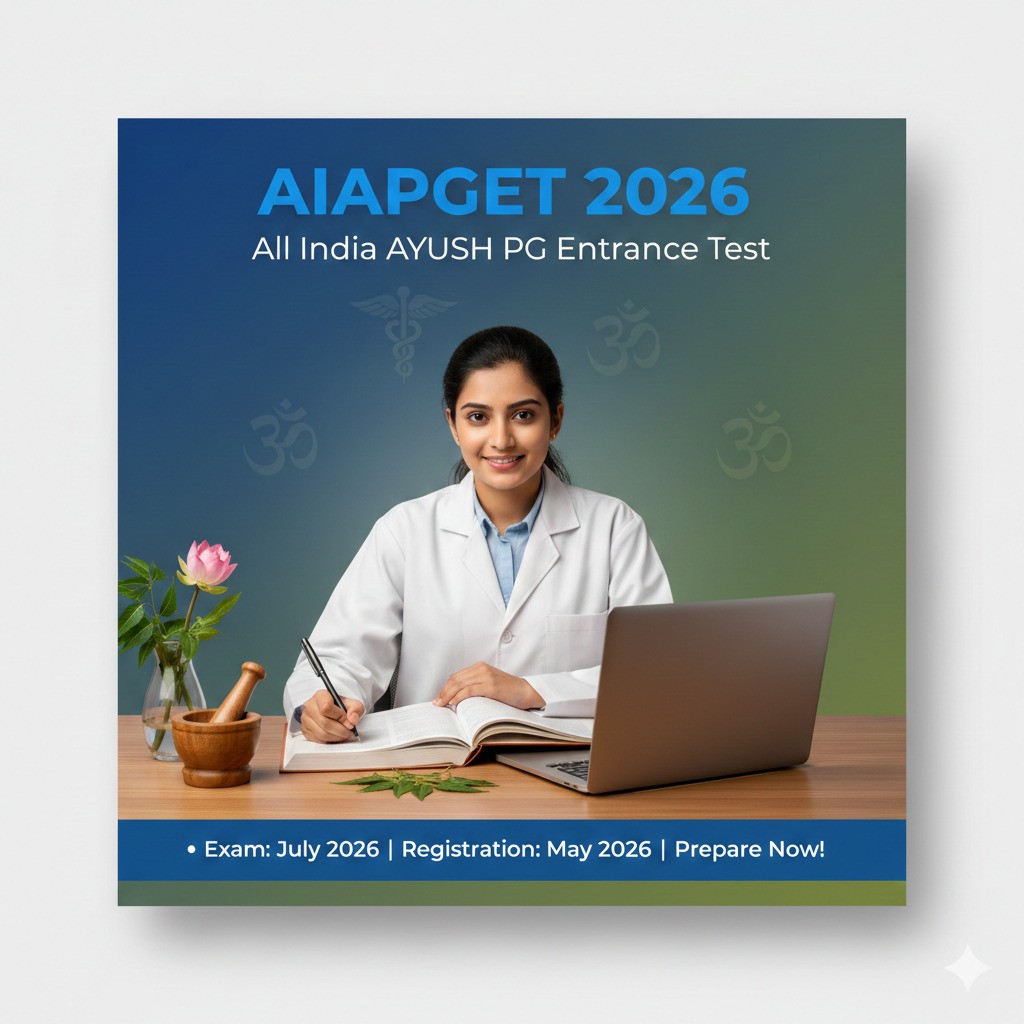
AIAPGET is a highly competitive 120-minute computer-based test consisting of 120 Multiple Choice Questions. Unlike undergraduate exams, AIAPGET heavily integrates clinical scenarios with classical Samhita/Materia Medica knowledge.
| Action | Marks |
|---|---|
| Correct Response | +4 |
| Incorrect Response | -1 |
| Unattempted | 0 |
The "Big Three" (Charaka, Sushruta, and Vagbhata) usually account for nearly 50-60% of the paper. Focus on Sutra-sthana for conceptual clarity and Chikitsa-sthana for clinical applications.
For Homeopathy Aspirants:Organon of Medicine and Materia Medica are the scoring pillars. Expect case-based questions where clinical symptoms must be mapped to the correct remedy.
NTA's biometric process is time-intensive. Arrive at least 2 hours prior to the gate closing time.
Dress Protocol: Wear light-colored half-sleeve clothing. Avoid large buttons or elaborate embroidery. Footwear must be open-toed (sandals/slippers) with low soles—shoes are strictly prohibited.
Since the time is limited (1 minute per question), avoid getting stuck on complex Shloka-based or lengthy clinical questions.
- Pass 1 (0-40 mins): Solve all direct, fact-based questions you are 100% sure of.
- Pass 2 (40-90 mins): Tackle clinical cases and questions where you can eliminate two options.
- Pass 3 (90-110 mins): Review your "Marked for Review" items. Use the last 10 minutes strictly for final verification.